世界知识产权组织杂志,2013年第6期(12月)
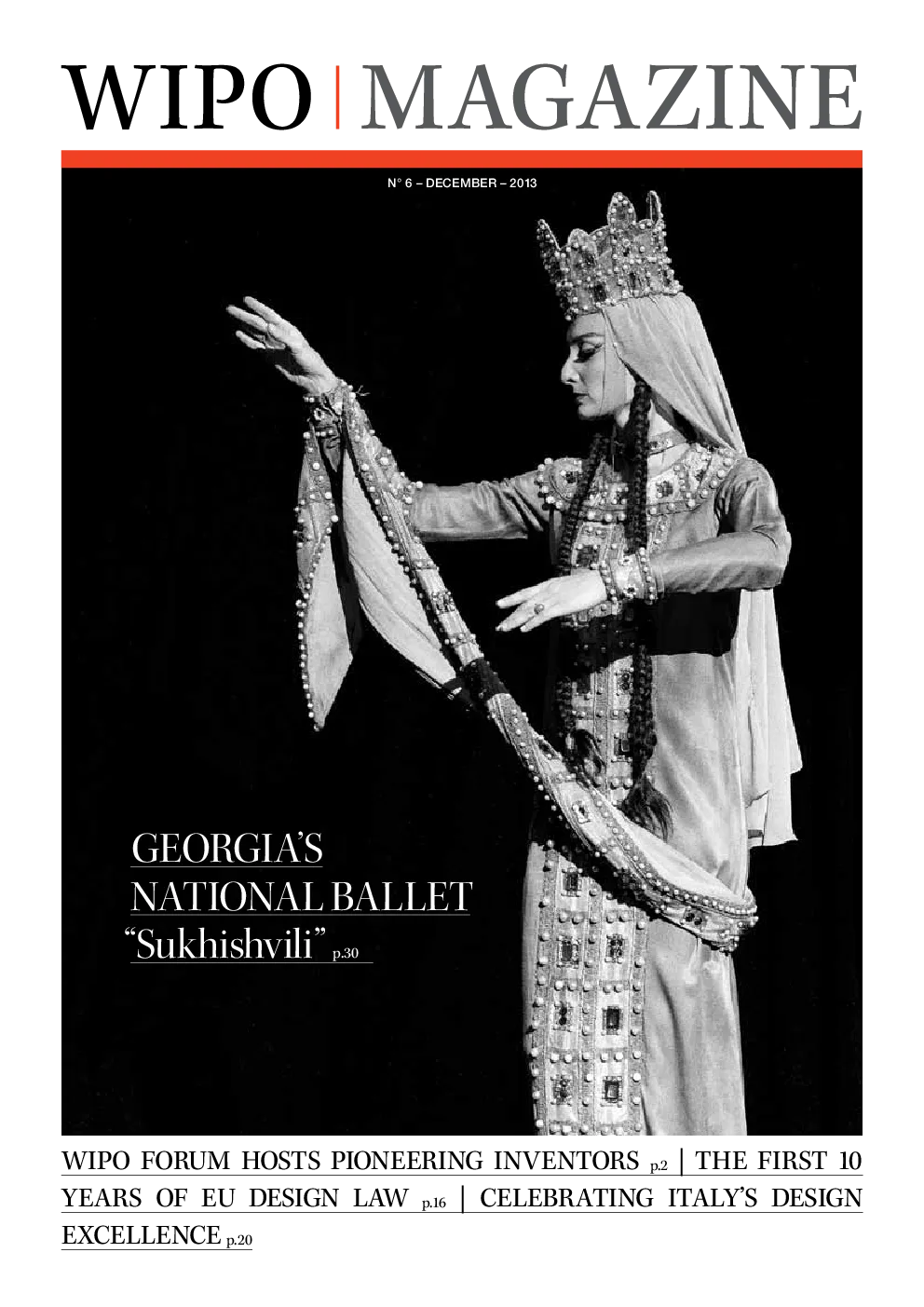
WIPO FOrum hOstsPIOneerIngInventOrs p.2|theFIrst 10yearsOFeudesIgn laW p.16| CelebratIng Italy’s desIgnexCellenCep.20 WIPO’snew website the new web structure and design ofwipo.intputs users front and center.Whether you are a newcomer to intel-lectual property (IP) or a seasoned IPprofessional, the new site is designed torespond to your needs. gration of video and visuals, and adjustsautomatically to provide optimal displayand navigation on desktops, tablets andsmartphones regardless of size of system. wipo.intis a work in progress. We willcontinue to upgrade and update contentin the coming months and new featureswill be added in response to your feed-back. The newwipo.intportal provides a quickoverview of WIPO and enables you tofind out about WIPO’s diverse activitiesvia new fly-out menus.better sign-post-ing makes it easier for you to navigatethe site and to access the informationyou need quickly. Please let us know what you think bysending your comments and sugges-tions towww.wipo.int/contact/en/area.jsp?area=web.your views will help en-sure the site evolves in response to yourneeds. The new design is clean and flexible andresponds to the new ways you accessinformation. It features seamless inte- CoNteNts p.2WIPO Forum hosts pioneering inventorsp.3- Uniting tradition and modernityp.6- Keeping things coolp.9- New body parts – the shape of things to come?p.13- Unraveling the mysteries of the mindp. 16Ten years of EU design lawp. 20Celebrating Italy’s design excellencep.26Protecting IP: Striking a balancep.30Georgia’s National Ballet “Sukhishvili”p.34In the courts:Registering trademarks: UK court sets boundaries Editor:Catherine JewellGraphic Designer:Annick Demierre Front cover:Photo: WIPO/BerrodOn the opening day of WIPO’s Assemblies(September 23 to October 2, 2013),Georgia’s National Ballet “Sukhishvili”offered delegates a stunning performanceof the diversity of Georgia’s folk tradition. ©World IntellectualProperty Organization WiPoForumhostsPioNeeriNGiNNovatorsByCatherine Jewell,Communications Division, WIPO For companies operating in a competitive market, innovation is a wayof life. We all benefit from the stream of new and improved productsand services that result. Every once in a while, however, trail-blazingpioneers emerge with a new game plan that disrupts the status quo.Four such visionaries, each turning the dial on established practice intheir quest to improve the quality of medicine, food and shelter sharedtheir experiences with intellectual property (IP) policy-makers at thefirst WIPO ForumFrom inspiration to innovation: the game-changers,on September 24, 2013. These four game-changers Diébédo FrancisKéré (architect), Gopalan Sunderraman (inventor of the “Chotukool”cooling system), Anthony Atala (a pioneer of regenerative medicine)and Henry Markram, (at the frontline of brain research) discuss theirground-breaking achievements and share their views on the elementsthat need to be in place to enable innovation to thrive. WiPoForumFrancis Kéré: Uniting traditionand modernity At first, the community was very skeptical about using localmaterials to build the school. “It was not easy to convince mypeople to use clay to build the school, because their experienceis that a clay building will not withstand the rainy season,” hesaid. “When I told them we were going to use clay they wereshocked. They didn’t see any innovation with clay, so I had toconvince them. Remember the Western model is our dreambut we neither have the financial nor the technical means todo it. But that was a good challenge for me. I had to create amodern building to make the project acceptable to my people;one that was cool inside and adapted to the local climate usinglocal materials and traditional techniques.” Diébédo Francis Kéré’s award-winning approach to architec-ture attracted international acclaim in 2004 when he won theAga Khan Award for Architecture for his work in promotingsustainable and community driven architecture. Mr. Kéré’s work in this area was triggered when his com-munity in Gando, Burkina Faso, asked him to assist themin re-building the local school. Having himself languished inthe searing temperatures of the classroom during his schoolyears in Burkina Faso, Mr. Kéré was keen to apply the knowl-edge he had acquired at architectural school in Germany tocreate a more comfortable learning environment for the localschoolchildren. Strapped for cash, but determined to supporthis community, he was forced to think out of the box and todevelop solutions using locally available resources – materials,labor and know-how. Transferring a European model to one ofthe poorest countries on the planet with little or no electricityor clean drinking water, was not an option. So began a journeythat is both transforming the lives of communities in BurkinaFaso and beyond and inspiring new generations of architectsaround the world. Given the high illiteracy rates in Burkina Faso, explaining “engi-neering and architect