东南亚地区高等教育数字化转型报告
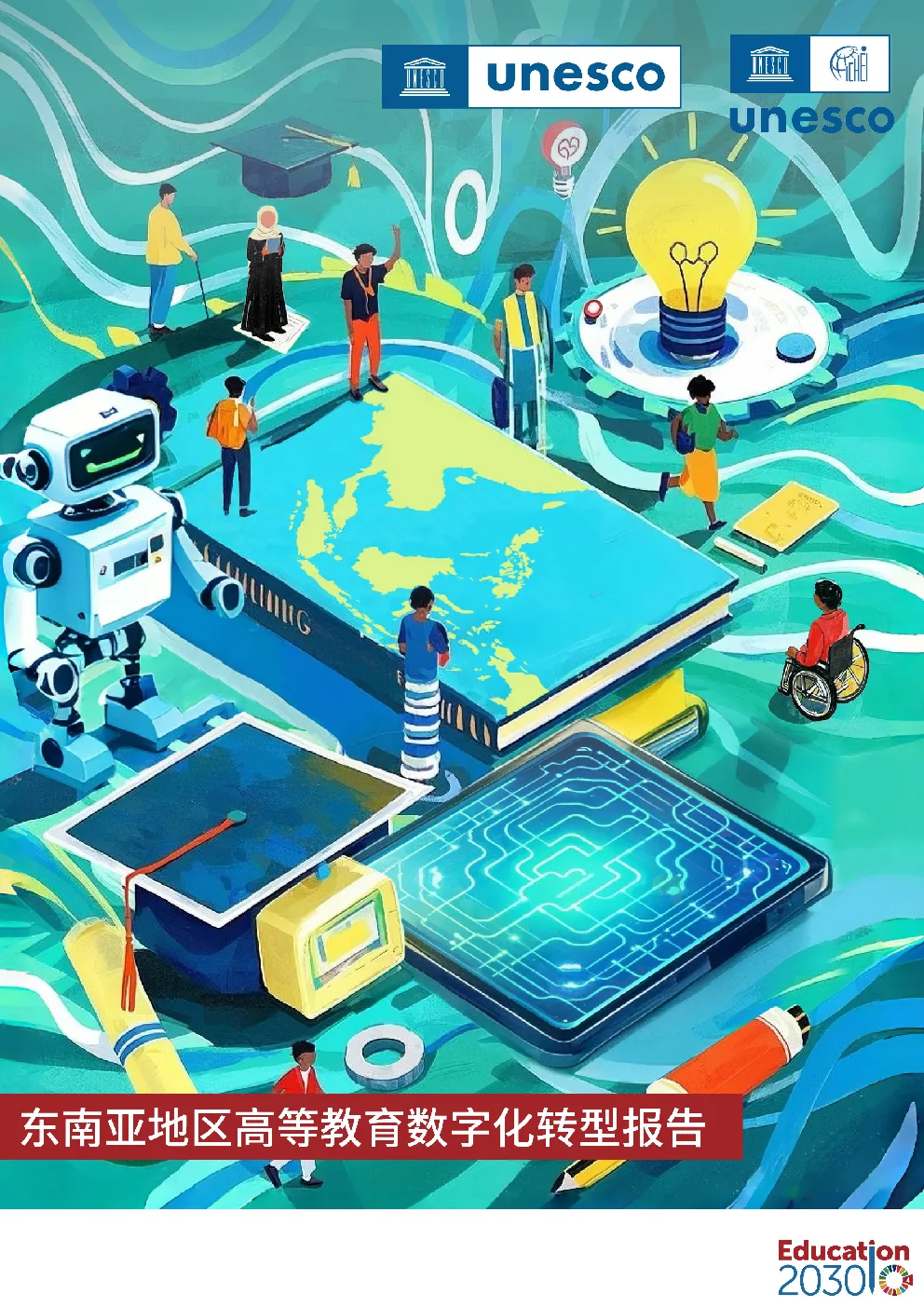
UNESCO – a global leader in educationEducation is UNESCO’s top priority because it is abasic human right and the foundation for peaceUNESCO – a global leader in educationEducation is UNESCO’s top priority because it is abasic human right and the foundation for peace联合国教育、科学及文化组织(UNESCO)——全球教育领导机构 The Global Education 2030 AgendaUNESCO, as the United Nations’ specialized agency forThe Global Education 2030 AgendaUNESCO, as the United Nations’ specialized agency for2030年全球教育议程 education, is entrusted to lead and coordinate theEducation 2030 Agenda, which is part of a globalmovement to eradicate poverty through 17 SustainableDevelopment Goals by 2030. Education, essential toachieve all of these goals, has its own dedicated Goal 4,which aims to“ensure inclusive and equitable qualityeducation and promote lifelong learning opportuni-ties for all.”The Education 2030 Framework for Actioneducation, is entrusted to lead and coordinate theEducation 2030 Agenda, which is part of a globalmovement to eradicate poverty through 17 SustainableDevelopment Goals by 2030. Education, essential toachieve all of these goals, has its own dedicated Goal 4,which aims to“ensure inclusive and equitable qualityeducation and promote lifelong learning opportuni-ties for all.”The Education 2030 Framework for Action教科文组织作为主管教育的联合国专门机构,负责领导并协调2030年教育议程——作为通过17项可持续发展目标在2030年前消除贫穷的全球运动的一部分。教育既是实现各项可持续发展目标的关键,同时自身也是单独一项目标(可持续发展目标4),即“确保包容和公平的优质教育,让全民终身享有学习机会”。《教育2030行动框架》为落实这一宏伟目标及各项承诺提供了指导方针。 and sustainable development. UNESCO is theUnited Nations’ specialized agency for education,providing global and regional leadership to driveprogress, strengthening the resilience and capacityof national systems to serve all learners andresponding to contemporary global challengesthrough transformative learning, with special focuson gender equality and Africa across all actions.and sustainable development. UNESCO is theUnited Nations’ specialized agency for education,providing global and regional leadership to driveprogress, strengthening the resilience and capacityof national systems to serve all learners andresponding to contemporary global challengesthrough transformative learning, with special focuson gender equality and Africa across all actions.教育是联合国教科文组织工作的重中之重,它既是一项基本人权,也是建设和平和推动可持续发展的基础。教科文组织是主管教育的联合国专门机构,在全球和地区的教育领域发挥领导作用,以推动各国教育系统的发展,增强其韧性和能力,从而服务所有学习者。教科文组织通过变革性学习引领应对当今全球挑战,并在所有业务领域重视性别平等和非洲。 联合国教育、科学及文化组织(UNESCO)与联合国教科文组织高等教育创新中心(中国深圳)于2025年出版。 © UNESCO 2025 BGK/DOC/ED/25/015-SE 本出版物所使用的名称及其材料编制方式并不意味着联合国教科文组织对任何国家、领土、城市或地区,或其当局的法律地位,或对其边界或界线划分表示任何看法。 本出版物中表达的是作者的看法和意见,而不一定是联合国教科文组织的看法和意见,因此本组织对此不承担责任。 作者: Hong T.M Bui, Ting T.T.Le, and Hoa T.M.Nguyen 平面设计和排版: UNESCO-ICHEI 封面图片: 由Dreamina根据提示“创建一个反映东南亚高等教育数字化的封面 ”生成。背景为机械齿轮、智能设备等科技元素,搭配纸笔、毕业帽等教育元素,画面中间几排青年人在其中活动,背景是富有动感的抽象图案,色彩对比强烈 。科技元素如齿轮、灯泡等被描绘的质感厚重。教育元素如书本、卷轴以细腻的笔触展现。 如需更多信息,请联系:bangkok@unesco.orgoffice@ichei.orgwww.ichei.org0755-88010925 东南亚地区高等教育数字化转型报告 目录 图表清单.................................................................................................................................................4表格清单.................................................................................................................................................4序.....................................................................................................................................................5致谢.....................................................................................................................................................7免责声明.................................................................................................................................................7缩略语与简称..........................................................................................................................................8执行摘要.................................................................................................................................................9报告导论...............................................................................................................................................13 第一章 系统性综述研究.........................................................................................................................14 1.1. 引言................................................................................................................................................15 1.2.1. 要素一:组织数字文化....................................................................................................................171.2.2. 要素二:知识创造与创新.................................................................................................................181.2.3. 要素三:知识发展..........................................................................................................................191.2.4.要素四:知识管理与应用.................................................................................................................211.2.5. 要素五:知识交流与合作.......