WIPO杂志,2011年第6期(12月)
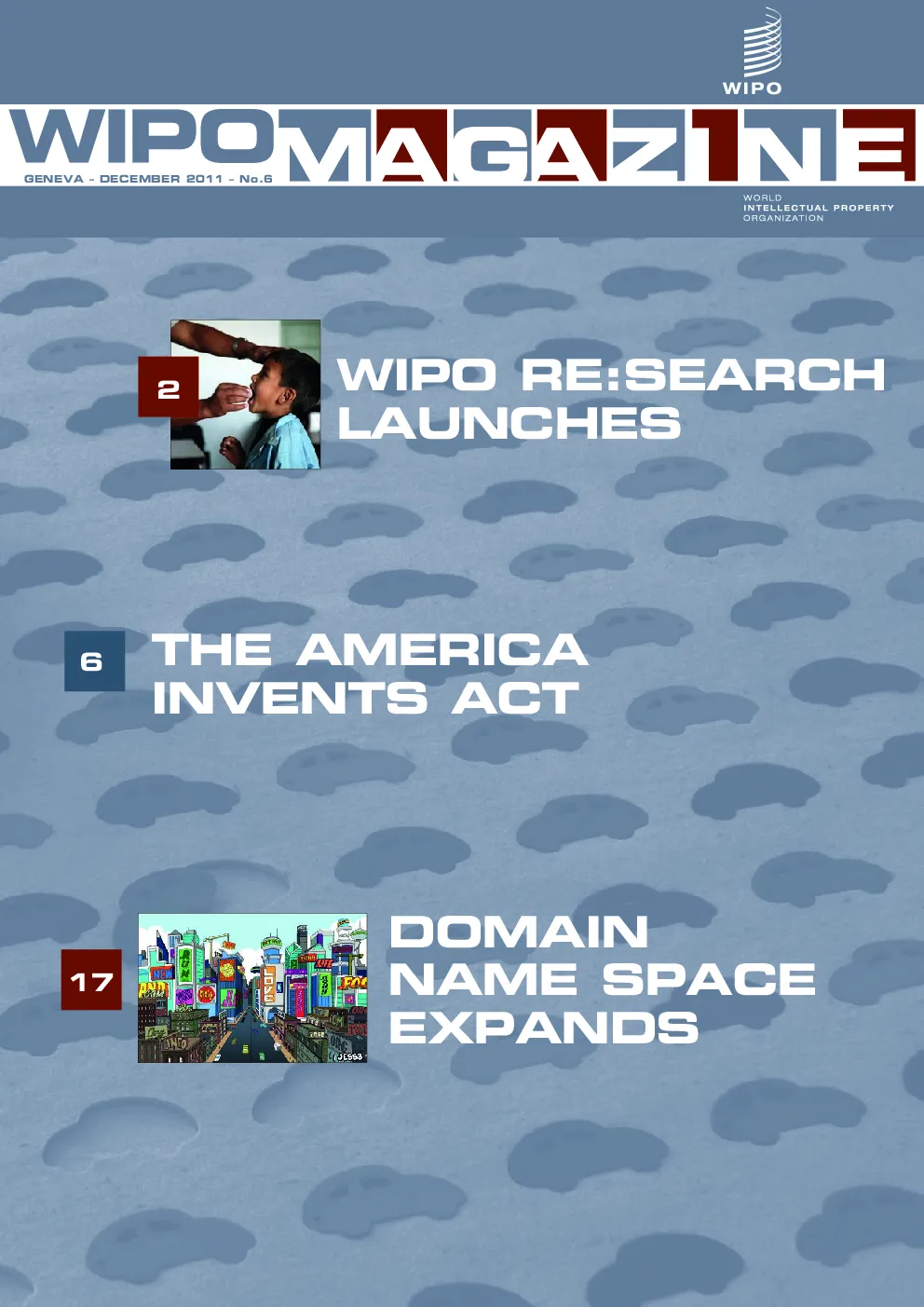
WIPO Re:SeaRChLaUnCheS TheaMeRICaInvenTSaCT6 DOMaInnaMe SPaCeeXPanDS contentS WIPO Re:SeaRCh –IP at Work for SocIal BenefIt The GLOBaL IMPaCT Of The aMeRICaInvenTS aCT SafeGUaRDInG CULTURaL heRITaGe –the caSe of the Sacred WandjIna IanhaRGReaveS On aDaPTInG IPTOThe DIGITaL aGe11 ThefUTURe Of PUBLIShInG–aVeteran’S PerSPectIVe14 navIGaTInG an eXPanDeD DOMaInnaMe LanDSCaPe17 DeSIGn In POLanD–tranSItIonto ModernIty20 hOMaGe TO STeve JOBS–aPIoneer of functIon and forM23 WIPO MagazIne Issue 6/2011 acknowledgementsK. Sebati, T. Bombelles, p. 2D. Zografos, p. 8B. Beckham, p. 17 Cover imageDesigner: Joanna Rusin WIPO Re:SeaRCh –IP atWork forSocIalBenefIt apioneering initiative that promises to transform the public health landscape in developing countrieswas launched at WIPO on October 26, 2011. WIPO Re:search is an open innovation research platform thatbrings together public and private-sector partners to catalyze research into the discovery, development anddelivery of drugs, vaccines and diagnostics for neglected tropical diseases (nTDs), malaria and tuberculosis(TB).according to the World Health Organization (WHO),nTDs are largely a symptom of poverty and disad-vantage and blight the lives of over a billion people around the world. Hardest hit are the poorest of thepoor often living in remote rural areas, urban slums, shantytowns or conflict zones. These diseases maim,disfigure, debilitate and often claim the lives of those affected. Lacking political clout and the means tobuy treatments, the needs of afflicted communities have largely been ignored. WIPO Re:search endeavorsto fill the gaps in much-needed research by putting IP to work for social benefit. WIPO Magazine exploresthe promise this groundbreaking platform holds in reshaping the global public health landscape. the objective available to the global research community on aroyalty-free basis to help accelerate the develop-ment of new and improved therapies. This bringsthe energy typically expended on diseases affect-ing the developed world to bear on NTDs. WIPORe:Search is “a groundbreaking example of how amulti-stakeholder coalition can put IP to work forsocial benefit,” observed WIPO Director GeneralFrancis Gurry at its launch. The prime objective of WIPO Re:Search is to boostresearch into NTDs, malaria and TB – to acceleratethe discovery, development and delivery of betterand more effective therapies for those who needthem. For a number of these diseases, effective andsafe medicines are available, although increasingdrug resistance is a problem. For many othersthe available treatments are archaic, even toxic.Against this backdrop, there is a huge need forcontinued research into more effective therapiesto treat these diseases. WIPO Re:Searchpromises to acceleratethe development anddelivery of new andmore effective drugsto treat NTDs, malariaand TB how it works WIPO Re:Search has three main components: A fully searchable public database (www.wipore-search.org), hosted by WIPO, containing informa-tion about available IP assets, information andresources;A Partnership Hub managed by BIO Ventures forGlobal Health (BVGH) to foster partnershipsbetween providers (e.g., pharmaceutical compa-nies) and NTD researchers, and provide informa-tion about available licensing and research col-laboration opportunities, networking possibili-ties and funding options;Services to support and facilitate licensing nego-tiation, and to identify research needs andopportunities with technical advice from theWorld Health Organization (WHO). WIPO Re:Search is an unprecedented collabora-tion bringing together a broad coalition of publicand private-sector institutions, including leadingpharmaceutical companies, publicly-funded medi-cal research institutes and councils, and universi-ties. All partners have agreed to make valuableintellectual property (IP) assets and know-how To become a member of WIPO Re:Search – as auser, provider or supporter – an organization mustadhere to the project’s Guiding Principles. Theseinclude a commitment that IP accessed throughWIPO Re:Search will be licensed on a royalty-free just about formal IP such as patents. It makes availablea wide range of information, studies and data on clini-cal trials providing researchers with invaluable insightsinto what has worked and what has not. Sharingresearch means that “some of the things that havebeen learned by trial and error can be better under-stood by people who want to further the research,”noted David Brennan, CEO of AstraZeneca andPresident of the International Federation of Pharma-ceutical Manufacturers and Associations (IPFMA). basis for research and development (R&D) on NTDsin any country; and on a royalty-free basis for thesale of NTD medicines in, or to, least developedcountries (LDCs). The database includes a wide variety of contribu-tions relevant to NTDs, malaria and TB, including: compounds and compound libraries;unpublished scientific results;regulatory data and dossiers;s