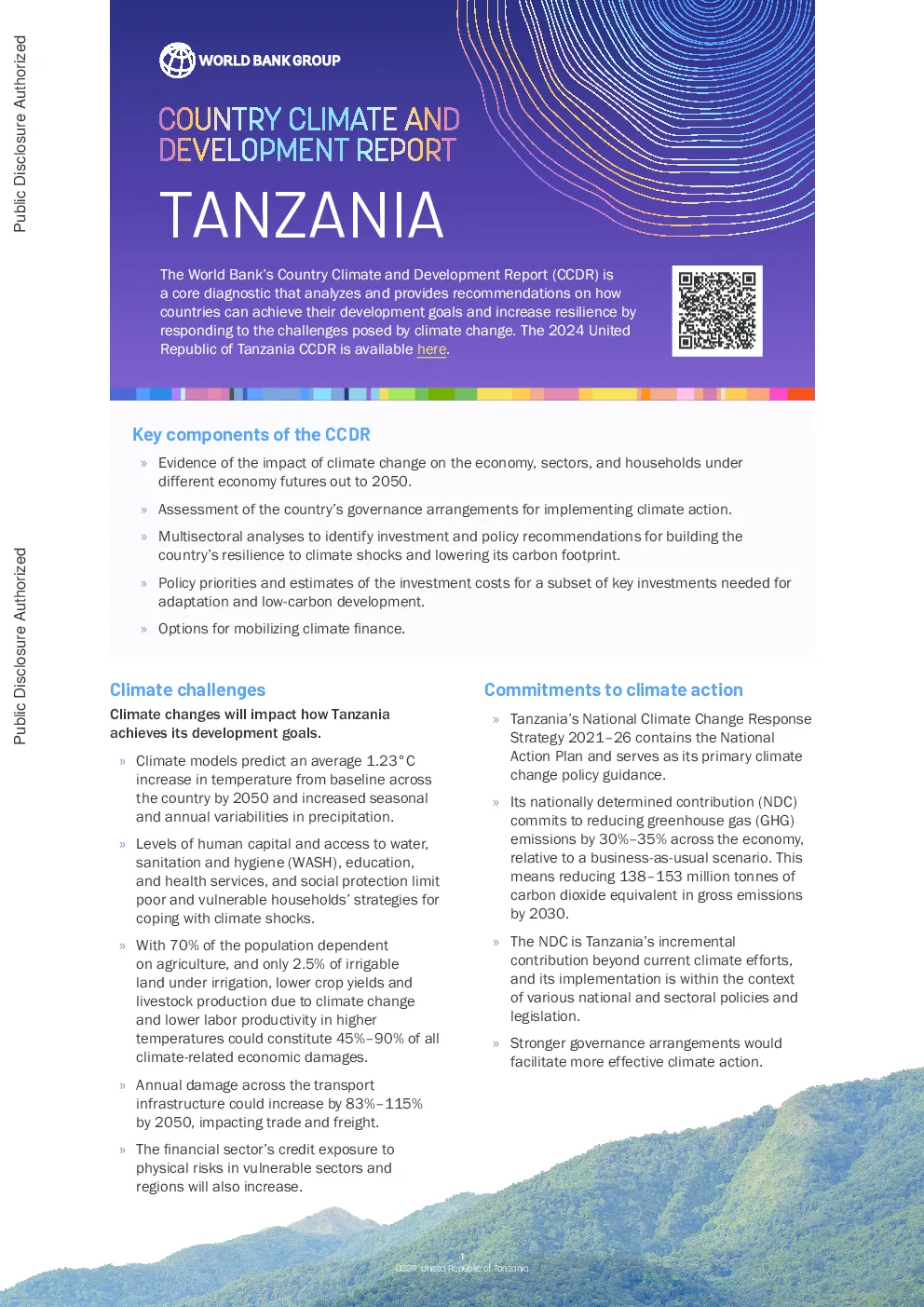
The World Bank’s Country Climate and Development Report (CCDR) for the United Republic of Tanzania highlights the significant impacts of climate change on the country’s economy, sectors, and households, along with recommendations for building resilience and lowering carbon emissions. Key findings and recommendations include:
Climate Challenges
- Temperature and Precipitation: Climate models predict a 1.23°C temperature increase by 2050, with increased seasonal and annual precipitation variability.
- Economic Damages: Climate change could cause 45%–90% of all climate-related economic damages, particularly affecting agriculture (70% of the population dependent) and infrastructure.
- Infrastructure Risks: Annual damage to transport infrastructure could rise by 83%–115% by 2050, impacting trade.
- Financial Sector Vulnerability: The financial sector’s credit exposure to physical risks in vulnerable sectors and regions will increase.
Commitments to Climate Action
- National Climate Change Response Strategy (2021–26): Serves as primary climate policy guidance.
- Nationally Determined Contribution (NDC): Commits to reducing GHG emissions by 30%–35% (138–153 million tonnes of CO2 equivalent by 2030).
- Governance Improvements: Stronger governance arrangements are needed for effective climate action.
Human Capital and Social Protection
- Adaptive Social Protection: Include climate-affected areas in social protection registries and fund at least Sub-Saharan Africa average levels (1.6% of GDP).
- Universal WASH Access: Prioritize implementation in vulnerable regions and address urban water service inefficiencies.
- Universal Health Care: Ensure coordination on disaster risk awareness, raise awareness of climate impacts on health, and improve monitoring.
- Education Services: Promote climate-resilient infrastructure, raise awareness, expand curriculum coverage, and encourage enrollment in climate-related fields.
Resilience and Productivity of Land, Water, and Agriculture
- Irrigation Systems: Improve governance, establish micro-irrigation funds, and consider hydrological realities.
- Cadaster and Land Use Planning: Accelerate cadaster establishment and promote village and district land use planning.
- Natural Habitat Management: Update the 2002 Integrated Tourism Masterplan for climate resilience, address human-wildlife conflict, and consider climate in tourism expansion.
- Forest Management: Support commercial forest plantation management, incentivize natural regeneration, and strengthen charcoal revenue collection.
- Biomass-Energy and Clean Cooking: Support sustainable biomass production and accelerate clean cooking adoption.
- Climate-Resilient Farming: Support micro-irrigation, improve livestock breeds, promote conservation agriculture, redirect fertilizer subsidies, and improve access to extension services and insurance.
Resilient and Low-Carbon Infrastructure and Cities
- Transport Networks: Improve drainage, pave unpaved links, establish asset inventory databases, and implement robust planning.
- Renewable Energy: Strengthen legal and regulatory frameworks, develop a climate resilience strategy for the power sector, and examine water allocation trade-offs.
- Global Decarbonization: Explore market opportunities for gold, nickel, and graphite resources and implement sectoral reforms.
- Climate-Resilient Cities: Develop risk-informed plans, mainstream resilient standards, and expand nonmotorized and public transportation systems.
Resilient, Low-Carbon Digital Infrastructure
- Multisectoral Interventions: Focus on climate-positive, resilient, and inclusive growth interventions.
Strengthening Climate Commitments
- Institutional Coordination: Improve coordination and governance frameworks, mainstream climate considerations into government systems, increase stakeholder engagement, and ensure data-informed decision-making.
- Financial Sector: Strengthen climate risk management practices.
Financial Needs and Mobilization
- Climate Action Funding: Tanzania estimates $19.23 billion is needed by 2030 to achieve its NDC commitments.
- Financing Options: Include public financing, private financing, dedicated climate finance, and engagement with the private sector.
Conclusion
Climate change poses significant risks to Tanzania’s development goals, but proactive measures can build resilience and achieve sustainable growth. The CCDR provides a comprehensive roadmap for climate action, emphasizing the need for institutional improvements, stakeholder engagement, and financial mobilization to meet climate commitments and reduce vulnerabilities.