您的浏览器禁用了JavaScript(一种计算机语言,用以实现您与网页的交互),请解除该禁用,或者联系我们。 [城市土地学会]:2025寒潮来袭:极端严寒与房地产研究报告:潜在风险与抗寒韧性策略 - 发现报告

2025寒潮来袭:极端严寒与房地产研究报告:潜在风险与抗寒韧性策略

房地产 2025-01-06 城市土地学会 carry~强
报告封面

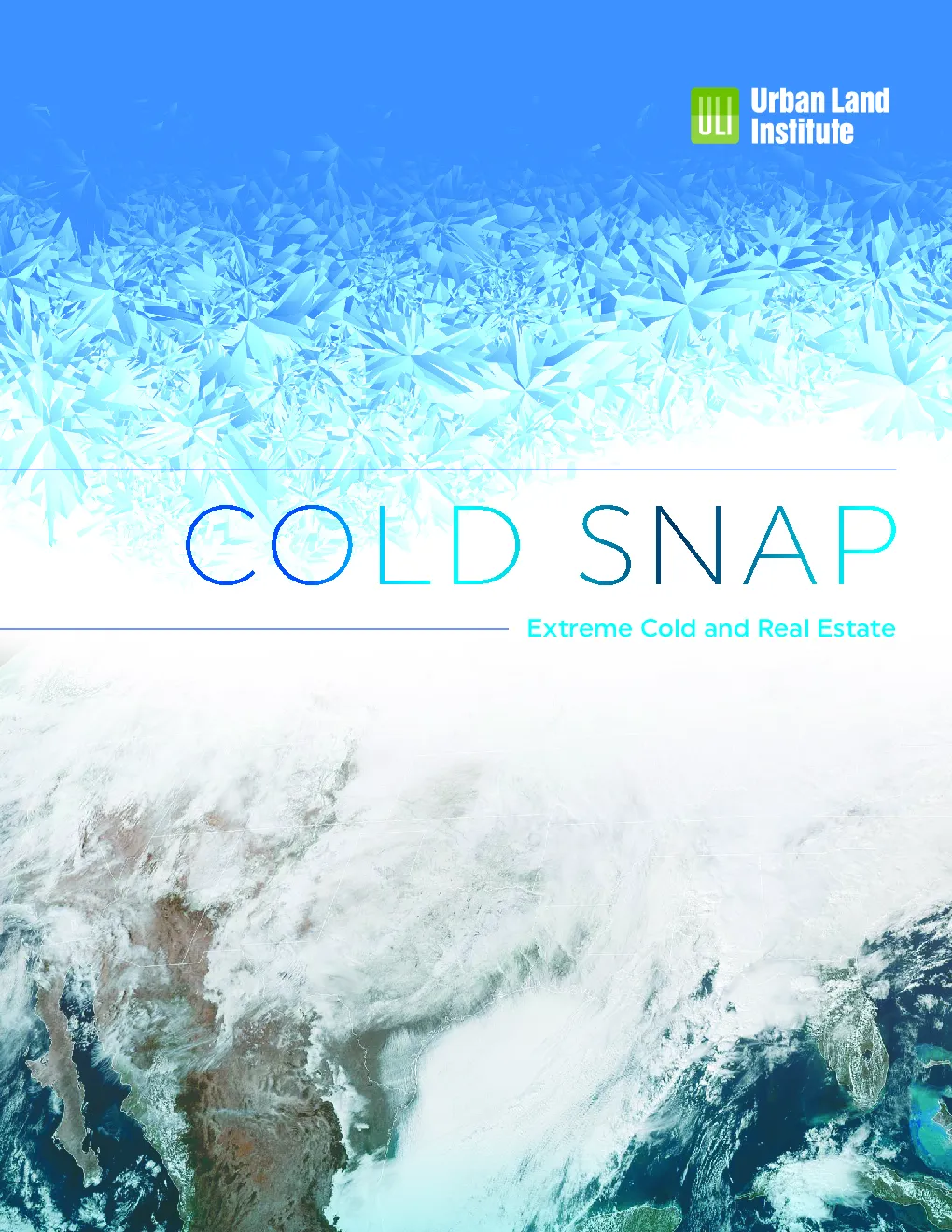
Extreme Cold and Real Estate COVER PHOTO:Winter Storm Uri covering the eastern thirdof the United States on February 15, 2021. (NOAA) © 2024 Urban Land Institute 2001 L Street, NW | Suite 200 | Washington, DC 20036-4948 All rights reserved. Reproduction or use of the whole orany part of the contents without written permission of the Recommended bibliographic listing: Urban Land Institute.Cold Snap: Extreme Cold and Real Estate. Washington, DC: ABOUT THE URBAN LAND INSTITUTE The Urban Land Institute is a global, member-drivenorganization comprising more than 48,000 real estateand urban development professionals dedicated toadvancing the Institute’s mission to shape the future real estate brokers, appraisers, attorneys, engineers,financiers, and academics. Established in 1936, theInstitute has a presence in the Americas, Europe, More information is available atuli.org. Follow ULIonX (formerly known as Twitter),Facebook,LinkedIn, ULI’s interdisciplinary membership represents all aspectsof the industry, including developers, property owners, ABOUT ULI’S RANDALL LEWIS CENTER ULI Randall Lewis Center for Sustainability in Real Estateleads the real estate industry in creating places andbuildings where people and the environment thrive. Incollaboration with ULI members and partners, theRandall Lewis Center drives industry transformation, goals via cutting-edge research, global convenings,community technical assistance, and other strategies.The center’s main programs are Decarbonization, Urban Discover transformative practices for real estateand land use at uli.org/sustainability. Connect with ABOUT THIS REPORT This report introduces real estate owners, developers,and investors to the risks posed to real estate byextreme cold and other hazards typically associatedwith winter. While many prominent climate hazardstake place in other seasons—hurricanes, wildfires, and of the risks and resilience measures available to mitigatethese hazards is a key aspect of any climate andsustainability strategy. This report presents the businesscase for cold-resilient buildings and the potential As global temperatures rise from accelerating climatechange, extreme temperature swings—both coldsnaps and heat waves—are causing increasing damageand disruption. However, extreme cold and stormsthat bring snow, ice, and freezing rain can receive less Nonetheless, cold waves and winter storms can bejust as destructive, forming storm fronts hundreds ofmiles long and bringing plunging temperatures thatinfrastructure cannot withstand, all causing tremendous Storm Filomena in 2021 dropped more snow on Madrid than had been seen since 1971, leading to five deaths and causing an estimatedUS$2.2 billion in damages. The risk from these hazards, long confined to northern regions inNorth America and Europe, has begun to reach more southerlylocales that have not designed their built environments with extreme Winter storm Uri, which brought devastation to Texasin 2021, was a stark lesson in this new reality. Thusfar the world’s costliest winter storm on record, Uricreatedover $30 billion in damage, knocked out thepower grid for millions of people for days, and led to246 deaths—more thanHurricane Sandyin 2012—and caused water pipes to freeze and burst in manybuildings. Over500,000 insurance claimswere filed.Additionally, winter storm Eunice, which hit Ireland Warming overall may also increase theoccurrence of wetter, and therefore heavier,snow. “Building code uses historicalmodels. It says, ‘this is the kind of snowand these are the weights we’ve had Firms savvy at assessing climate risk, such as JBGSMITH, a real estate investment trust with office andmultifamily holdings primarily in the Washington, D.C.,metro area, are using detailed risk assessments tolook comprehensively at asset- and market-level riskand resilience factors before investing (see ULI’s After reviewing the analysis, “the upshot was that itinformed how we think about whether or not we’regoing to enter a market and if so, the types of assets To that end, JBG is examining whether assets havestrong backup power sources and what buildingconstruction and energy systems look like to determinewhether the properties can be comfortably inhabited“whether it’s 25 degrees or 105 degrees outside,” asJackson says. Risk is particularly high in older assets, JBG SMITH had developed a robust physical riskassessment and management strategy, which includesfinancial modeling, as Kim Pexton, senior vice presidentof sustainability, describes. When the firm was lookingat markets around the country for expansion of itsworkforce housing investment management platform,LEO Impact Capital, red-flag risks from extreme cold These assets pose both livability and insurance concernsthat affect decision-making. “There’s a significant issuegoing on right now in the multifamily space aroundrapidly escalating insurance costs,” Jackson points out.These properties would be more difficult to insureand