解决阻碍千兆经济发展的数据赤字——破产
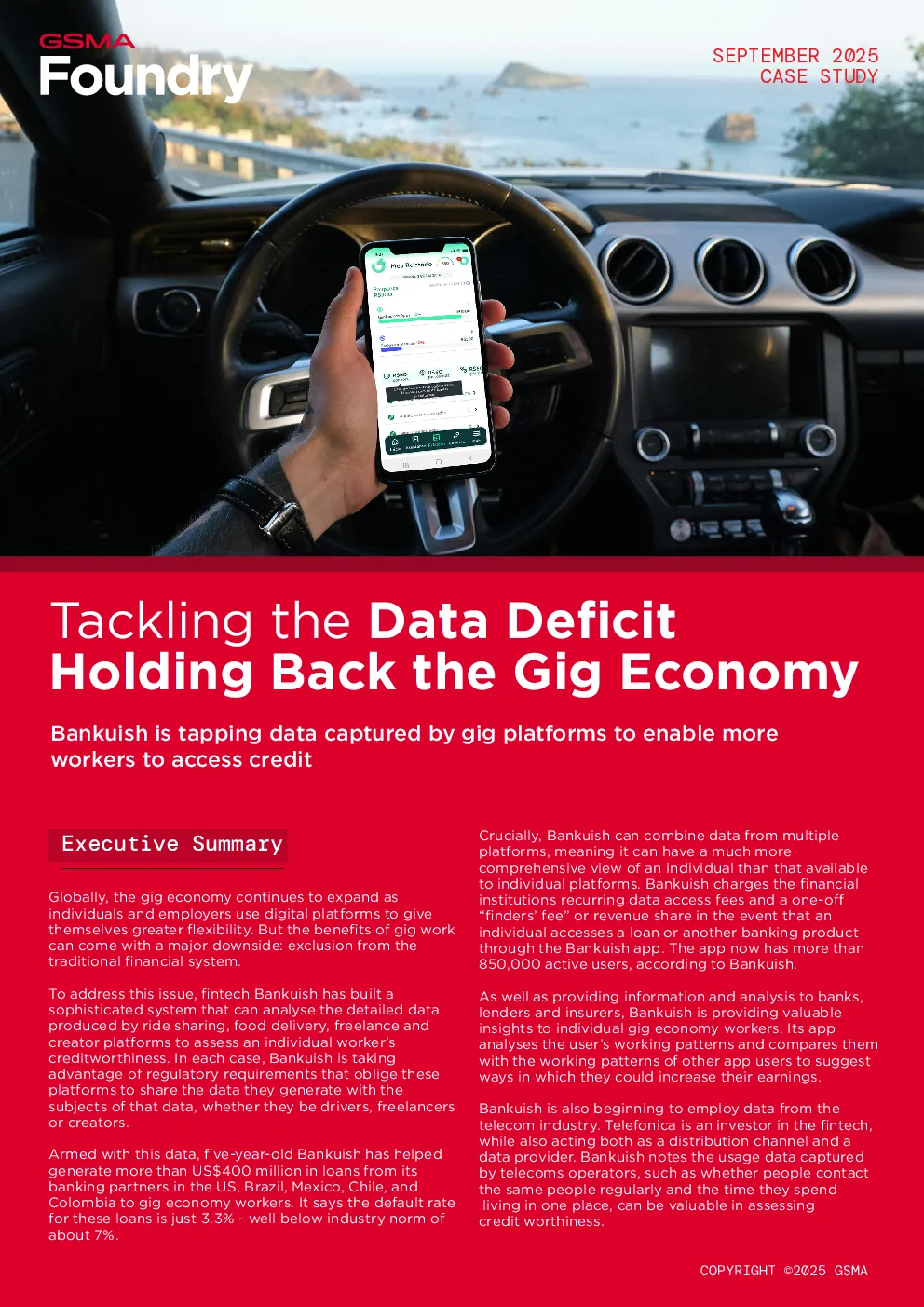
Bankuish is tapping data captured by gig platforms to enable moreworkers to access credit Crucially, Bankuish can combine data from multipleplatforms, meaning it can have a much morecomprehensive view of an individual than that availableto individual platforms. Bankuish charges the financialinstitutions recurring data access fees and a one-off“finders’ fee” or revenue share in the event that anindividual accesses a loan or another banking productthrough the Bankuish app. The app now has more than850,000 active users, according to Bankuish. ExecutiveSummary Globally, the gig economy continues to expand asindividuals and employers use digital platforms to givethemselves greater flexibility. But the benefits of gig workcan come with a major downside: exclusion from thetraditional financial system. To address this issue, fintech Bankuish has built asophisticated system that can analyse the detailed dataproduced by ride sharing, food delivery, freelance andcreator platforms to assess an individual worker’screditworthiness. In each case, Bankuish is takingadvantage of regulatory requirements that oblige theseplatforms to share the data they generate with thesubjects of that data, whether they be drivers, freelancersor creators. As well as providing information and analysis to banks,lenders and insurers, Bankuish is providing valuableinsights to individual gig economy workers. Its appanalyses the user’s working patterns and compares themwith the working patterns of other app users to suggestways in which they could increase their earnings. Bankuish is also beginning to employ data from thetelecom industry. Telefonica is an investor in the fintech,while also acting both as a distribution channel and adata provider. Bankuish notes the usage data capturedby telecoms operators, such as whether people contactthe same people regularly and the time they spendliving in one place, can be valuable in assessingcredit worthiness. Armed with this data, five-year-old Bankuish has helpedgenerate more than US$400 million in loans from itsbanking partners in the US, Brazil, Mexico, Chile, andColombia to gig economy workers. It says the default ratefor these loans is just 3.3% - well below industry norm ofabout 7%. COPYRIGHT©2025 GSMA Globally, the gig economy continues to growstrongly. It will be worth more than US$2 trillion by2032, growing at a CAGR of more than 16% between2021-2031, according to Business Research Insights.In the US, 36% of the U.S. workforce—58 millionpeople – already work in the gig economy, usingflexible platforms, such as Uber, Deliveroo andYouTube, to choose their own shifts as drivers ormake deliveries, and to create content, accordingto consultancy McKinsey. The tools for measuringcreditworthiness haven’t evolvedto reflect the way people worktoday Jose V. Fernandez- CEO and founder of Bankuish People choose to work in this way for variousreasons: some traditional jobs were displaced duringthe pandemic, while many individuals see gig roles asopportunities to boost their income, enjoy flexibility,or both. But with the benefits of gig work comes acritical downside: potential exclusion from thetraditional financial system. makes for a precarious living. If an Uber driver’scar breaks down, without a credit score, they can’taccess a loan on reasonable terms to fix thevehicle. That means they either take a loan with anextortionate interest rate or they can’t work and mayno longer be able to cover their rent, their children’sschool fees, their credit card or the cost of groceries. “Created in the early 20th century to help retailersevaluate repayment risk when the workforce shiftedfrom agrarian self-employment to wage-earningfactory and office jobs, credit scoring systemsremain largely wage-income-centric,” says Jose V.Fernandez, CEO and founder of Bankuish, aMiami-based fintech. “The tools for measuringcreditworthiness haven’t evolved to reflect the waypeople work today.” From the banks’ perspective, a lack of creditinformation is also a major problem: they end upceding a big part of the credit market to others.“This gap isn’t just bad for workers, it’s a missedopportunity for banks and lenders,” notes Jose V.Fernandez. Tapping a new source oftruth As a result, hundreds of millions of people aroundthe world can’t access formal credit. About 70%of Latin Americans are considered unbanked orunderbanked, according to Latin America Reports,while more than 50% of Americans would likely bedeclined for a bank loan due to low or non-existentcredit scores, according to consultancyOliverWyman. When running another fintech (Atlas Money)facilitating the provision of credit in West Africa,Jose V. Fernandez noted that many potentialborrowers were working in the gig economy, asdrivers and couriers. “In their apps, there is a lotof information, and the more I looked into thoseapps, the more I realised that, as a risk analyst, asan underwriting analyst, I would feel a lot morecomfortable about being able to lend