在不确定性时代实现增长——国际货币基金组织2025年度报告
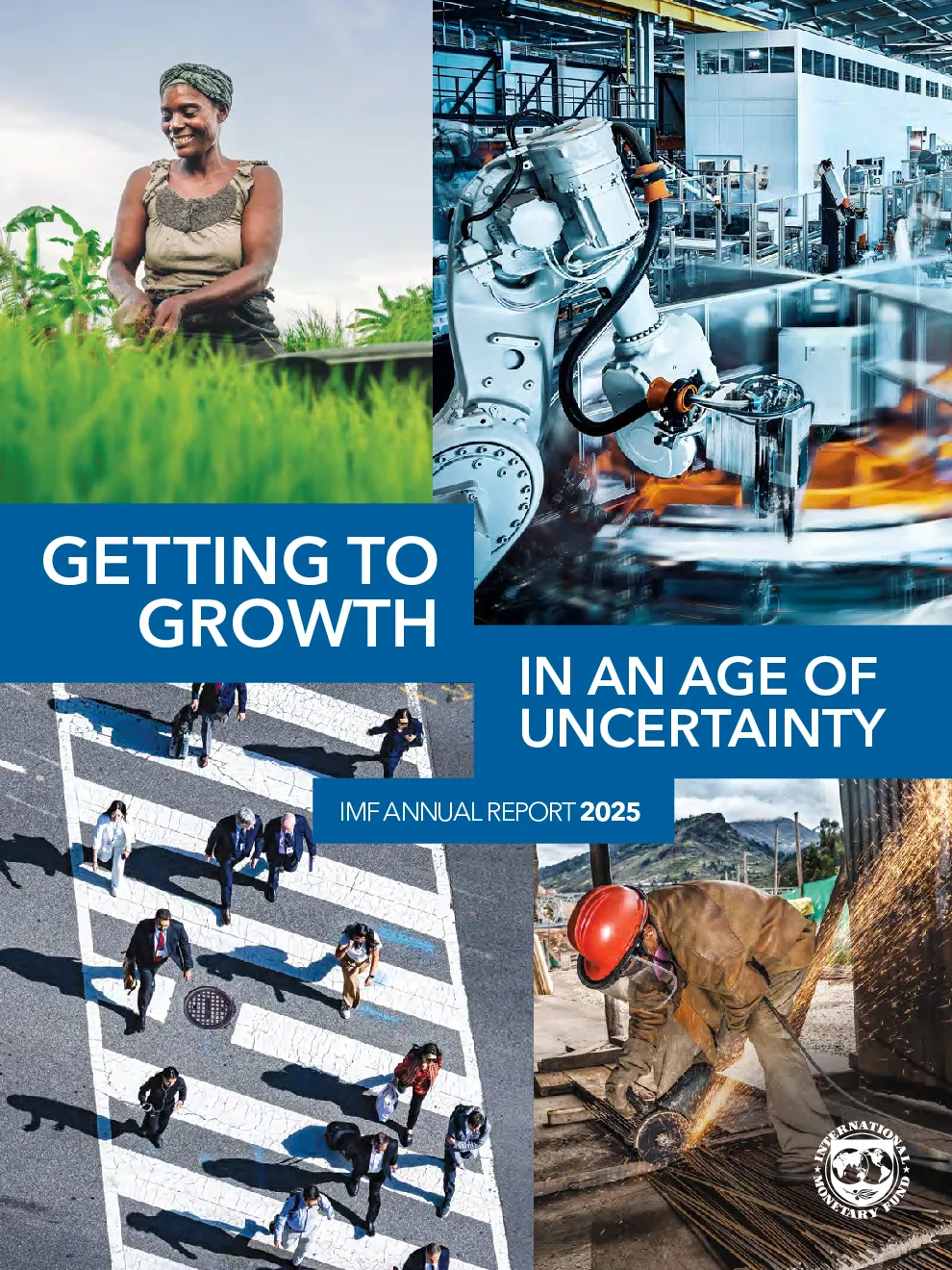
IN AN AGE OFUNCERTAINTY IMF ANNUAL REPORT2025 THE WORLD ISFACINGEXCEPTIONALUNCERTAINTY THE GLOBAL TRADINGSYSTEM IS BEING RESHAPED. MAJOR TRANSITIONS ARE MAKINGTHEECONOMIC ENVIRONMENTMORE CHALLENGING. IMF ANNUAL REPORT 2025 Against this backdrop, the foremost economicchallenge facing our members is growth—or rather,the lack of it. Achieving stronger growth will requirecountries to double down on domestic efforts tostrengthen economic and financial stability, andimprove their own growth potential. In the context ofgreater global uncertainty, the work starts at home. THESE DEVELOPMENTSCOME ON TOP OF THEUNCERTAINTY CAUSEDBY ONGOING CONFLICTSAND MAJOR TRANSITIONSTHAT MAKE THE ECONOMICENVIRONMENT MORECHALLENGING ANDUNPREDICTABLE. Transformational reforms to lift productivity andboost growth are imperative: less red tape, increasedcompetition, more entrepreneurship, a simpler andmore coherent tax system, better digital structures,higher levels of economic participation, and deepercapital markets. Technological shifts and the artificial intelligencerevolution are generating significant adjustmenteven as they promise new opportunities. Naturaldisasters and more frequent extreme weathercontinue to impose severe macroeconomic costs onmany countries. Policy efforts are needed to restore fiscalsustainability and build sufficient buffers to managefuture shocks, which could be sizable and recurrent.This can be done gradually but should start now, soas to leave room for priority spending. The longercountries wait, the sharper the adjustment could be. The trade tensions and associated tariffs areexacerbating the low-growth/high-debt outlook.The IMF lowered its near-term growth forecastsin April to 2.8 percent this year and 3 percent for2026, and five-year growth forecasts remain at theirlowest in decades. While working on the home front, countriesshould also collaborate internationally to promote astable and predictable trade environment, facilitatedebt restructuring, and address shared challenges.Intensification of trade tensions could further reducenear- and long-term growth while divergent andrapidly shifting policy stances or deterioratingsentiment could trigger drops in asset prices,exacerbating risks to financial stability. Global inflation is falling but at a slower and lesssynchronous pace than previously. This is leading tomore policy divergence between central banks, withknock-on effects on asset prices and exchange rates. Low-income countries have been hit particularlyhard by the current external environment. Afterdemonstrating resilience through a series ofshocks—including the COVID-19 pandemic andspillovers from Russia’s war in Ukraine—they areimplementing difficult and much-needed reformsto restore macroeconomic stability. Nevertheless,under current conditions, these countries risk beingknocked off the path toward income convergenceand poverty reduction. IN SHORT, THE CURRENTENVIRONMENT DEMANDSCLARITY, COMMITMENT, ANDCOORDINATION. The IMF is developing and tailoring its advice tohelp members meet these exceptional challenges.To this end, it has sought fresh perspectives with the creation of a new Advisory Council onEntrepreneurship and Growth. The IMF will stay focused on its mandate ofpromoting macroeconomic and financial stability,further deepening its work in assessing spilloversfrom trade and industrial policy measures, andanalyzing external imbalances. As the global landscape evolves, the IMF remainsflexible and responsible to the membership’schanging needs, adapting as necessary todevelopments in the world economy and policypriorities. This is illustrated by a number of decisions,including the maintenance of higher-level accesslimits; the reforms to a key loan vehicle forlow-income countries—the Poverty Reduction andGrowth Trust; and the update to the Charges andSurcharge Policy—all highlighted by the ManagingDirector in her letter. Figure 0.1. The IMF is also dedicated to ensuring itsrecommendations are made with an eye to protectingthe most vulnerable. Its policy advice encouragesjob creation, enhances social safety nets, tacklescorruption, and contributes to equitable access toresources. Its capacity development strengthensinstitutional frameworks and equips policymakerswith the skills to design and implement effectiveeconomic policies. TRADE POLICYUNCERTAINTY IS OFFTHE CHARTS Eighty years on from its founding, the Fundcontinues to wield its unique convening power topromote multilateral cooperation in addressingglobal challenges. It facilitates dialogue amongmember countries to promote collaboration on abroad range of cross-border issues. Times and circumstances change, but theIMF’s commitment to fostering global monetarycooperation, ensuring financial stability, andpromoting sustainable economic growth endures. Sources: Caldara and others 2020; and IMF staff calculations.Note: October 2024 = 100. Monthly data; April reflectsaverage to April 14. Message from theManagingDirect