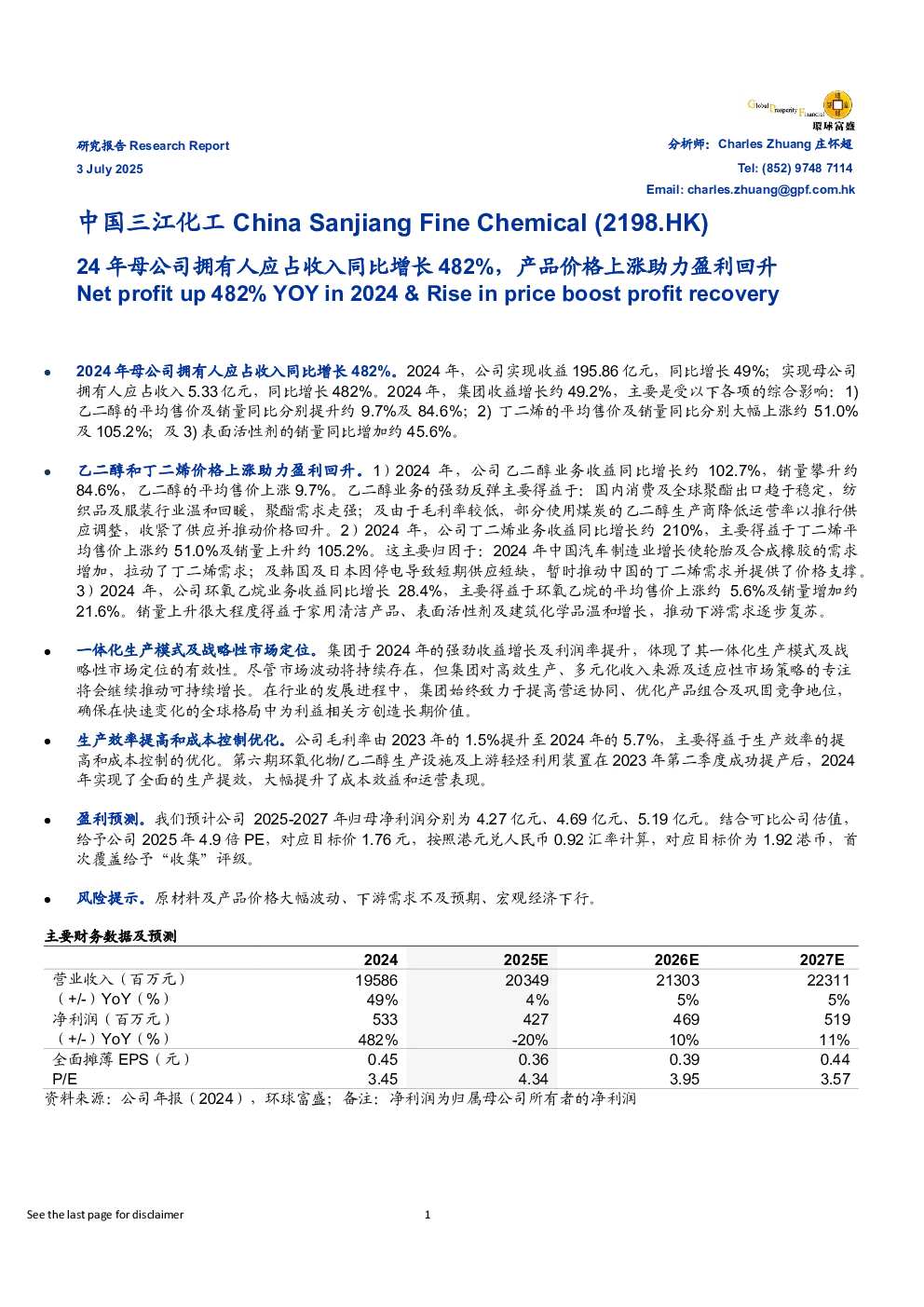
2027E223115%51911%0.443.57 ⚫⚫⚫ Seethe last page for disclaimerSummary➢In 2024, revenue attributable to the owners of the parent company increased by 482% year-on-year. Thecompany achieved revenue of 19.586 billion yuan in 2024, marking a 49% year-on-year increase. Therevenue attributable to the owners of the parent companyreached 533 million yuan, marking a 482% year-on-year increase. The group's revenue increased by approximately 49.2% in 2024, mainly due to thecombined impact of the following factors: 1) the average selling price and sales volume of ethylene glycolincreased by approximately 9.7% and 84.6% year-on-year, respectively; 2) the average selling price andsales volume of butadiene increased significantly by around 51.0% and 105.2% year-on-year, respectively;and 3) sales of surfactants increased by around 45.6% year-on-year.➢Rising prices of ethylene glycol and butadiene boost profit recovery. In 2024, the company's ethylene glycolbusiness revenue increased by around 102.7% year-on-year, with sales climbing by around 84.6% and theaverage selling priceofglycol rising by 9.7%. This strong rebound in the ethylene glycol business is primarilydue to stabilised domestic consumption and global polyester exports, a moderate recovery in the textileand clothing industry, and strengthened polyester demand. Due to low gross profit margins, some coal-using ethylene glycol producers have reduced operating rates to adjust supply, which has tightened supplyand driven price recovery. In 2024, the company's butadiene business revenue increased by around 210%year-on-year, primarily due to a 51.0% increase in the average selling price of butadiene and a 105.2%increase in sales volume. This growth is primarily attributed to China's expanding automobilemanufacturing sector, which increased demand for tyres and synthetic rubber, thereby driving up demandfor butadiene. Short-term supply shortages caused by power outages in South Korea and Japan temporarilyboosted China's demand for butadiene, providing price support. In 2024, the company's ethylene oxidebusiness revenue increased by 28.4% year-on-year, primarily due to an increase in the average selling priceof ethylene oxide by around 5.6%, coupled with a 21.6% increase in sales. The increase in sales is largelydue to moderate growth in household cleaning products, surfactants and construction chemicals, whichhave driven gradual recovery in downstream demand.➢Integrated production model and strategic market positioning. The group's strong revenue growth andimproved profit margin in 2024 reflect the effectiveness of this model and positioning. Despite ongoingmarket volatility, the Group's focus on efficient production, diversified revenue sources and adaptivemarket strategies will continue to drive sustainable growth. Throughout its development, the group hasremained committed to enhancing operational synergy, optimising the product portfolio and strengtheningits competitive position, thereby ensuring the creation of long-term value for stakeholders amid the rapidlyevolving global landscape.➢Improve production efficiency and optimise cost control. The company's gross profit margin increased from1.5% in 2023 to 5.7% in 2024, primarily due to improved production efficiency and optimised cost control.Upgrades to the sixth phase of the epoxy/ethylene glycol production facilities and the upstream lighthydrocarbon utilisation units were completed in the second quarter of 2023. These upgrades havesignificantly improved cost-effectiveness and operational performance, achieving comprehensiveproduction efficiency improvement in 2024.➢Profit forecast. We expect the company's net profit attributable to the parent company to be 427 millionyuan, 469 million yuan, and 519 million yuan respectively from 2025 to 2027. Based on the valuation ofcomparable companies, the company is given4.9xPE for 2025, corresponding toTPof 1.76yuan.Calculated at the exchange rate of HKD 0.92 to RMB, the corresponding target price is HKD1.92. Weinitiate with an"Accumulate" rating.➢Risk warning: Significant fluctuations in raw material and product prices, lower-than-expected downstreamdemand and a macroeconomic downturn pose risks. 4 5