黎巴嫩:世卫组织2025年卫生紧急 appeal
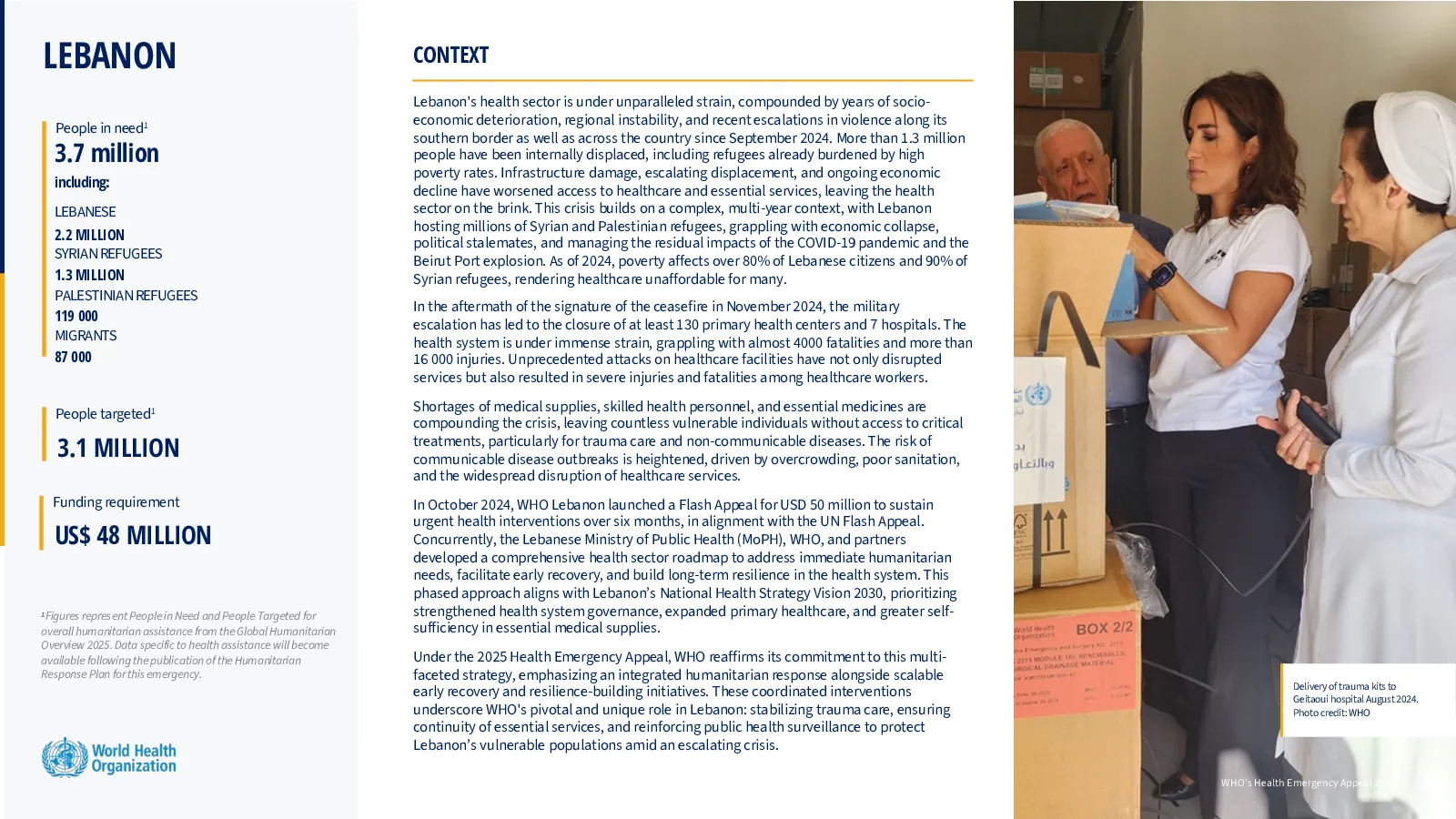
CONTEXT Lebanon's healthsector is under unparalleled strain, compounded by years of socio-economic deterioration, regional instability, and recent escalations in violence along itssouthern border as well as across the country since September 2024. More than 1.3 millionpeople have been internally displaced, including refugees already burdened by highpoverty rates. Infrastructure damage, escalating displacement, and ongoing economicdecline have worsened access to healthcare and essential services, leaving the healthsector on the brink. This crisis builds on a complex, multi-year context, with Lebanonhosting millions of Syrian and Palestinian refugees, grappling with economic collapse,political stalemates, and managing the residual impacts of the COVID-19 pandemic and theBeirut Port explosion. As of 2024, poverty affects over 80% of Lebanese citizens and 90% ofSyrian refugees, rendering healthcare unaffordable for many. People in need13.7 millionincluding:LEBANESE2.2 MILLIONSYRIAN REFUGEES1.3 MILLIONPALESTINIAN REFUGEES119 000MIGRANTS87 000 In the aftermath of the signature of the ceasefire in November 2024, the militaryescalationhas led to the closure of at least 130 primary healthcentersand 7 hospitals. Thehealth system is under immense strain, grappling with almost 4000 fatalities and more than16 000 injuries. Unprecedented attacks on healthcare facilities have not only disruptedservices but also resulted in severe injuries and fatalities among healthcare workers. Shortages of medical supplies, skilled health personnel, and essential medicines arecompounding the crisis, leaving countless vulnerable individuals without access to criticaltreatments, particularly for trauma care and non-communicable diseases. The risk ofcommunicable disease outbreaks is heightened, driven by overcrowding, poor sanitation,and the widespread disruption of healthcare services. People targeted1 3.1MILLION Funding requirement In October 2024, WHO Lebanon launched a Flash Appeal for USD 50 million to sustainurgent health interventions over six months, in alignment with the UN Flash Appeal.Concurrently, the Lebanese Ministry of Public Health (MoPH), WHO, and partnersdeveloped a comprehensive health sector roadmap to address immediate humanitarianneeds, facilitate early recovery, and build long-term resilience in the health system. Thisphased approach aligns with Lebanon’s National Health Strategy Vision 2030, prioritizingstrengthened health system governance, expanded primary healthcare, and greater self-sufficiency in essential medical supplies. US$48MILLION 1Figures represent People in Need and People Targeted foroverall humanitarian assistance from the Global HumanitarianOverview 2025. Data specific to health assistance will becomeavailable following the publication of the HumanitarianResponse Plan for this emergency. Under the 2025 Health Emergency Appeal, WHO reaffirms its commitment to this multi-faceted strategy, emphasizing an integrated humanitarian response alongside scalableearly recovery and resilience-building initiatives. These coordinated interventionsunderscore WHO's pivotal and unique role in Lebanon: stabilizing trauma care, ensuringcontinuity of essential services, and reinforcing public health surveillance to protectLebanon’s vulnerable populations amid an escalating crisis. WHO’S STRATEGIC OBJECTIVES 1.Strengthening integrated disease surveillance and laboratory capacity for effectivepublic health response:To boost Lebanon’s early warning systems and disease surveillance,WHO will focus on strengthening cholera response through water, sanitation, and hygiene(WASH) interventions and coordinated vaccination efforts, helping to mitigate and containpotential outbreaks. This will reinforce Lebanon's laboratory and disease surveillancecapacity for more effective public health responses to emerging threats.2.Ensuring scalable clinical care and protection during health emergencies:WHO aims to enhance Lebanon's ability to handle mass casualties by providing targeted support fortrauma care, essential medical supplies, and surge support, especially at critical healthfacilities. WHO will support primary healthcare centres, mobile clinics and mental healthservices in high-need areas to ensure uninterrupted access to essential healthcare forvulnerable populations, including displaced persons.3.Strengthening community engagement and resilience through comprehensive public health interventions:To build community resilience, WHO will stabilize health servicesacross Lebanon, focusing on restoring health infrastructure, expanding primary care access,and supporting essential services for trauma care, chronic disease management, and mentalhealth. Rapid training and surge capacity initiatives will address urgent needs in conflict-affected areas, fostering robust community engagement in public health.4.Enhancing health emergency preparedness and response capacities:Laying the groundwork for a resilient health system, WHO