索马里:世卫组织2025年健康紧急呼吁
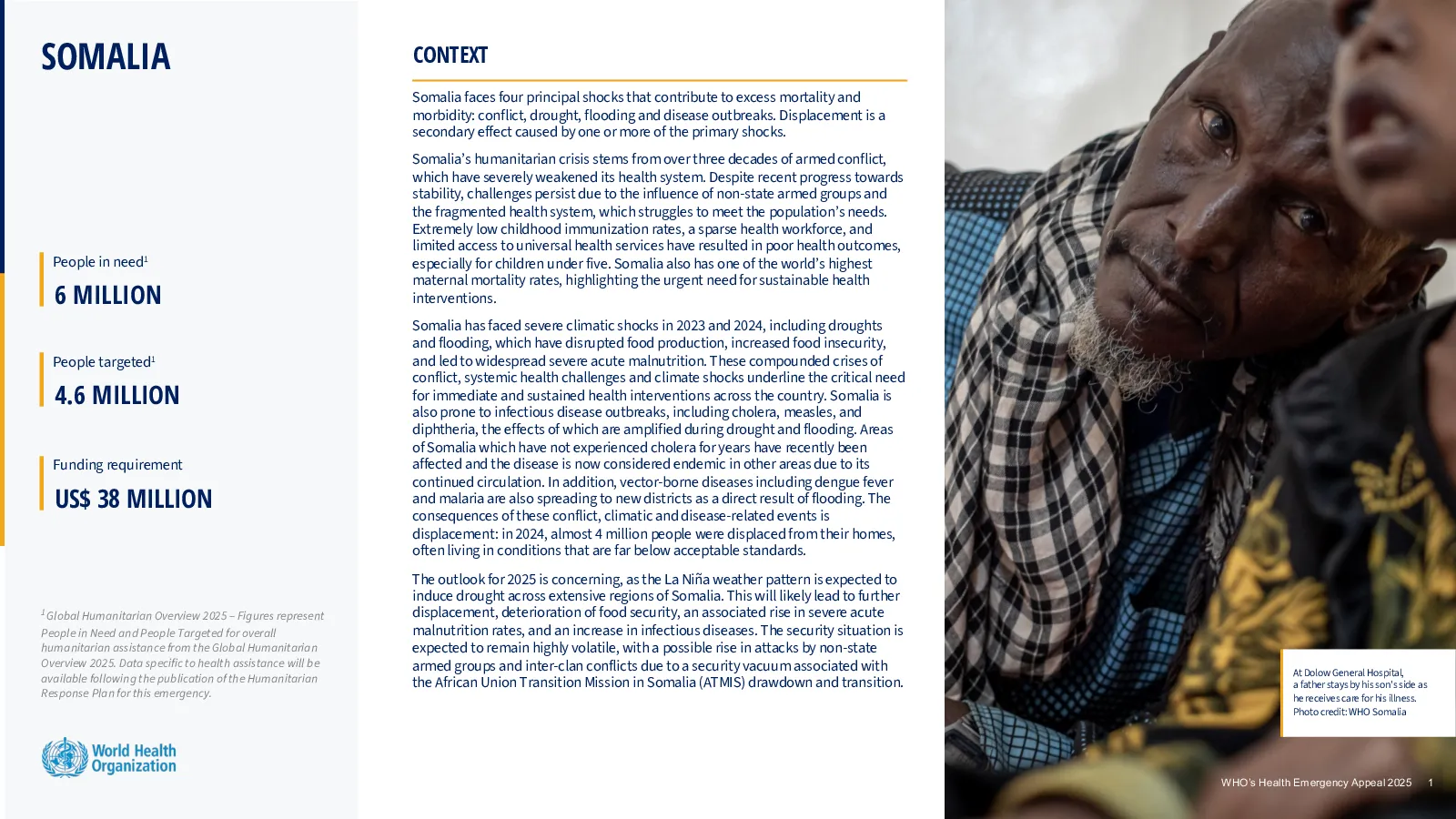
CONTEXT Somalia faces four principal shocks that contribute to excess mortality andmorbidity: conflict, drought, flooding and disease outbreaks. Displacement is asecondary effect caused by one or more of the primary shocks. Somalia’s humanitarian crisis stems from over three decades of armed conflict,which have severely weakened its health system. Despite recent progress towardsstability, challenges persist due to the influence of non-state armed groups andthe fragmented health system, which struggles to meet the population’s needs.Extremely low childhood immunization rates, a sparse health workforce, andlimited access to universal health services have resulted in poor health outcomes,especially for children under five. Somalia also has one of the world’s highestmaternal mortality rates, highlighting the urgent need for sustainable healthinterventions. Peoplein need16 MILLION Somalia has faced severe climatic shocks in 2023 and 2024, including droughtsand flooding, which have disrupted food production, increased food insecurity,and led to widespread severe acute malnutrition. These compounded crises ofconflict, systemic health challenges and climate shocks underline the critical needfor immediate and sustained health interventions across the country. Somalia isalso prone to infectious disease outbreaks, including cholera, measles, anddiphtheria, the effects of which are amplified during drought and flooding. Areasof Somalia which have not experienced cholera for years have recently beenaffected and the disease is now considered endemic in other areas due to itscontinued circulation. In addition, vector-borne diseases including dengue feverand malaria are also spreading to new districts as a direct result of flooding. Theconsequences of these conflict, climatic and disease-related events isdisplacement: in 2024, almost 4 million people were displaced from their homes,often living in conditions that are far below acceptable standards. People targeted1 4.6 MILLION Funding requirementUS$ 38 MILLION The outlook for 2025 is concerning, as the La Niña weather pattern is expected toinduce drought across extensive regions of Somalia. This will likely lead to furtherdisplacement, deterioration of food security, an associated rise in severe acutemalnutrition rates, and an increase in infectious diseases. The security situation isexpected to remain highly volatile, with a possible rise in attacks by non-statearmed groups and inter-clan conflicts due to a security vacuum associated withthe African Union Transition Mission in Somalia (ATMIS) drawdown and transition. 1Global Humanitarian Overview 2025–Figures representPeople in Need and People Targeted for overallhumanitarian assistance from the Global HumanitarianOverview 2025. Data specific to health assistance will beavailable following the publication of the HumanitarianResponse Plan for this emergency. AtDolowGeneral Hospital,afather stays by his son's side ashe receives care for his illness.Photo credit: WHO Somalia WHO’S STRATEGIC OBJECTIVES 1.Strengthen inter-sectoral coordination and collaboration:WHO will enhance coordination at national and sub-nationallevels, working closely with the government, the health cluster,and inter-cluster partners to ensure effective risk analysis anda coordinated response to Somalia’s complex emergencies. 2.Deliver life-saving health interventions: WHO will prioritizesustaining and delivering essential, life-saving healthinterventions to Somalia’s most vulnerable and marginalizedpopulations, adopting a people-centered approach. 3.Enhance health system resilience: Build and enhance thehealth system’s resilience to cope with future climate andconflict shocks and humanitarian and public health crises. WHO’s commitment to the well-being of Somalia’s peopleremains unwavering. Amid escalating challenges–fromclimate shocks to health emergencies–we arestrengthening health systems, ensuring life-saving care,and building resilience against future crises. With yourcontinued generosity, we can reach the most vulnerable,combat disease outbreaks, and provide essential servicesto those in need. Together, we can make a profounddifference in securing a healthier, more stable future forSomalia. Dr Renee Van deWeerdt, WHO Representative toSomalia A child patient and his motherreceiving care atDolowGeneralHospital, as the healthcare teamswork tirelessly to support theirrecovery.Photo credit: WHO / IsmailTaxta WHO 2025 RESPONSE STRATEGY WHO will continue to support Federal Member State Ministriesof Health to improve their coordination and response capacityfor managing health emergencies. In the event of a severeincident, WHO’s Incident Management Team (IMT) will bedeployed at national and sub-national levels to coordinate withhealth authorities at district and state levels. The coordinationensures that interventions align with national strategies andsystem-strengthening efforts to support the government’spriorities. OPERATIONAL PRESE