您的浏览器禁用了JavaScript(一种计算机语言,用以实现您与网页的交互),请解除该禁用,或者联系我们。 [联合国]:2024年食物浪费指数报告 - 发现报告

2024年食物浪费指数报告

食品饮料 2024-10-08 联合国 程思齐Sophie
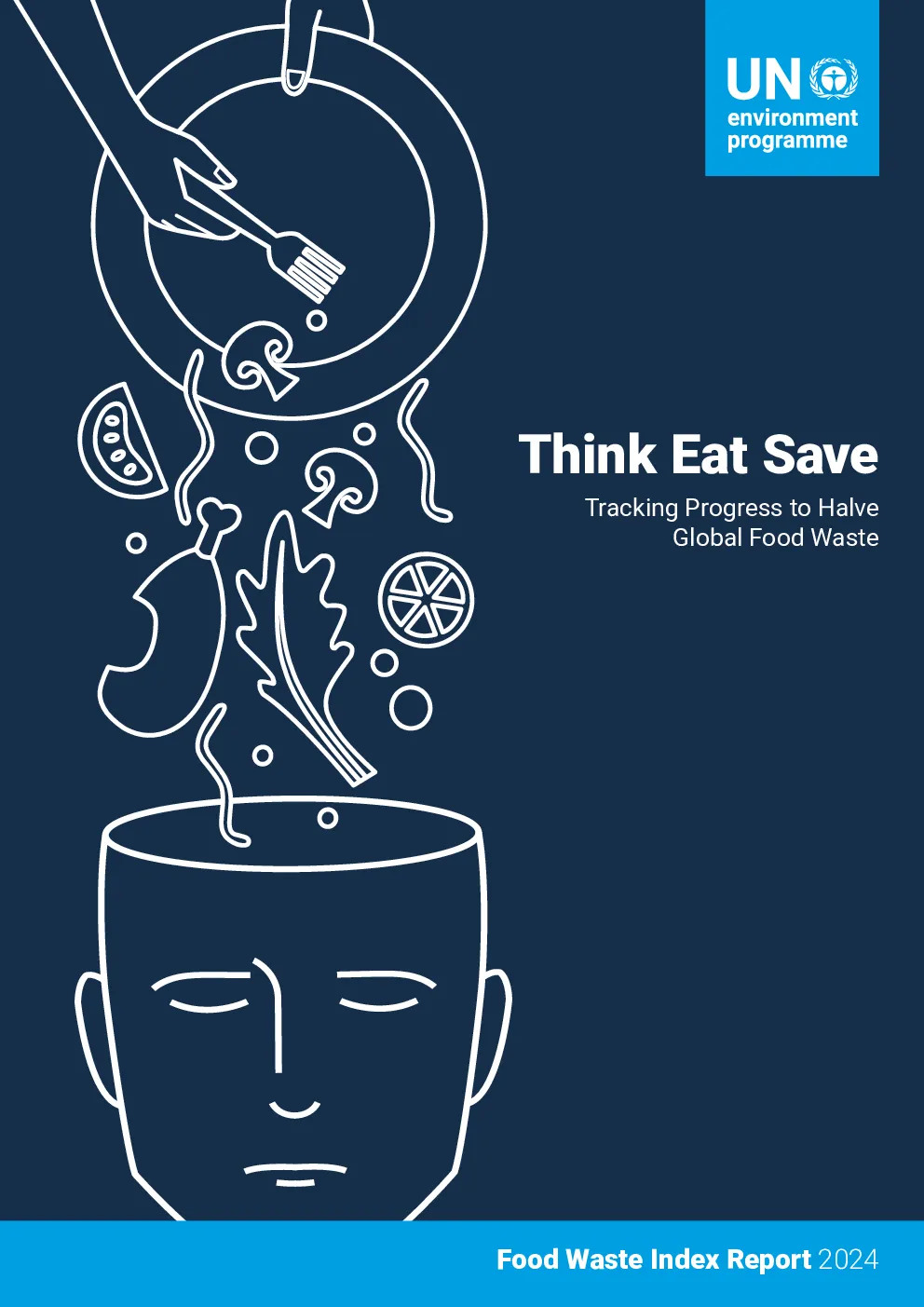
报告封面

Think Eat Save Tracking Progress to HalveGlobal Food Waste © 2024 United Nations Environment Programme ISBN: 978-92-807-4139-1 Job number: DTI/2629/NA This publication may be reproduced in whole or in part and in any form for educational or non-profit services without special permissionfrom the copyright holder, provided acknowledgement of the source is made. The United Nations Environment Programme wouldappreciate receiving a copy of any publication that uses this publication as a source. No use of this publication may be made for resale or any other commercial purpose whatsoever without prior permission in writingfrom the United Nations Environment Programme. Applications for such permission, with a statement of the purpose and extent of thereproduction, should be addressed tounep-communication-director@un.org. Disclaimers The designations employed and the presentation of the material in this publication do not imply the expression of any opinion whatsoeveron the part of the Secretariat of the United Nations concerning the legal status of any country, territory or city or area or its authorities, orconcerning the delimitation of its frontiers or boundaries. Mention of a commercial company or product in this document does not imply endorsement by the United Nations EnvironmentProgramme or the authors. The use of information from this document for publicity or advertising is not permitted. Trademark names andsymbols are used in an editorial fashion with no intention on infringement of trademark or copyright laws. The views expressed in this publication are those of the authors and do not necessarily reflect the views of the United Nations EnvironmentProgramme. We regret any errors or omissions that may have been unwittingly made. © Maps, photos and illustrations as specified Design and layout: Fabrice Belaire (figures & layout) and Beverley McDonald, UNEP (cover design). Suggested citation:United Nations Environment Programme (2024). Food Waste Index Report 2024. Nairobi. Production:United Nations Environment Programmehttps://www.unep.org/resources/publication/food-waste-index-report-2024 Financial support from the Swiss Federal Office for Agriculture (FOAG- BLW) and the United States Environmental Protection Agency(US EPA) to conduct the research on which this report is based is gratefully acknowledged. Supported by: Acknowledgements Authors: Hamish Forbes, Eloise Peacock, Nettie Abbot, MichaelJones (WRAP). UNEP Focal Point: Clementine O’Connor. Acknowledgements: Aditi Ramola (International Solid WasteAssociation), Claire Turner (WRAP), Dany Ghafari (UNEP), DonovanStorey (UNEP), Ekaterina Poleshchuk (UNEP), Emily Chang (Instituteof Economics, Taiwan), Felicitas Schneider (Thünen-Institut,Germany), Gustavo Porpino (Embrapa, Brazil), Irene Fagotto (UNEP),Jonathan Bruenggel (Federal Office of Environment of Switzerland),Martina Otto (UNEP), Masaki Yabitsu (UN-Habitat), Richard Swannell(WRAP), Thembelihle Ndukwana (Department of Trade and Industry,South Africa), Tom Quested (WRAP). Publication Date: March 27th 2024 This report was developed in the context of the One Planet NetworkSustainable Food Systems Programme. UNEP extends its thanksto the Federal Office of Agriculture of Switzerland and to the UnitedStates Environmental Protection Agency for their support in thedevelopment of this report. List of abbreviationsand acronyms CGCSAConsumer Goods Council of South AfricaEUEuropean UnionFAOFood and Agriculture Organization of the United NationsFLIFood Loss IndexGDPGross domestic productJICAJapan International Cooperation AgencyJ-PRISM IIJapanese Technical Cooperation Project for Promotion of RegionalInitiative on Solid Waste Management in Pacific Island Countries Phase IIMSWMunicipal solid wasteNDCNationally Determined ContributionPOSPoint of salePPPPublic-private partnershipSAGOSaudi Grains OrganisationSDGSustainable Development GoalSDG 12.3Sustainable Development Goal 12, target 12.3UNEPUnited Nations Environment ProgrammeUN-HabitatUnited Nations Human Settlements ProgrammeUNSDUnited Nations Statistics DivisionU.S. EPAUnited States Environmental Protection AgencyWaCTWaste Wise Cities ToolWRAPWaste and Resources Action Programme Definitions “Food waste” is defined as food and the associated inedible partsremoved from the human food supply chain. “Removed from the human food supply chain” means one of thefollowing end destinations: co/anaerobic digestion; compost /aerobic digestion; land application; controlled combustion; sewer;litter/discards/refuse; or landfill. “Food” is defined as any substance – whether processed, semi-processed or raw – that is intended for human consumption.“Food” includes drink, and any substance that has been used inthe manufacture, preparation or treatment of food. Therefore, foodwaste includes both: “edible parts”: i.e. the parts of food that were intended for humanconsumption, and “inedible parts”: components associated with a food that are notintended