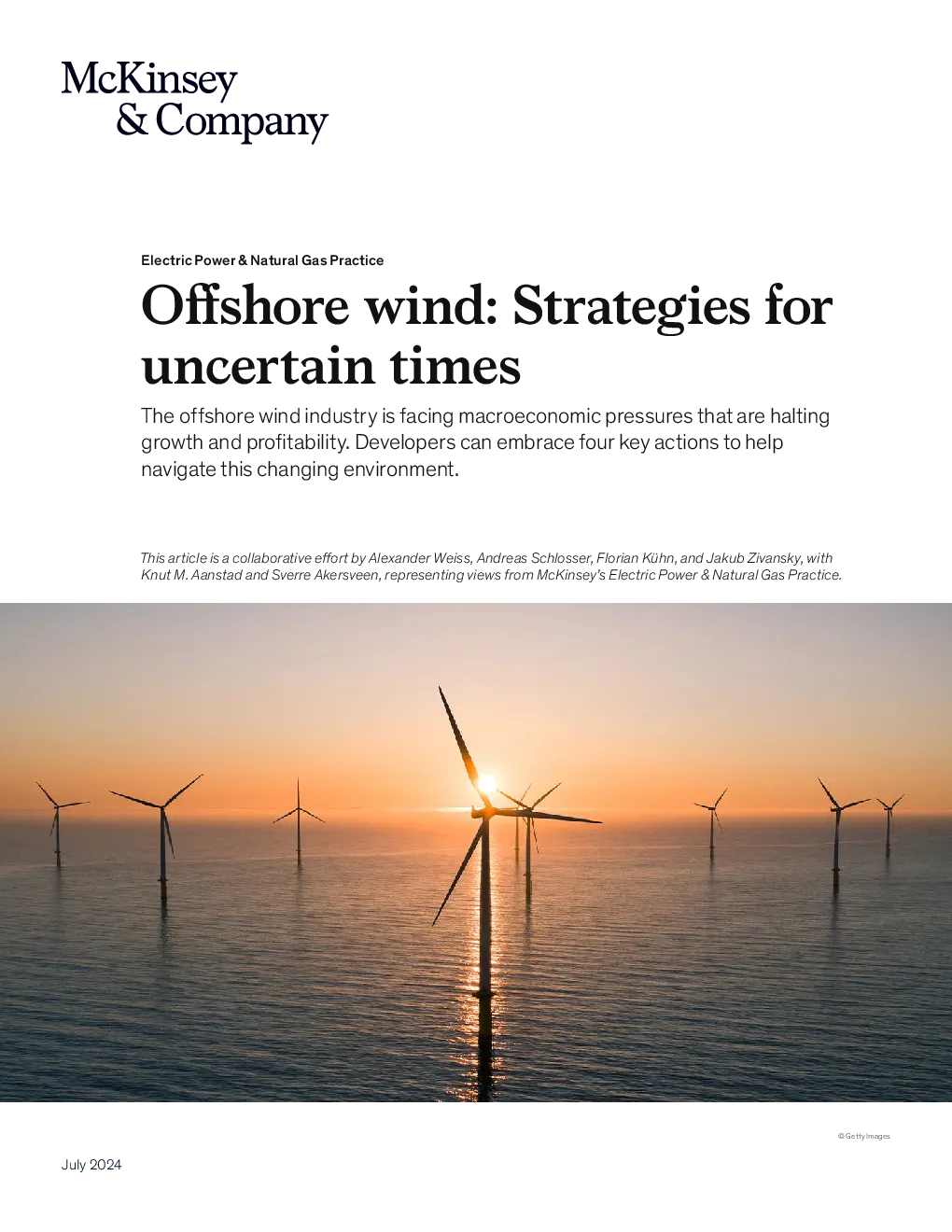
Offshore Wind Industry: Navigating Uncertain Times
Executive Summary
The offshore wind industry is currently facing significant macroeconomic challenges, leading to a halt in growth and profitability. Despite its proven scalability as a renewable energy source, the industry's decade-long growth trajectory has been disrupted by rising raw commodity prices, interest rate hikes, and supply chain bottlenecks. This report outlines strategies for developers to navigate these uncertainties and maintain growth.
Key Points
Historical Context: Offshore wind has been a rapidly growing sector, offering clean energy solutions and contributing to the global push towards net-zero emissions. Its affordability has increased over time, driven by competition, low interest rates, and technological advancements.
Current Challenges: Recent trends indicate a decline in developer profitability, with communicated Levelized Cost of Electricity (LCOE) increases ranging from 40% to 60%. This is exacerbated by non-inflation-adjusted contracts for difference (CfD), making many projects unprofitable.
Strategic Outlook: The future profitability of offshore wind depends on five critical dimensions:
- Cost Curve Positioning: Increased material costs, inflation, and competitive seabed tenders have worsened the cost position, creating headwinds.
- Regulatory Environment: Falling CfD strike prices and rising auction costs in some regions reduce project attractiveness.
- Market Demand: While demand for clean energy remains high, budget constraints limit development.
- Supply Chain Dynamics: Supply bottlenecks and cost limitations impact the industry's ability to improve profitability.
- Developer Behavior: Commitment to government targets and climate policies influences development decisions.
Recommended Actions
Developers should consider the following actions to ensure ongoing growth:
- Focus on Cost Reduction: Implement strategies to manage material costs and optimize supply chains to mitigate inflation impacts.
- Adapt Regulatory Strategies: Adjust to evolving regulatory landscapes, focusing on sustainable cost structures and long-term profitability.
- Enhance Market Engagement: Strengthen relationships with governments and consumers to align with decarbonization goals and maintain market pull.
- Supply Chain Resilience: Invest in developing robust supply chains, including support regimes and new entrant acceptance, to improve resilience against bottlenecks.
- Strategic Partnerships: Form partnerships to share risks and leverage collective resources for innovation and cost reduction.
Conclusion
Despite current challenges, the offshore wind industry holds significant potential for growth. By addressing the identified strategic dimensions and implementing targeted actions, developers can navigate the uncertainties and secure a path towards structural profitability.