世界知识产权组织杂志,2012年第1期(2月)
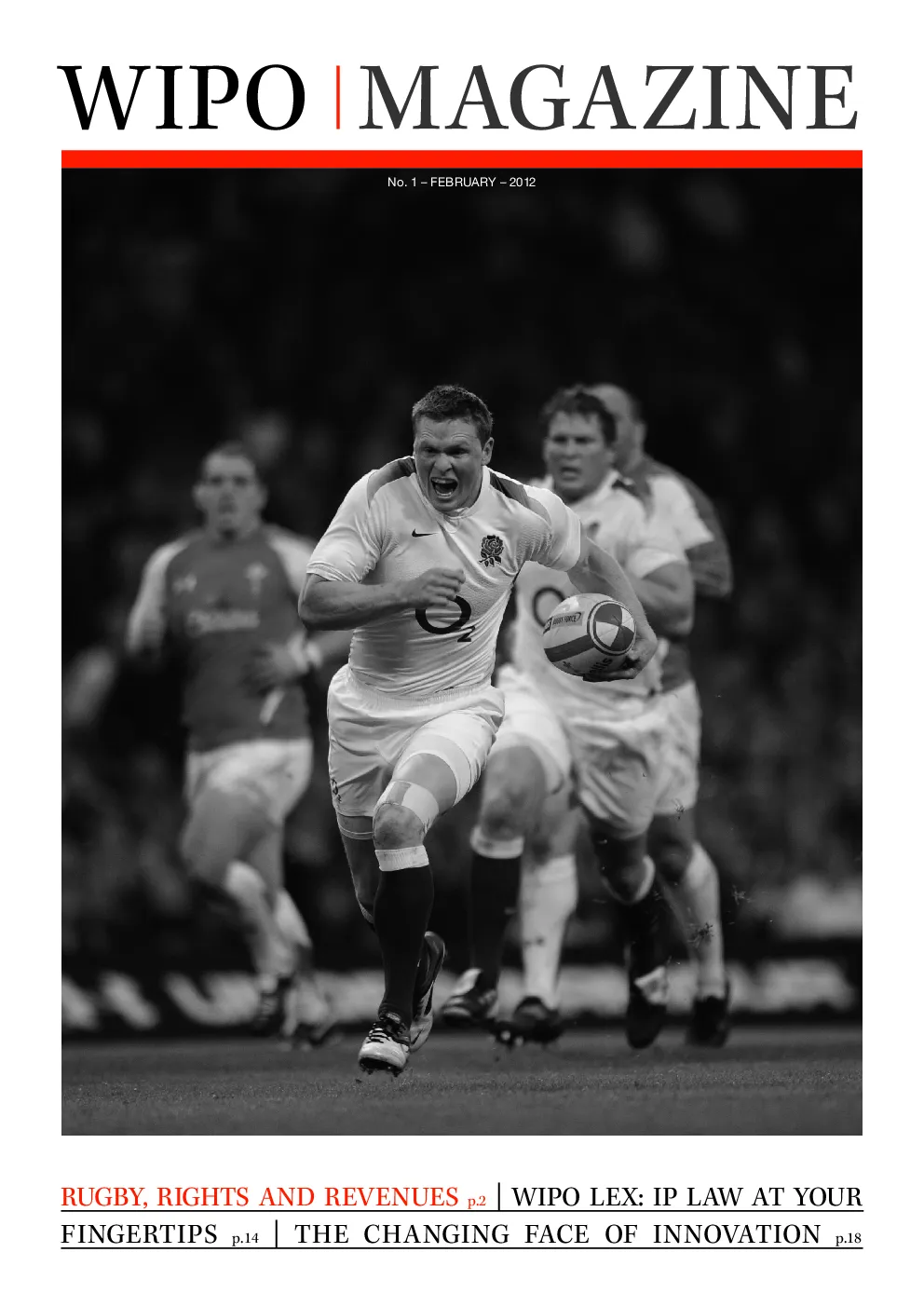
Rugby, Rights and Revenuesp.2|wipoLex:ipLaw at youRFingeRtipsp.14|the Changing FaCe oF innovationp.18 Message from WIPODirector GeneralFrancis Gurry I am pleased to introduce a new look and updatedapproach for the WIPO Magazine. I am all the more pleased to do so since many of you, in therecent WIPO Magazine reader survey, specifically mentioned theprevious graphic design as one of the aspects you would mostlike to see improved. Our design team has risen to the challenge,and I hope that you will find the new design appealing. I would like to thank all our readers for your interest in theWIPO Magazine, with special thanks to those who took the timeto participate in the reader survey. Your comments will enableus to continue to improve the Magazine and to feature theemerging IP trends and IP success stories of interest to you. In line with feedback received from the survey, we are expandingour coverage of certain IP issues; how IP is being used inpractice, for example, and how the courts are handlingIP-related issues in various jurisdictions. We have introduced,in this first issue, two new series, one on IP and Sport and anotheron Innovation Trends. We will, of course, continue to coverthe “hot” issues occupying the minds of IP policymakers, as wellas the groundbreaking projects on which WIPO is working. To meet your expressed interest in more regular online content,we are working to expand the Magazine’s web and socialmedia presence. A more dynamic interface will soon provideyou with an opportunity to share your views on the storiesfeatured and to exchange experiences with other readers. I look forward to an exciting year aheadand wish you enjoyable reading. Contents p–2Rugby, Rights and Revenuesp–6WIPO Lex: IP Law at your Fingertipsp–8Pioneering Green Innovationan interview with General Electricp–14Safeguarding Design Assets: A UK Perspectivep–18The Changing Face of Innovationp–22Publisher reigned in on Racing Data Copyright Claimp–27Celebrating Culture: IP & Arts Festivalsp–31In the News Editor:Catherine JewellGraphic Designer:Annick DemierreCover image:Getty Images Acknowledgements:p–2:Paolo Lanterip–6:Jessamyn Honculadap–8:Anatole Krattigerp–14:Grégoire Bisson ©World IntellectualProperty Organization Rugby,Rights and Revenues byJonathan Taylor, Legal Counselof Six Nations Rugby Limited (SNRL),Bird & Bird LLP, UK This is the first in a series that explores the interface be-tween intellectual property (IP) and sport. In the aftermathof the 2011 Rugby World Cup, and with the 2012 RBS SixNations Championship being played out in February andMarch this year, WIPO Magazine kicks off with this viewfrom inside the Six Nations Rugby Championship of howIP helps safeguard the commercial value of rugby. The RBS Six Nations Championship is rugby union’s showpieceevent in the northern hemisphere and generates considerablecommercial revenues that underwrite the development effortsof each participating union. IP laws protect the commercialvalue that SNRL and its shareholder unions have created inthe Championship, and they provide a robust and effectivemechanism for combating online piracy of the Championship’sofficial broadcast coverage. Without effective IP laws rugbyunion’s efforts to grow will be stymied, and its clear publicinterest benefits – in terms of delivering top-quality sportscoverage and promoting health, social inclusion, and racialand gender equality – will be compromised. RuGBy unIonAnDtHePuBLICInteRest Rugby union is played in over 100 countries, across the fivecontinents. The recent inclusion of 7-a-side rugby as an Olym-pic sport promises to fuel further interest in it. The traditionalrugby powerhouses in the northern hemisphere are England,France, Ireland, Italy, Scotland and Wales (collectively known asthe Six Nations), and in the southern hemisphere, Australia, NewZealand and South Africa. Popular demand for the sport and,therefore, its commercial value are greatest in these countries. In addition to regulating and protecting the integrity of thesport, rugby union’s governing bodies (or unions) organize andstage international matches, tours and tournaments involvingtheir respective national teams. They sell the rights to theseevents (principally broadcasting and sponsorship rights) togenerate commercial revenue. The prime objective of theunions, however, is to act as custodians of the sport, so thatit expands and develops at all levels. Any revenue generatedover and above the staging costs is re-invested in the sport,both to improve it at the professional level and to provide facili-ties and coaching opportunities at the community level. Suchinvestment at the grass roots enables amateur players to enjoythe health, recreational and social benefits of the game andfacilitates the identification and development of new talent tojoin the professional elite. england’s Chrisashton runs for the try line ina match againstwales in the 2011tournament The professional game then drives the pop