您的浏览器禁用了JavaScript(一种计算机语言,用以实现您与网页的交互),请解除该禁用,或者联系我们。 [世界卫生组织]:中东冲突升级,全球外部形势报告4-2026年4月16日 - 发现报告

中东冲突升级,全球外部形势报告4-2026年4月16日

信息技术 2026-04-15 世界卫生组织 丁叮叮叮
报告封面

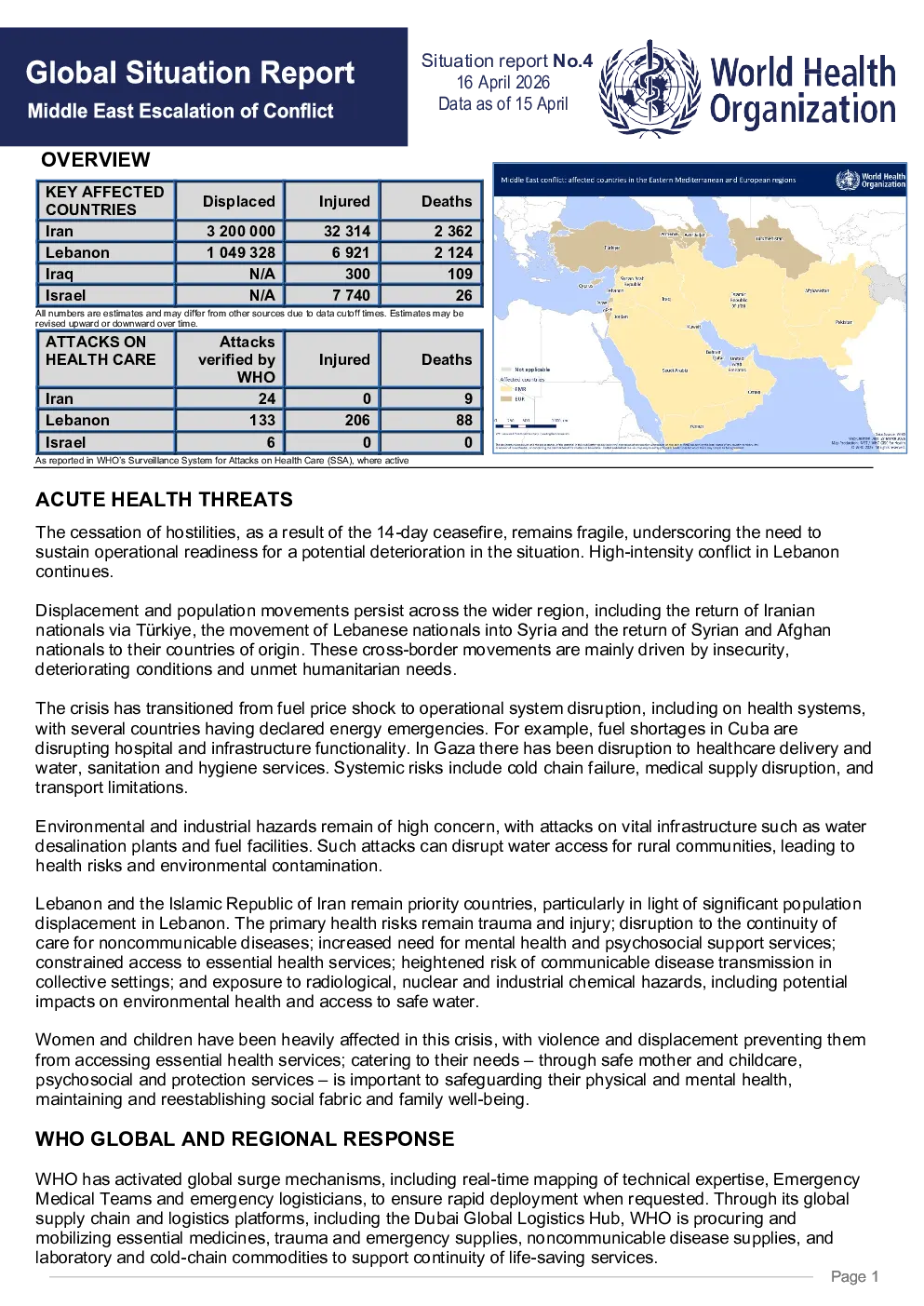
OVERVIEW ACUTE HEALTH THREATS The cessation of hostilities, as a result of the 14-day ceasefire, remains fragile, underscoring the need tosustain operational readiness for a potential deterioration in the situation. High-intensity conflict in Lebanoncontinues. Displacement and population movements persist across the wider region, including the return of Iraniannationals via Türkiye, the movement of Lebanese nationals into Syria and the return of Syrian and Afghannationals to their countries of origin. These cross-border movements are mainly driven by insecurity, The crisis has transitioned from fuel price shock to operational system disruption, including on health systems,with several countries having declared energy emergencies. For example, fuel shortages in Cuba aredisrupting hospital and infrastructure functionality. In Gaza there has been disruption to healthcare delivery andwater, sanitation and hygiene services. Systemic risks include cold chain failure, medical supply disruption, and Environmental and industrial hazards remain of high concern, with attacks on vital infrastructure such as waterdesalination plants and fuel facilities. Such attacks can disrupt water access for rural communities, leading tohealth risks and environmental contamination. Lebanon and the Islamic Republic of Iran remain priority countries, particularly in light of significant populationdisplacement in Lebanon. The primary health risks remain trauma and injury; disruption to the continuity ofcare for noncommunicable diseases; increased need for mental health and psychosocial support services; Women and children have been heavily affected in this crisis, with violence and displacement preventing themfrom accessing essential health services; catering to their needs – through safe mother and childcare,psychosocial and protection services – is important to safeguarding their physical and mental health, WHO GLOBAL AND REGIONAL RESPONSE WHO has activated global surge mechanisms, including real-time mapping of technical expertise, EmergencyMedical Teams and emergency logisticians, to ensure rapid deployment when requested. Through its globalsupply chain and logistics platforms, including the Dubai Global Logistics Hub, WHO is procuring and WHO is monitoring the health situation of displaced populations and providing support toministries of healthintheform of policy guidance, coordination and collaboration with partners. WHO is assessing environmental and other health risks and preparing associated response measures,including producingcommunity engagement material for WHOandpartners, aligned withtheassessed healthrisks. WHOhas enhanced support toministries of health for community-basedhealth protection, includingsurveillance and the early detection/alert of risks and emerging threats; healtheducation, providing informationon high-risk diseases such as hepatitisandmeasles;information on self-care at the community-level fornoncommunicable diseases; and more.WHO has publishedcommunity engagement materials for preparing For additional information on the global situation and response, please visithttps://www.who.int/emergencies/situations/middle-east-conflict COUNTRY HIGHLIGHTS ISLAMIC REPUBLIC OF IRAN Situation The situation in Iran remains unpredictable despite the ceasefire announcement. The Government of Iran isseeking support from WHO to establish a mechanism for the rapid delivery of humanitarian assistance tosupport its own response to the crisis. WHO response The WHO Regional Office for the Eastern Mediterranean continues to support national authorities to lead andcoordinate the health response. In parallel, WHO headquarters is undertaking a comprehensive mapping ofavailable technical, operational and surge capacities to enable rapid support of the regional response. A formal request was made by the Ministry of Health to WHO to provide medicines, equipment, and support onnoncommunicable diseases management and deployment of Emergency Medical Teams (EMT). While furtherclarifying the details of this request, WHO is proactively preparing a coordination mechanism for EMTdeployment to Iran. WHO continues to procure requested supplies for NCDs based on the needs of the LEBANON Situation Intensified fighting and threats of strikes to additional areas within Beirut’s southern suburbs triggeredwidespread fear, significant displacement, and heightened concern regarding the safety and operationalcontinuity of healthcare facilities in these locations. Evacuation orders were issued for Beirut’s Jnah area,which includes two major referral hospitals: the Rafik Hariri University Hospital and Al Zahraa Hospital. No Lebanon’s Tebnine Government Hospital, one of the busiest trauma management hospitals in the south, wasdamaged twice on 12 and 14 of April, from strikes nearby. Eleven workers were injured, with damage to theemergency department including to critical equipment such as ventilators, monitors, stretchers and trolleys