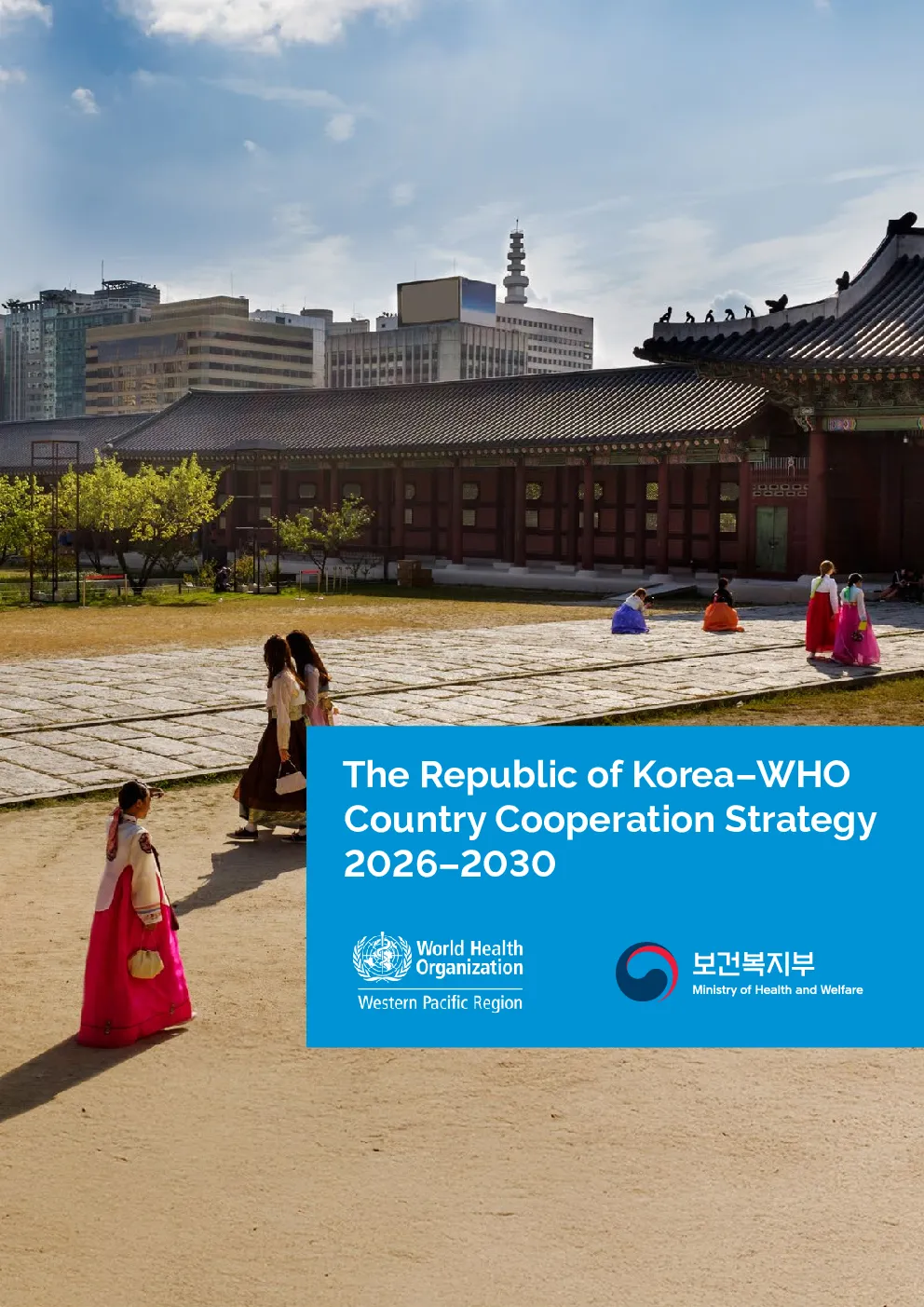
The Republic of Korea–WHOCountry Cooperation Strategy The Republic of Korea–WHO Country Cooperation Strategy 2026–2030 ISBN 978-92-9062-118-8 Contents ForewordviiAcknowledgmentsviiiAbbreviationsixExecutive summaryxi1.Introduction11.1The goal of the Republic of Korea–WHO CCS..........................................................................31.2The process of developing the Republic of Korea–WHO CCS.............................................42.VisionofWHOintheWesternPacificRegion62.1WHO’s goal 2025–2028: promote, provide and protect health for allpeople, everywhere...........................................................................................................................62.2 WHOintheWesternPacificRegion:WeavingHealthforFamilies,Communities and Societies (2025–2029): Working together to improve 3.Health in the Republic of Korea 3.1Health achievements.....................................................................................................................103.2National health priorities.............................................................................................................113.3Remaining challenges and way forward................................................................................12 4.Strategic agenda: Republic of Korea–WHO Country Cooperation Strategy 4.1Republic of Korea and WHO collaboration: Shared achievements.................................164.2Strategic agenda for cooperation 2026–2030.....................................................................164.2.1Strategic Priority 1. Leveraging digital health and innovation to advanceuniversal health coverage and health equity.............................................................184.2.2Strategic Priority 2. Designing healthy societies to promote health andprevent diseases..................................................................................................................194.2.3Strategic Priority 3. Strengthening global health security andemergency preparedness.................................................................................................224.2.4Strategic Priority 4. Promoting climate-resilient, low-carbon and 5.Monitoring and reviewing the Country Cooperation Strategy 5.1 Key performance indicators (KPIs).............................................................................................285.2 Implementation mechanisms......................................................................................................31 Annex View of Songdo traditional village.The Government of the Republic of Koreaand WHO have agreed to continue workingclosely together to protect nature and TheRepublic of Korea–WHO Country Cooperation Strategy 2026–2030encapsulates our collective commitment to advance health and well-being for all. Rooted in mutual respectand collaboration, this country cooperation strategy (CCS) aligns with the shared regional The Republic of Korea’s leadership in digital health innovation, commitment to universalhealth coverage and proactive approach to emerging health challenges – such as pandemicreadiness and response and climate change – have been key in shaping this CCS. The This CCS focuses on strategic priorities that address pressing health issues, includingnoncommunicable diseases, mental health, pandemic readiness and response, antimicrobialresistance and the impacts of climate change. By strengthening health systems, promoting As we navigate the evolving health landscape, the partnership between the World HealthOrganization and the Republic of Korea stands as a testament to what we can achieve Together, let us continue to weave a tapestry of health that leaves no one behind. Dr Saia Ma’u PiukalaRegional DirectorfortheWesternPacific Dr Eun-kyeong JeongMinister of Health and Welfare TheRepublic of Korea–WHO Country Cooperation Strategy 2026–2030has been developed in partnership between the World Health Organization and theGovernment of the Republic of Korea. Input and feedback were gathered fromgovernment ministries and agencies including the Ministry of Health and Welfare,the Korea Disease Control and Prevention Agency, the Ministry of Climate, Energyand Environment and the Korea International Cooperation Agency. The evaluationof the previous country cooperation strategy (CCS) was conducted by Ms Mareike ACEWHOAsia-PacificCentreforEnvironmentandHealthintheWesternPacificRegionAIartificialintelligenceAMRantimicrobial resistanceCCScountry cooperation strategyGPW 14FourteenthGeneralProgrammeofWorkKDCAKorea Disease Control and Prevention AgencyKOICAKorea International Cooperation AgencyMCEEMinistry of Climate, Energy and EnvironmentMOHWMinistry of Health and WelfareNCDsnoncommunicable diseasesNHPnational health planOECDOrganisation for Economic Co-operation and DevelopmentPMparticulate matterSDGsSustainable Development GoalsTBtuberculosisUHCuniversal health coverageWHOWorld Health Organization Executive summary Exe