您的浏览器禁用了JavaScript(一种计算机语言,用以实现您与网页的交互),请解除该禁用,或者联系我们。 [亚开行]:发展创新的社区长期护理系统和服务(英) - 发现报告

发展创新的社区长期护理系统和服务(英)

医药生物 2025-11-01 亚开行 Gnomeshgh文J
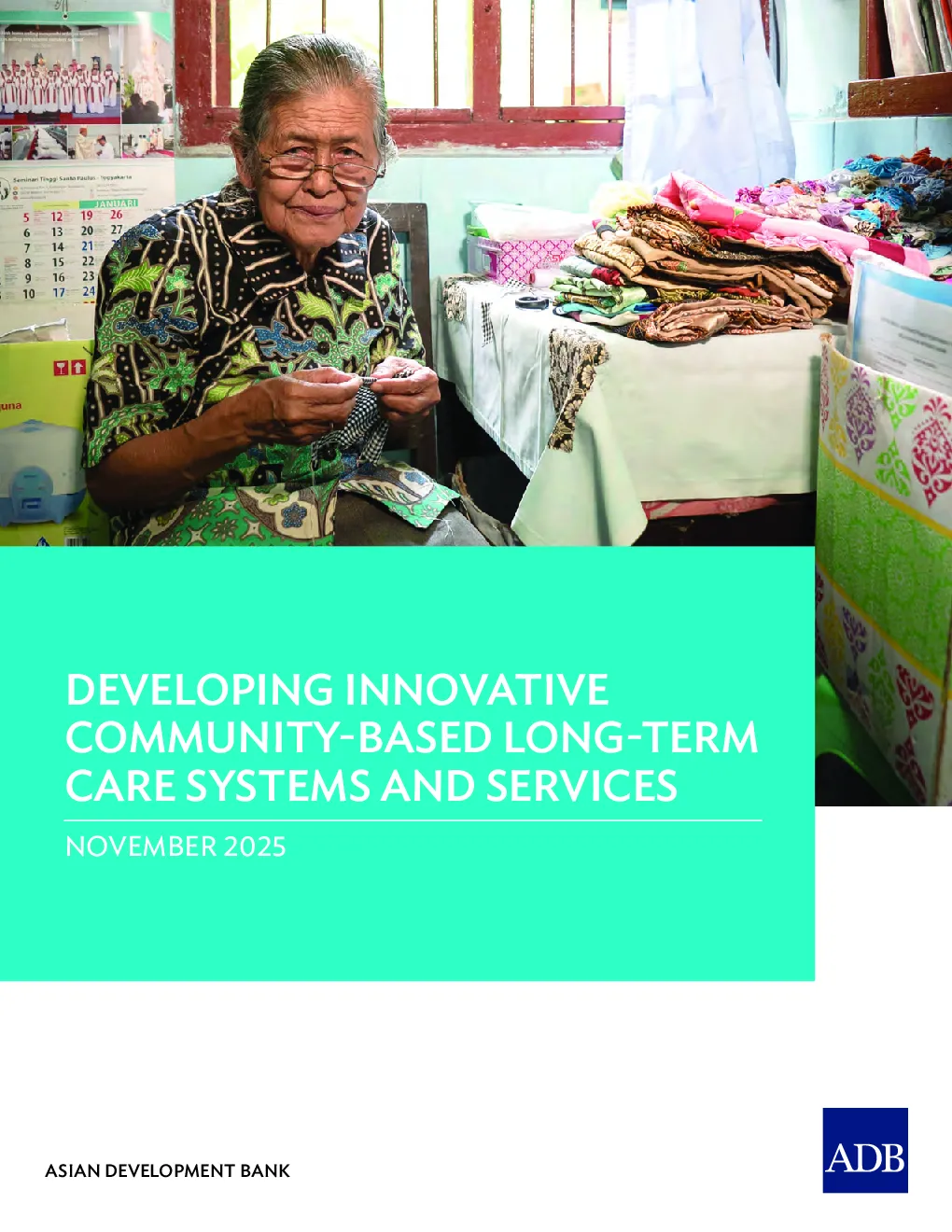
报告封面

NOVEMBER 2025 DEVELOPING INNOVATIVECOMMUNITY-BASED LONG-TERMCARE SYSTEMS AND SERVICES NOVEMBER 2025 Creative Commons Attribution 3.0 IGO license (CC BY 3.0 IGO) © 2025 Asian Development Bank6 ADB Avenue, Mandaluyong City, 1550 Metro Manila, PhilippinesTel +63 2 8632 4444; Fax +63 2 8636 2444www.adb.org Some rights reserved. Published in 2025. ISBN 978-92-9277-503-2 (print); 978-92-9277-504-9 (PDF); 978-92-9277-505-6 (ebook)Publication Stock No. TCS250454-2DOI: http://dx.doi.org/10.22617/TCS250454-2 The views expressed in this publication are those of the authors and do not necessarily reflect the views and policiesof the Asian Development Bank (ADB) or its Board of Governors or the governments they represent. ADB does not guarantee the accuracy of the data included in this publication and accepts no responsibility for anyconsequence of their use. The mention of specific companies or products of manufacturers does not imply that theyare endorsed or recommended by ADB in preference to others of a similar nature that are not mentioned. By making any designation of or reference to a particular territory or geographic area in this document, ADB does notintend to make any judgments as to the legal or other status of any territory or area. This publication is available under the Creative Commons Attribution 3.0 IGO license (CC BY 3.0 IGO)https://creativecommons.org/licenses/by/3.0/igo/. By using the content of this publication, you agree to be boundby the terms of this license. For attribution, translations, adaptations, and permissions, please read the provisionsand terms of use at https://www.adb.org/terms-use#openaccess. This CC license does not apply to non-ADB copyright materials in this publication. If the material is attributedto another source, please contact the copyright owner or publisher of that source for permission to reproduce it.ADB cannot be held liable for any claims that arise as a result of your use of the material. Please contact pubsmarketing@adb.org if you have questions or comments with respect to content, or if you wishto obtain copyright permission for your intended use that does not fall within these terms, or for permission to usethe ADB logo. Corrigenda to ADB publications may be found at http://www.adb.org/publications/corrigenda. Notes: On the cover: Mbah Djariyah does needlework in her home in Yogyakarta, Indonesia. Home-based andcommunity-based care programs address older people’s needs for assistance with everyday activities.(photo by Anita Reza Zein/ADB). Contents Tables, Figures, and BoxesivForewordvAcknowledgmentsviiAbbreviationsviiiIntroduction1Long-Term Care Trends and Systems in Indonesia, Mongolia, and Viet Nam4Increasing Prevalence of Frailty and Noncommunicable Diseases in an Aging Population4Functional Impairment and Loss of Independence in Daily Living5Fragile and Underdeveloped Long-Term Care Systems5Policy Improvements6Rationale for Investing in Community-Based Long-Term Care7Regional Pilot to Develop Community-Based Long-Term Care Systems and Services9Models of Care11Three Contexts, Three Models of Care11Community-Based Long-Term Care Workforce27Management, Health, and Social Care Workforce27Indispensable Role of Family Caregivers28Volunteers Are a Valuable Asset29Capacity Building30Innovation and Technology in Long-Term Care in the Pilot33Digital Care and Case Management33Data Utilization33Health and Social Care Integration34Connecting to the Larger Ecosystem34Key Successes38Key Lessons Learned40Strategic Recommendations43 Tables, Figures, and Boxes TABLES 1Aging Population and Impairment Rates in Indonesia, Mongolia, and Viet Nam52Community-Based Long-Term Care Model103Service-Matching Recommendations154Prevalence of Care Foci Among Older Adults Classified as Level 3, with Viet Nam as an Example175Training Programs Developed31 FIGURES 1Case Management Flow142Indonesia’s Community Care Hub Model193Active Aging Hub Model224Stakeholder Mapping and Structure of Viet Nam’s Care Model245How Integrated Care Is Achieved Through Case Management356Combining the ICOPE Approach with Pilot Care Model37 BOXES 1What Is Community-Based Long-Term Care?22World Health Organization ICOPE Approach36 Foreword Populationaging has majoreconomicand socialimplications,including raisingconcerns aboutwho will providecare for growingnumbers of olderpeople with morelong-term andcomplex careneeds. Over half of the global population aged 60 years and above reside in Asia and the Pacific, and the numberis projected to rise to approximately 1.3 billion by 2050. Population aging has major economic and socialimplications, including raising concerns about who will provide care for growing numbers of older peoplewith more long-term and complex care needs. Currently, most care provision to older people is suppliedinformally by family members, who rarely receive any support or training. As population demographicschange, there is a need to develop systems and services to help al