您的浏览器禁用了JavaScript(一种计算机语言,用以实现您与网页的交互),请解除该禁用,或者联系我们。[世界银行]:商用车安全:政府和私营部门的指南和良好做法(英) - 发现报告

商用车安全:政府和私营部门的指南和良好做法(英)

交运设备2025-09-22-世界银行王***
AI智能总结
查看更多
商用车安全:政府和私营部门的指南和良好做法(英)

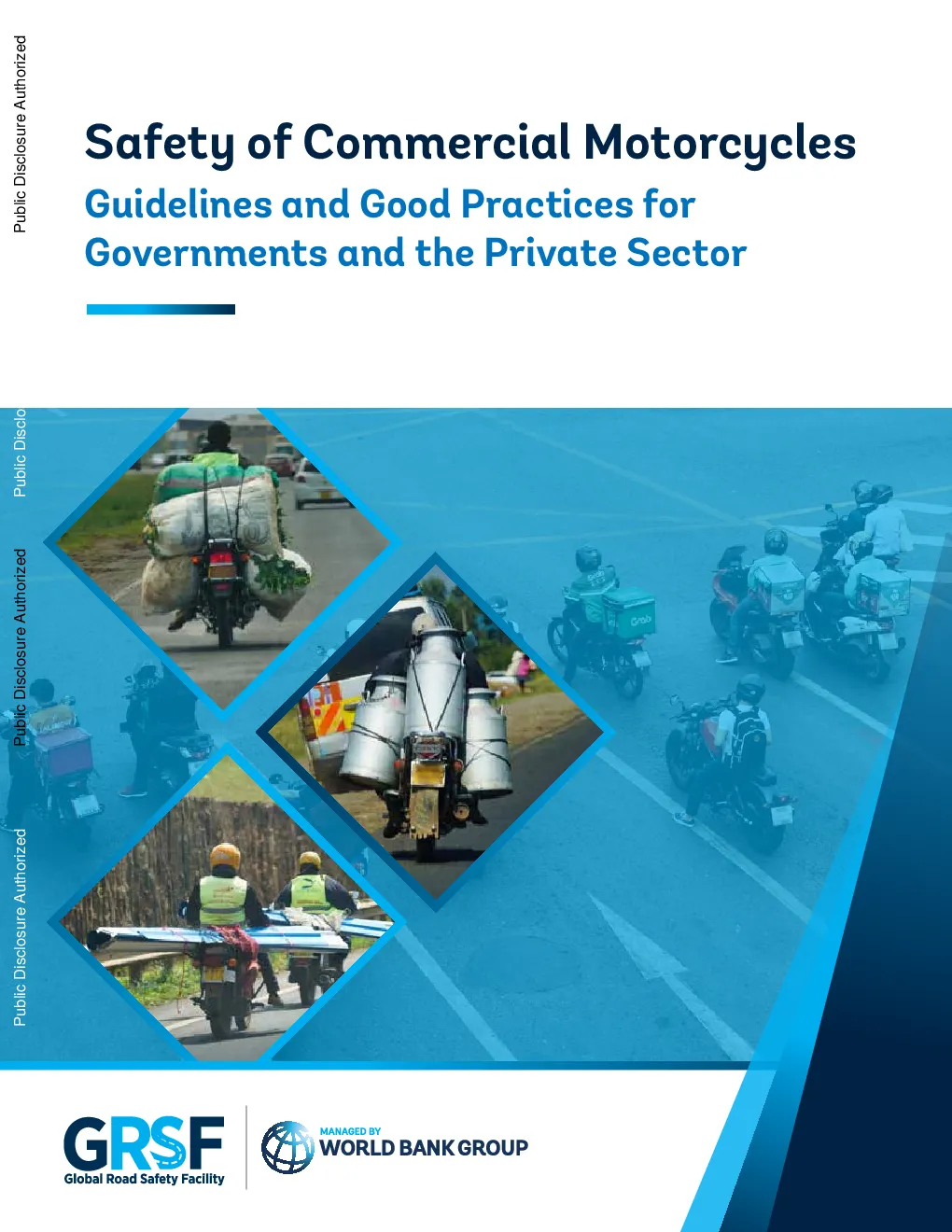
© 2025 The World Bank1818 H Street NW, Washington DC 20433Telephone: 202-473-1000; Internet: www.worldbank.org Some rights reserved This work is a product of The World Bank. The findings, interpretations, and conclusions expressed in this work donot necessarily reflect the views of the Executive Directors of The World Bank or the governments they represent. The World Bank does not guarantee the accuracy, completeness, or currency of the data included in this work anddoes not assume responsibility for any errors, omissions, or discrepancies in the information, or liability withrespect to the use of or failure to use the information, methods, processes, or conclusions set forth. Theboundaries, colors, denominations, links/footnotes and other information shown in this work do not imply anyjudgment on the part of The World Bank concerning the legal status of any territory or the endorsement oracceptance of such boundaries. The citation of works authored by others does not mean the World Bank endorsesthe views expressed by those authors or the content of their works. Nothing herein shall constitute or be construed or considered to be a limitation upon or waiver of the privilegesand immunities of The World Bank, all of which are specifically reserved. Rights and Permissions The material in this work is subject to copyright. Because The World Bank encourages dissemination of itsknowledge, this work may be reproduced, in whole or in part, for noncommercial purposes as long as fullattribution to this work is given. Attribution—Please cite the work as follows: “World Bank. 2025. Safety of Commercial Vehicles: Guidelines andGood Practices for Governments and the Private Sector. © World Bank.” Any queries on rights and licenses, including subsidiary rights, should be addressed to World Bank Publications,The World Bank, 1818 H Street NW, Washington, DC 20433, USA; fax: 202-522-2625; e mail:pubrights@worldbank.org. Cover photos: © William Majani Wambulwa. Further permission required for reuse.Cover design: Duina Reyes Acknowledgments This guide was prepared by a World Bank team led by Dipan Bose (Senior Transport Specialist), Arif Uddin (TransportSpecialist) and Demilour Reyes-Ignacio (Operations Analyst). Contribution to the preparation of the guide wasprovided by World Bank consultants: Demir Hadzic, Krishnan Srinivasan, Pierre Fernand Marie Castaing, and WilliamMajani Wambulwa. The team would like to thank Kazuyuki Neki (Transport Analyst), Nato Kurshitashvili (SeniorTransport Specialist), Dilshad Dossani (Transport Specialist) and Yoomin Lee (Transport Analyst) for their contributionto the case studies. The guide was peer reviewed by Ana Waksberg Guerrini (Senior Urban Transport Specialist, World Bank), Juan MiguelVelasquez Torres (Senior Transport Specialist, World Bank), Hanning Bi (Investment Officer, International FinanceCorporation), Shyam Srinivasan (Transport Specialist, World Bank), Sam Clark (Head of Programs, TRANSAID), ArianaChilds Graham (Program Director, Road Safety, Global Health Advocacy Incubator). We would like to express our appreciation to Hideaki Takaishi, Honda Motor Co., Ltd.; Tatiane Neves Alves, Managerof Social Impact and Sustainability at iFood, Pavit S Kenth, Managing Director, BodaPlus Ltd.; Ahmed Najmul Hussain,Director Administration and Road Safety Programme, BRAC; and Luthfi Luddin, AssistantManager, Regional PublicAffairs, Grab. Finally, the study benefitted from the support provided by the Bloomberg Philanthropies Initiative forGlobal Road Safety, particularly the contribution of technical partners including Vital Strategies and Johns HopkinsUniversity. Administrative support was provided by Faustina Chande, report editing done by Chitra Arcot, and report design wasundertaken by Benjamin Holzman and Duina Reyes. Overall leadership and management of the project was provided by Said Dahdah (Program Manager, Global RoadSafety Facility, World Bank) and Nicolas Peltier (Global Director for Transport, World Bank). About GRSF This guide was produced by the Global Road Safety Facility (GRSF)—a multidonor trust fund managed by the WorldBank that supports efforts in low and middle-income countries to halve their road traffic fatalities and serious injuries.GRSF is supported by Bloomberg Philanthropies Initiative for Global Road Safety, TotalEnergies Foundation, and theGovernment of the United Kingdom of Great Britain and Northern Ireland acting through the Department of Healthand Social Care. Website: www.globalroadsafetyfacility.org Email: grsf@worldbank.org Table of Contents Acknowledgments.....................................................................................................................................................................iExecutive Summary.................................................................................................................................................................1PART 1. The Case for Commercial Motorcycle