Okay, let's dive into the world of [Your Topic]. Since you don't know what that is, I'll tell you: [Your Topic] is the process of using AI to generate and refine creative content, such as writing, images, music, and more. We're talking about AI tools that can help you brainstorm ideas, draft content, edit and polish, and even create entirely new pieces of art or music from scratch.
That's a fascinating field! It's rapidly evolving, and the possibilities are expanding every day. I'm really interested in learning more about how AI can be used for creative purposes.
That's great! I'm happy to help you explore this topic. Let's start by breaking down the different ways AI is being used in creative fields. We can cover:
- AI in Writing: This includes everything from generating articles, stories, and poems to brainstorming ideas and even writing different styles.
- AI in Image Generation: This is where we see some truly amazing things, like generating realistic images from text descriptions, creating artistic styles, and even manipulating existing images.
- AI in Music Creation: This is a rapidly growing area, with AI composing music in various styles, generating lyrics, and even creating unique sounds.
- AI in Other Creative Fields: We can also explore how AI is being used in areas like video game development, animation, and even fashion design.
Which of these areas would you like to explore first?
This is a great starting point! I'm particularly interested in learning more about AI in Image Generation. That sounds like it has some amazing possibilities.
Okay, great! AI in Image Generation is a truly exciting field. Let's dive in. To get a feel for what's possible, let's look at some examples. Here are a few prompts I've prepared for you to see how AI image generators work:
- Prompt 1: "A majestic dragon soaring through a starry night sky, digital painting style, highly detailed, cinematic lighting."
- Prompt 2: "A futuristic cityscape at dusk, with neon lights and flying cars, concept art style, vibrant colors, wide-angle view."
- Prompt 3: "A serene landscape of a mountain lake at sunrise, realistic style, soft lighting, reflections on the water."
These prompts are just examples, but they give you an idea of how you can describe the image you want to create. The more descriptive you are, the better the AI can understand your vision. You can also specify things like the style of the image (e.g., photorealistic, watercolor, cartoon), the mood, the composition, and even the specific art movement it should be inspired by.
Now, imagine you want to create your own image. What would you like to draw or generate? You can be as specific or as creative as you like. You can even tell me about a specific image you've seen that you'd like to recreate.
This is really interesting! I love the examples you provided. They really showcase the power of AI in creating unique and visually stunning images. I'd love to try creating my own image, but I'm not sure where to start.
That's perfectly fine! It's all about experimentation and having fun. Let's break down the process into a few simple steps to get you started:
1. Think About Your Concept:
- What is the main subject of your image?
- What do you want to convey or express through this image?
- What is the overall mood or atmosphere you're aiming for?
2. Describe Your Subject in Detail:
- Be specific about the main subject(s) in your image. What do they look like? What are they doing?
- Add details about the setting, background, and environment.
- Consider the composition: How are the elements arranged in your image?
3. Choose a Style:
- Do you want your image to be photorealistic, like a photograph?
- Or perhaps you prefer a more artistic style like watercolor, oil painting, or even a specific art movement like Impressionism or Surrealism?
- You can also experiment with different artistic styles, like anime, cartoon, or pixel art.
4. Add Mood and Atmosphere:
- How do you want the image to make the viewer feel?
- Use descriptive words to convey the mood, such as "serene," "mysterious," "energetic," or "dark."
5. Refine and Iterate:
- Don't be afraid to experiment with different prompts and see what results you get.
- If you're not happy with the first result, try tweaking your prompt to add more details, change the style, or adjust the mood.
- You can also use AI image editing tools to further refine your image after it's generated.
Let's try it together. I'll start by giving you a simple prompt, and then you can try to refine it or create your own from scratch. How does that sound?
Here's my first prompt attempt: "A cat sitting on a windowsill."
It's a good starting point, but let's see if we can make it more interesting. What do you think we could add to this prompt to make it more descriptive and visually engaging? We can follow the steps we just discussed. For example, we could add details about the cat's appearance, the windowsill, and the surrounding environment. We could also choose a specific style and mood.What do you think we could add to this prompt to make it more descriptive and visually engaging? We could definitely enhance the prompt "A cat sitting on a windowsill" by adding more details and specifying the style and mood. Here are a few suggestions:
1. Add Details to the Cat:
- Appearance: "A fluffy Persian cat with bright blue eyes and a white tail, sitting on a windowsill..."
- Action: "A curious Siamese cat with a twitching nose, sitting on a windowsill..."
- Expression: "A sleepy tabby cat with closed eyes and a contented purr, sitting on a windowsill..."
2. Describe the Windowsill:
- Condition: "A weathered wooden windowsill with cracks and a small potted plant..."
- Location: "A sunlit windowsill in an old Victorian house with intricate iron railings..."
- View: "A windowsill overlooking a bustling city street with raindrops sliding down the glass..."
3. Set the Scene:
- Time of Day: "A fluffy Persian cat with bright blue eyes and a white tail, sitting on a sunlit windowsill in an old Victorian house with intricate iron railings, overlooking a bustling city street with raindrops sliding down the glass..."
- Weather: "A curious Siamese cat with a twitching nose, sitting on a windowsill by a large window in a cozy cottage, with snow falling outside and a warm fireplace visible..."
- Season: "A sleepy tabby cat with closed eyes and a contented purr, sitting on a windowsill covered in blooming flowers during a sunny spring day..."
4. Choose a Style:
- Photorealistic: "A fluffy Persian cat with bright blue eyes and a white tail, sitting on a sunlit windowsill in an old Victorian house with intricate iron railings, overlooking a bustling city street with raindrops sliding down the glass, photorealistic style..."
- Watercolor: "A curious Siamese cat with a twitching nose, sitting on a windowsill by a large window in a cozy cottage, with snow falling outside and a warm fireplace visible, watercolor style..."
- Surreal: "A sleepy tabby cat with closed eyes and a contented purr, sitting on a windowsill covered in blooming flowers during a sunny spring day, with floating islands and a dragon in the background, surreal style..."
5. Add Mood and Atmosphere:
- Serene: "A fluffy Persian cat with bright blue eyes and a white tail, sitting on a sunlit windowsill in an old Victorian house with intricate iron railings, overlooking a bustling city street with raindrops sliding down the glass, photorealistic style, serene mood..."
- Mysterious: "A curious Siamese cat with a twitching nose, sitting on a windowsill by a large window in a cozy cottage, with snow falling outside and a warm fireplace visible, watercolor style, mysterious mood..."
- Energetic: "A sleepy tabby cat with closed eyes and a contented purr, sitting on a windowsill covered in blooming flowers during a sunny spring day, with floating islands and a dragon in the background, surreal style, energetic mood..."
By adding these details, we can create a more vivid and engaging image. Which of these suggestions would you like to choose, or do you have any other ideas to add to the prompt?
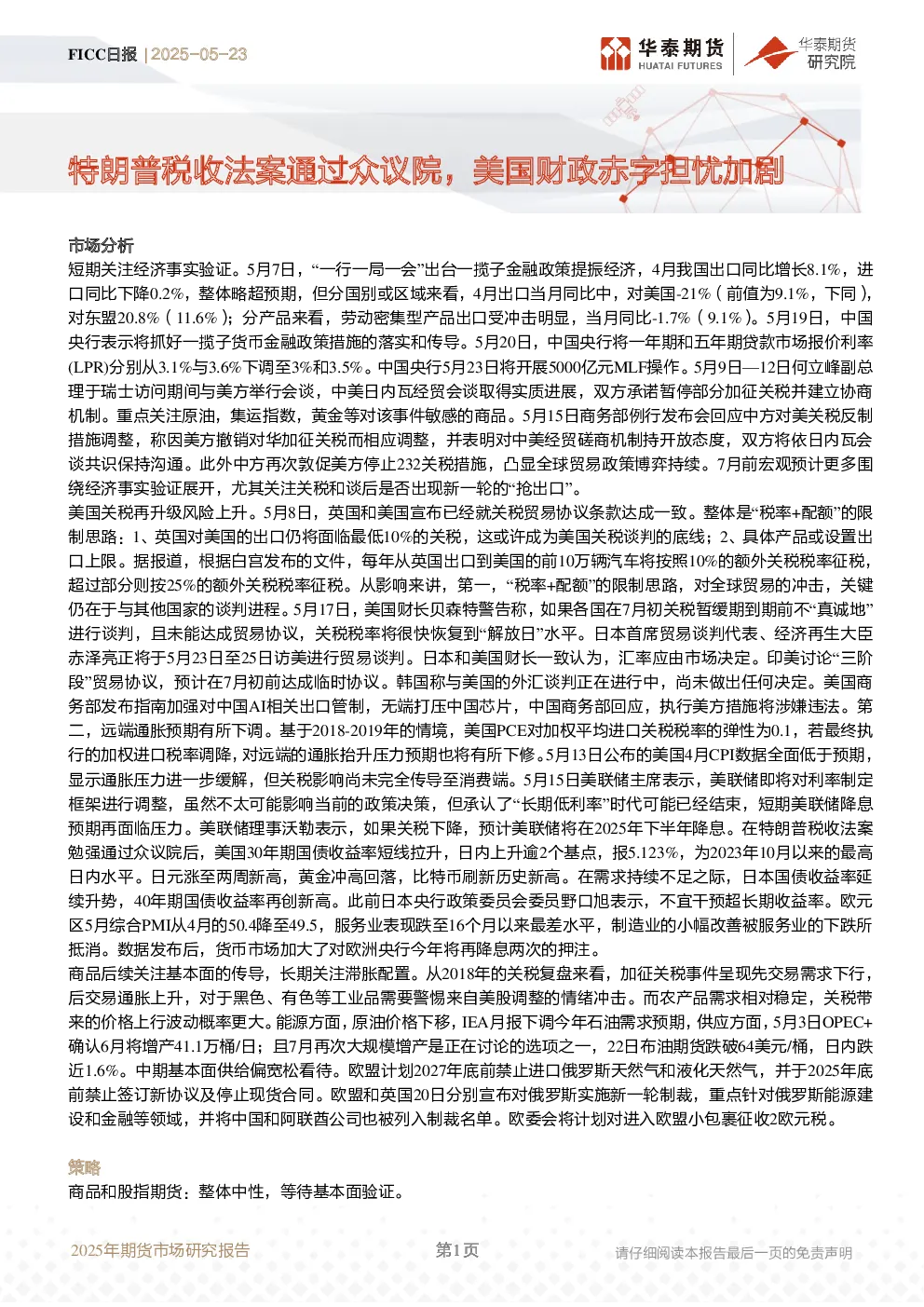
2025年期货市场研究报告风险地缘政治风险(能源板块上行风险);全球经济超预期下行(风险资产下行风险);美联储超预期收紧(风险资产下行风险);海外流动性风险冲击(风险资产下行风险)。要闻中国央行:2025年5月23日(周五),中国人民银行将以固定数量、利率招标、多重价位中标方式开展5000亿元MLF操作,期限为1年期。(华尔街见闻)日本首席贸易谈判代表、经济再生大臣赤泽亮正将于5月23日至25日访美进行贸易谈判。(华尔街见闻)日本财务大臣加藤加藤胜信:与美国财长贝森特的会谈持续了30分钟;与贝森特一致认为,汇率应由市场决定,重申货币波动过度对经济和金融稳定产生不利影响,目前没有关于外汇水平的讨论;告诉贝森特美国关税令人遗憾,关税并非纠正贸易失衡背后宏观经济失衡的恰当手段。(wind)美联储理事沃勒:如果关税下降,预计美联储将在2025年下半年降息。企业在暂停资本支出,而不是取消。(华尔街见闻)美国众议院通过修改后的特朗普税收法案,并将其提交参议院。(彭博)在特朗普税收法案勉强通过众议院后,美国30年期国债收益率短线拉升,日内上升逾2个基点,报5.123%,为2023年10月以来的最高日内水平,距离2007年以来的最高点越来越近。这表明投资者对特朗普的减税计划表示反对,对财政赤字的担忧也开始对股市产生越来越大的压力。(华尔街见闻)香港万得通讯社报道,5月22日,美国30年期国债收益率升至5.15%,续刷2023年10月以来最高水平。美股三大股指期货短线跳水,纳指期货日内跌0.27%,标普500指数期货跌0.32%,道指期货跌0.45%。现货黄金日内跌幅收窄至0.07%,现报3313.16美元/盎司。(华尔街见闻)日本长期债券收益率持续走高,40年期收益率上升6个基点至3.675%,触及2007年开始发行以来的最高水平。此前日本央行政策委员会委员野口旭表示,不宜干预超长期收益率。日本10年期收益率上升5个基点至1.565%,20年期收益率上升5.5个基点至2.595%。(华尔街见闻)欧元区5月制造业PMI初值49.4,预期49.3,4月终值49.0;服务业PMI初值48.9,预期50.3,4月终值50.1;综合PMI初值49.5,预期50.7,4月终值50.4。(wind)OPEC+成员国正在讨论是否在6月1日的会议上同意另一次超大规模的增产,这可能是该组织连续第三个月向市场增加额外的石油产量。代表们表示,7月份日产量增加41.1万桶/日是正在讨论的选项之一,但尚未达成最终协议。(彭博)布油期货跌破64美元/桶,日内跌近1.6%。此前报道称OPEC+讨论7月再次大规模增产。(华尔街见闻)
请仔细阅读本报告最后一页的免责声明第2页第2页
2025年期货市场研究报告图表图1:花旗经济意外指数............................................................................................................................................................4图2:30大中城市商品房成交面积(周度)............................................................................................................................4图3:30大中城市城市商品房成交面积(日度)....................................................................................................................4图4:五大上市钢材消费量........................................................................................................................................................4图5:10Y中美国债利差.............................................................................................................................................................5图6:2Y中美国债利差...............................................................................................................................................................5图7:美元兑主要汇率周环比....................................................................................................................................................5图8:美元指数走势....................................................................................................................................................................5图9:利率走廊............................................................................................................................................................................6
请仔细阅读本报告最后一页的免责声明第3页第3页
2025年期货市场研究报告宏观经济图1:花旗经济意外指数资料来源:同花顺,华泰期货研究院图3:30大中城市城市商品房成交面积(日度)资料来源:同花顺,华泰期货研究院
请仔细阅读本报告最后一页的免责声明第4页第4页资料来源:同花顺,华泰期货研究院图4:五大上市钢材消费量资料来源:同花顺,华泰期货研究院
2025年期货市场研究报告利率图5:10Y中美国债利差资料来源:同花顺,华泰期货研究院外汇图7:美元兑主要汇率周环比资料来源:同花顺,华泰期货研究院图8:美元指数走势资料来源:同花顺,华泰期货研究院
请仔细阅读本报告最后一页的免责声明第5页第5页资料来源:同花顺,华泰期货研究院
2025年期货市场研究报告本期分析研究员蔡劭立从业资格号:F3063489投资咨询号:Z0014617联系人朱思谋从业资格号:F03142856投资咨询业务资格:证监许可【2011】1289号本报告基于本公司认为可靠的、已公开的信息编制,但本公司对该等信息的准确性及完整性不作任何保证。本报告所载的意见、结论及预测仅反映报告发布当日的观点和判断。在不同时期,本公司可能会发出与本报告所载意见、评估及预测不一致的研究报告。本公司不保证本报告所含信息保持在最新状态。本公司对本报告所含信息可在不发出通知的情形下做出修改,投资者应当自行关注相应的更新或修改。本公司力求报告内容客观、公正,但本报告所载的观点、结论和建议仅供参考,投资者并不能依靠本报告以取代行使独立判断。对投资者依据或者使用本报告所造成的一切后果,本公司及作者均不承担任何法律责任。本报告版权仅为本公司所有。未经本公司书面许可,任何机构或个人不得以翻版、复制、发表、引用或再次分发他人等任何形式侵犯本公司版权。如征得本公司同意进行引用、刊发的,需在允许的范围内使用,并注明出处为“华泰期货研究院”,且不得对本报告进行任何有悖原意的引用、删节和修改。本公司保留追究相关责任的权力。所有本报告中使用的商标、服务标记及标记均为本公司的商标、服务标记及标记。华泰期货有限公司版权所有并保留一切权利。广州市天河区临江大道1号之一2101-2106单元丨邮编:510000电话:400-6280-888网址:www.htfc.com
请仔细阅读本报告最后一页的免责声明汪雅航从业资格号:F03099648投资咨询号:Z0019185
第7页第7页高聪从业资格号:F3063338投资咨询号:Z0016648免责声明公司总部
公司总部:广州市南沙区横沥镇明珠三街1号10层1001-1004、1011-1016房