猜你想问
这份研报主要分析了什么内容?
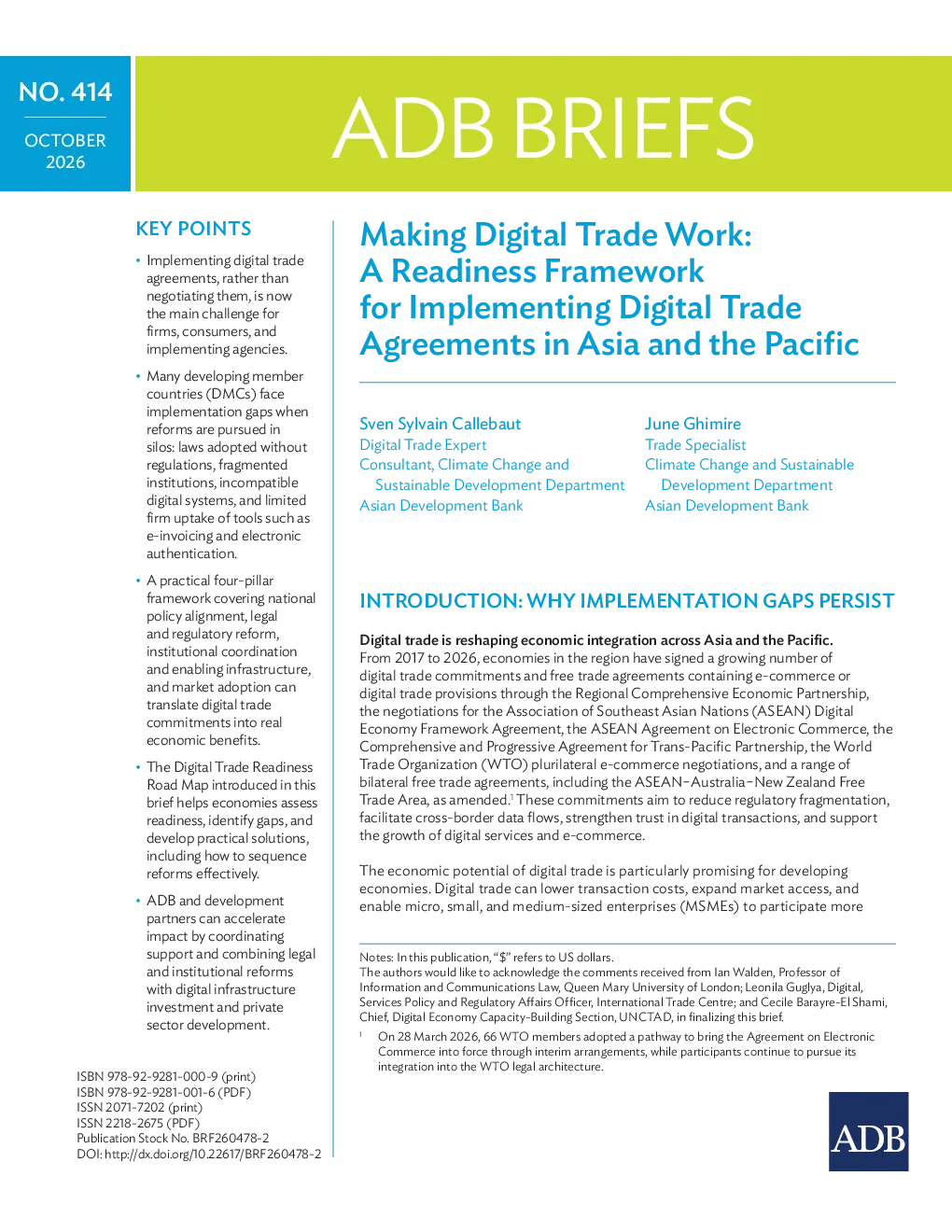
这份研报主要分析了亚太地区实施数字贸易协定的准备框架,探讨了数字贸易协定如何重塑亚太地区的经济一体化,以及如何将数字贸易承诺转化为实际操作,提出了一个包含国家政策协调、法律监管改革、机构协调和基础设施、市场采纳的四支柱框架,并介绍了数字贸易准备路线图,旨在帮助经济体评估准备情况、识别差距并制定解决方案。
亚太地区数字贸易发展有哪些行业趋势?
亚太地区数字贸易发展呈现行业趋势,包括数字贸易协定推动经济一体化,但实施存在法律、制度、技术和市场等多维度差距;各国需加强政策协调、法律监管改革、机构协调和基础设施,并促进市场采纳,特别是中小企业;强调技术标准、法律框架和机构安排的互操作性,以实现数字贸易有效运行。
研报重点分析了哪些方向?
研报重点分析了如何将数字贸易承诺转化为实际操作,提出了一个包含国家政策协调、法律监管改革、机构协调和基础设施、市场采纳的四支柱框架,并介绍了数字贸易准备路线图,旨在帮助经济体评估准备情况、识别差距并制定解决方案,同时建议谈判者确保提案与国内框架一致,优先考虑对中小企业有强经济影响的条款,并加强合作。
当前亚太地区数字贸易市场现状如何?
当前亚太地区数字贸易市场现状是,数字贸易协定虽推动了经济一体化,但实施存在法律、制度、技术和市场等多维度差距,导致预期经济利益未完全实现;各国在政策协调、法律监管、机构协调和基础设施方面仍需加强,市场采纳特别是中小企业参与度有待提高,互操作性也是关键挑战。
这份研报有哪些风险提示?
这份研报的风险提示在于,若各国未能有效实施数字贸易协定,包括政策协调不足、法律监管不完善、机构协调不畅、基础设施薄弱或市场采纳度低,可能导致数字贸易承诺无法转化为实际操作,从而影响经济一体化进程和预期经济利益,特别是中小企业可能因缺乏数字交易能力而错失发展机遇。
你可能感兴趣
促进包容性贸易:利用自由贸易协定保护亚太地区土著人民的权利
商贸零售亚开行2024-10-01
亚洲自由贸易协定操作认证程序:实施贸易便利化改革的深入分析
ADB2024-12-24
亚太地区医院的5G成熟度和采用率:从准备到实施
医药生物GSMA2026-09-11
加快推动数字贸易高质量发展的建议
普华永道2022-11-25
向着成熟的数字教育生态系统:数字教育准备框架
ADB2023-09-29
北交所定期报告:中共中央、国务院印发关于实施自由贸易试验区提升战略建议,支持数字贸易创新发展
东吴证券2025-04-21
美国参与亚太地区数字贸易和经济问题的选择
信息技术ITIF2022-02-08
释放亚太地区数字服务贸易的潜力
信息技术亚开行2022-11-01
2025年亚太地区气候雄心回顾:国家自主贡献实施准备情况
亚太经社委员会(ESCAP)2025-11-21
2024-2025年亚太地区优惠贸易协定趋势与发展
商贸零售ESCAP2025-01-11