您的浏览器禁用了JavaScript(一种计算机语言,用以实现您与网页的交互),请解除该禁用,或者联系我们。 [埃森哲]:将旅程重塑为酒店业 - 发现报告

将旅程重塑为酒店业

休闲服务 2026-08-24 埃森哲 米软绵gogo
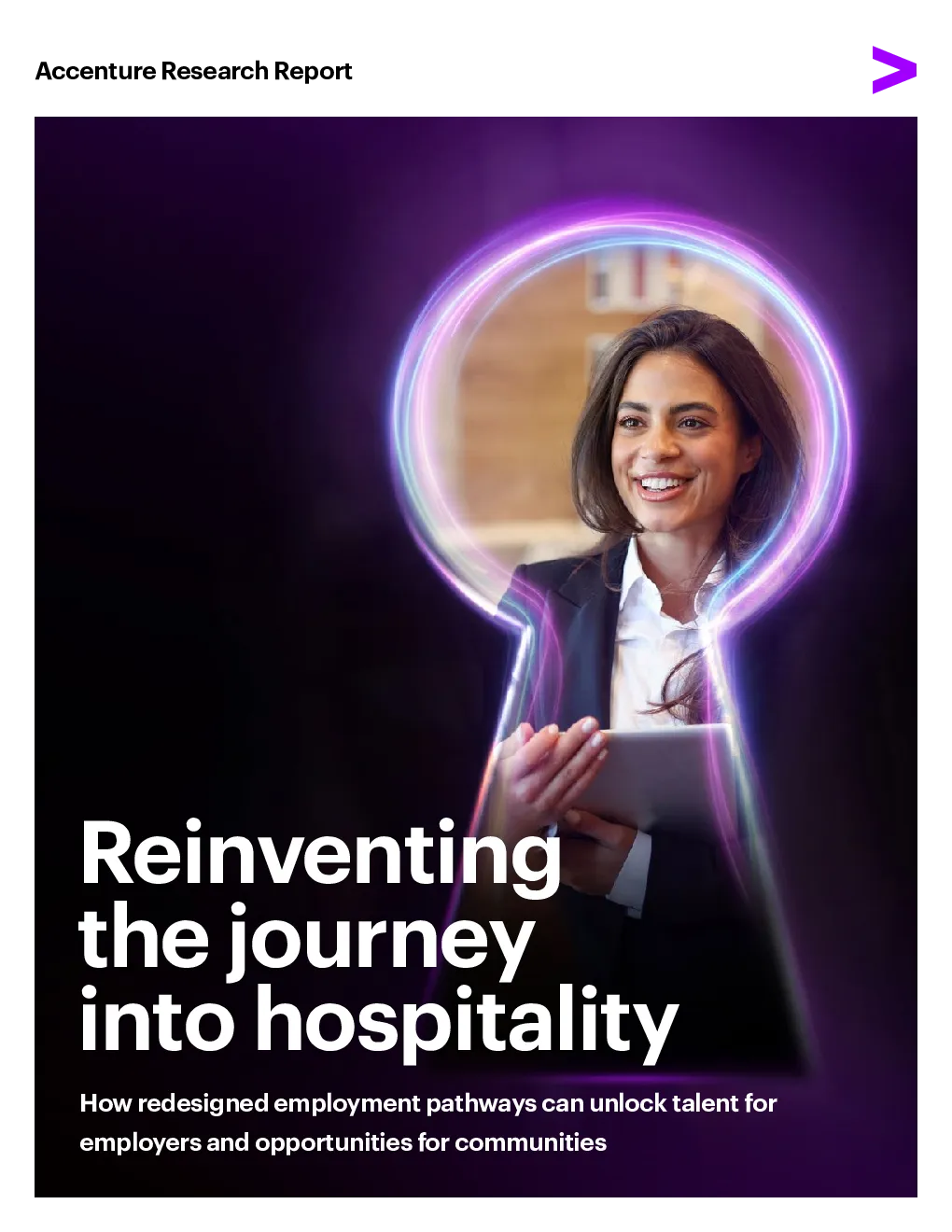
报告封面

How redesigned employment pathways can unlock talent foremployers and opportunities for communities For more than a decade, collaborating with clientsand nonprofit partners, Accenture has been creatingpathways to jobs as part of our commitment tohelping our communities thrive. For this report, wepartnered with the World Sustainable HospitalityAlliance (WSHA) to share real-world examples of howcross-sector collaboration can redesign employmentpathways into hospitality, helping address a persistentindustry-wide talent shortage while widening accessto careers in the sector. While the takeaways apply across hospitality, theexamples in this paper focus on hotel roles, whereAccenture and WSHA have worked alongsideemployers, digital learning partners and nonprofits toreduce barriers, build readiness and support peopleas they move into work and build a lasting career. Authors Glenn Mandziuk Jill Huntley Global Managing Director—CorporateCitizenship, Accenture and Presidentof the Accenture Foundation President and Chief Executive OfficerWorld Sustainable Hospitality Alliance LinkedIn LinkedIn Jill leads Accenture’s global social impactstrategy, bringing deep experience inbusiness consulting, organizationalstrategy and humanitarian work. She hasheld advisory and leadership roles in youthemployment and economic inclusion,including with the World EconomicForum’s Global Advisory Council on YouthUnemployment and as Chair of the Boardof Solutions for Youth Employment. Glenn works with hospitality leaders globallyto advance sustainability, equity and inclusivegrowth across the sector. With three decadesof experience in tourism, hospitality andeconomic development, he has led award-winning sustainability and destinationstewardship initiatives, including a UN-recognized sustainable tourism strategy, andis a recognized global speaker and advisor. Contributors Research & Editorial Corporate Citizenship Victoria CasarrubiosAditi AbhijeetAvimanyu BasuManisha DashNeethu EldoseRegina Maruca Camilla DrejerColleen McGuinness Marketing + Communications Gerold Franke Introduction Page 05 Redesigning employmentpathways to unlock newtalent pools Page 07 03 From inspiring examplesto coordinated action Page 11 01 Introduction Priya helps run her family’s small guesthouse outside Pune, India. Shemanages bookings, handles suppliers and, because she is fluent in threelanguages, helps people from many backgrounds feel at home. But she hasalways wanted to move to the city and build a career for herself beyond thefamily business. When she sees a post about an entry-level role at a hotelin central Pune, she’s excited, until she realizes that the local bus can’t gether to an induction that starts at 7 a.m., and temporary accommodationin Pune is not available. These logistics, not her ability to do the job, keepPriya from taking that promising step toward the future she envisions. Priya’s story is illustrative, but the pattern is real. With better employmentpathway design, often through minor adjustments to how businesses attractand support candidates for entry-level roles, more people can launch thecareers they seek. Employers, in turn, can reach untapped talent pools, helpingto address persistent entry-level staffing gaps. Hospitality has long been one of the most important entry points into theworking world. Supporting more than 350 million jobs worldwide, roughlyone in 10 globally, the sector creates opportunities in communities at a scalefew industries can match.1For many, it is more than a first job; it is a route toeconomic stability and a career worth building. Yet not everyone who couldsucceed in hospitality has the same ability to access those opportunities.Many of today’s employment pathways inadvertently present barriers,excluding capable people before employers ever have the chance to seetheir potential. Some lack the exposure to imagine themselves in the sectorto begin with. Others can see the opportunity but face practical obstaclesthat prevent them from pursuing it. million-workersshortfall8.6 below requiredstaffing levels18% The missed opportunity extends to communities, too. When fewer peoplecan access stable work and achieve economic stability, communityresilience becomes harder to realize. (projected for hospitalityindustry by 2035) For hospitality employers, unfilled roles and early attrition are materialbusiness challenges. Roles that remain open stretch teams and compromisethe guest experience, while rapid turnover erodes the return on theinvestment employers make in getting new workers hired in the first place.The World Travel & Tourism Council identifies recruiting and retaining talentas the greatest single workforce challenge facing the industry today. By 2035,the hospitality industry is projected to face a shortfall of 8.6 million-workershortfall, leaving the sector roughly 18% below required staffing levels.2 The challenges are clear, but viable and replicable solutions are emerging.D