您的浏览器禁用了JavaScript(一种计算机语言,用以实现您与网页的交互),请解除该禁用,或者联系我们。 [科学出版社]:中国和东南亚国家红树林评估报告:现状、挑战与未来行动 - 发现报告

中国和东南亚国家红树林评估报告:现状、挑战与未来行动

农林牧渔 2026-08-10 - 科学出版社 落枫
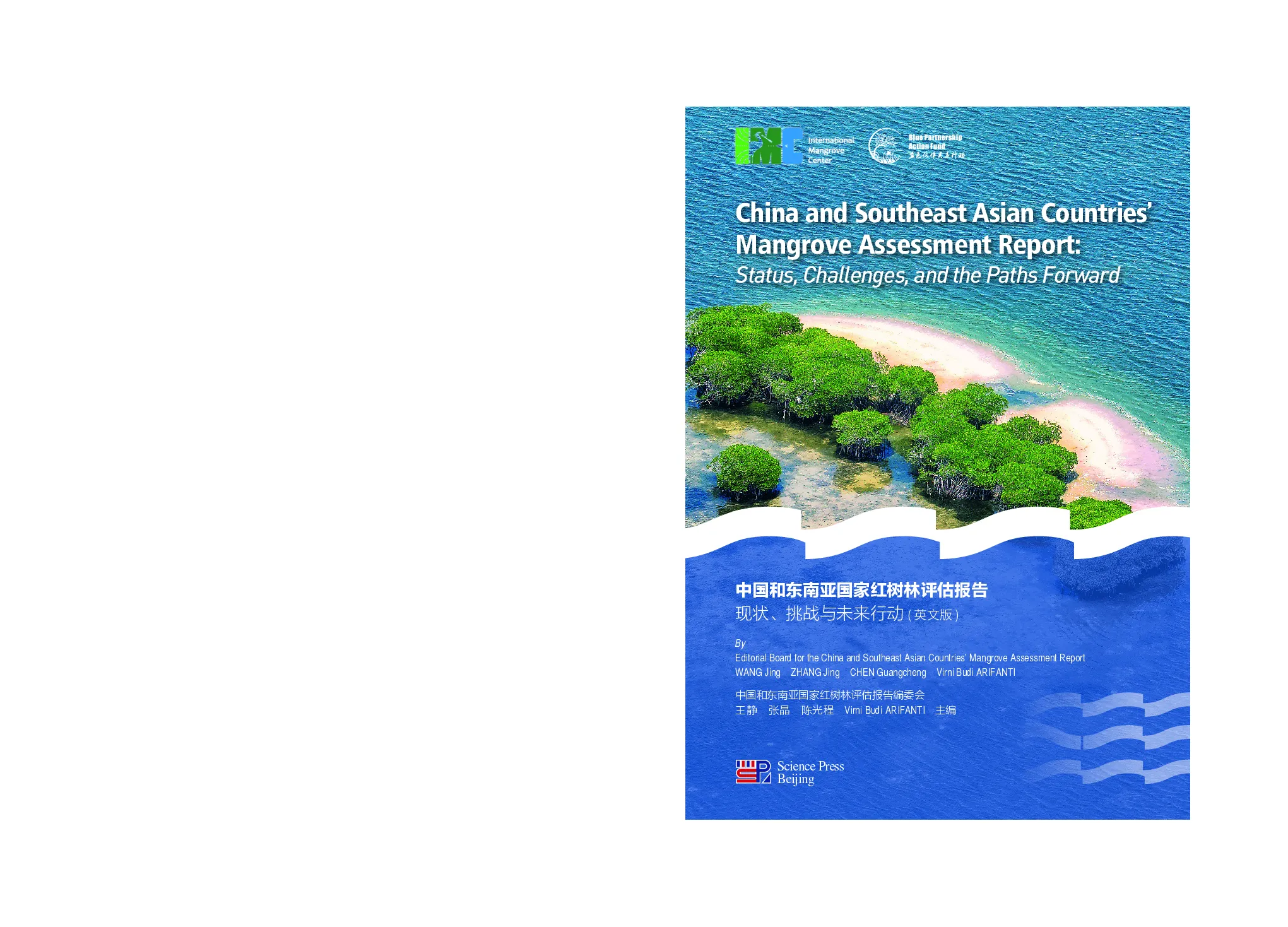
报告封面

中国和东南亚国家红树林评估报告现状、挑战与未来行动(英文版) ByEditorial Board for the China and Southeast Asian Countries’ Mangrove Assessment ReportWANG JingZHANG Jing CHEN Guangcheng Virni Budi ARIFANTI 主编中国和东南亚国家红树林评估报告编委会王静张晶陈光程Virni Budi ARIFANTI Science PressBeijing China and Southeast AsianCountries’ MangroveAssessment Report: Status, Challenges, andthe Paths Forward 中国和东南亚国家红树林评估报告现状、挑战与未来行动(英文版) ByEditorial Board for the China and Southeast AsianCountries’ Mangrove Assessment ReportWANG JingZHANG Jing CHEN GuangchengVirni Budi ARIFANTI 中国和东南亚国家红树林评估报告编委会王静张晶陈光程Virni Budi ARIFANTI主编 China and Southeast Asian Countries’ Mangrove Assessment Report:Status, Challenges, andthe Paths Forward WANG Jing, SEE FoundationZHANG Jing, SEE FoundationCHEN Guangcheng, Third Institute of Oceanography, Ministry of Natural Resources, P.R.ChinaVirni Budi ARIFANTI, Research Center for Ecology, National Research and Innovation Agency ofthe Republic of Indonesia (BRIN)DOU Rui, Ant Forest FoundationFAN Min, SEE Foundation ISBN 978-7-03-086391-1Science Press, Beijing Copyright ©2026 by Science PressThe designation of geographical entities in this book and the presentation of the material, do notimply the expression of any opinion whatsoever on the part of SEE Foundation or other participatingorganizations concerning the legal status of any country, territory or area, or its authorities, orconcerning the delimitation of its frontiers or boundaries. The views expressed in this report do not necessarily reflect those of SEE Foundation, or otherparticipating organizations. Responsible Editor: MA JunHAO ChenyangContact: majun@mail.sciencep.com; (86)+010-64012501. haochenyang@cspm.com.cn; (86)+010-64002134 Brief Introduction TheChina and Southeast Asian Countries’ Mangrove AssessmentReport: Status, Challenges, and the Paths Forwarddelivers a comprehensiveoverview of mangrove ecosystems and governance across China andASEAN member states. Leveraging national experiences, empirical data, andpolicy advancements, this volume analyzes regional biodiversity alongsideshared conservation challenges, such as coastal development and climatechange. Key subjects include restoration efforts, community engagement,and blue carbon initiatives. Crucially, the report addresses data disparities,highlighting the need for international cooperation to standardize monitoring.This publication was made possible through the generous support of regionalpartner organizations. We extend our sincere gratitude to all contributingchapter authors, reviewers, and partner organizations who shared their dataand expertise. Tailored for a diverse audience, this publication serves as an essentialresource for policymakers, government agencies, researchers, academicians,and students. It is equally valuable for private sector stakeholders, NGOs,development practitioners, and members of the public interested in coastalgovernance. It also acknowledges the invaluable contributions of fieldpractitioners and community representatives whose firsthand experiencesenrich the text. By providing accessible information and actionable insights,the report helps readers identify primary conservation bottlenecks and makeinformed decisions to build sustainable, resilient coastal futures. Editorial Board for theChina and Southeast Asian Countries’Mangrove Assessment Report A. Aldrie AMIRAung Myint OOCHEN GuangchengCHEN ShunyangCHENG JunChristian L. MONTILIJAODing Li YONGDOU RuiFAN MinFrida SIDIKJunior Gama PINTOJurgenne H. PRIMAVERALi-Lee CHEWLuis da COSTAMario M. CABRALMeas RITHYPoonsri WANTHONGCHAIRona Joy A. LOMASiriporn SRIARAMSum DARATAK ChandaraTariq Mubarak HUSINThiri Dae Wei AUNGVanessa Herranz MuñozVirni Budi ARIFANTIWANG JingWANG WenqingXU WansuYU WeiweiZHANG JingZHANG Wei MalaysiaMyanmarChinaChinaChinaPhilippine (the)SingaporeChinaChinaIndonesiaTimor-LestePhilippine (the)MalaysiaTimor-LesteTimor-LesteCambodiaThailandPhilippine (the)ThailandCambodiaCambodiaMalaysiaMyanmarSpainIndonesiaChinaChinaChinaChinaChinaChina Forward I The world’s mangroves stand at a critical turning point. Rooted in theintertidal zone between land and sea, these ecosystems occupy less than1% of the world’s forest area yet deliver a disproportionately large rangeof ecological functions—sequestering carbon (blue carbon), harboringexceptional biodiversity, and protecting coastlines, thereby supporting thelivelihoods and safety of millions of coastal inhabitants. However, underthe pressures of economic development, the impacts of climate change,and fragmented management capacities, mangrove conservation facesunprecedented and complex challenges. It is against this backdrop that the International Mangrove Center(IMC) was established. As a global platform dedicated to driving mangroveconservation and sustainable development worldwide, we believe that thefundamental pathway to ensuring the long-term health and sustainabilityof mangrove ecosystems lies in the deep integration of rigorous science,effective policies and