您的浏览器禁用了JavaScript(一种计算机语言,用以实现您与网页的交互),请解除该禁用,或者联系我们。 [美国癌症研究协会]:AACR全球儿童癌症现状报告 - 发现报告

AACR全球儿童癌症现状报告

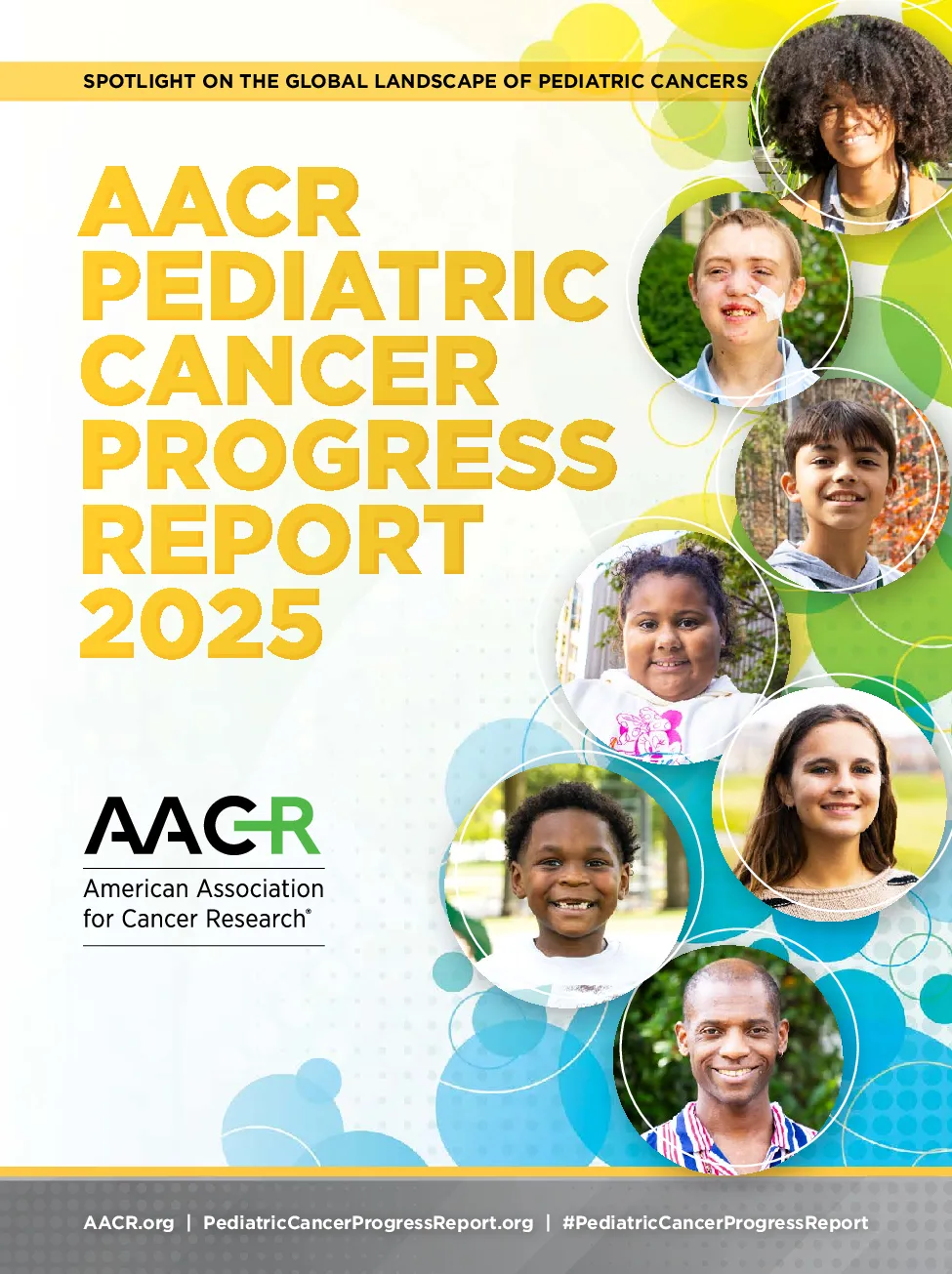
报告封面

PLEASE CITE THIS REPORT AS: American Association for Cancer Research®. AACR Pediatric Cancer Progress Report 2025.Accessed: [Month] [Day], [Year]. Available from: [Link] TABLE OF CONTENTS Pediatric Cancer Predispositionand Surveillance47 Identifying Children WithCancer Predisposition Syndromes47The Role of Distinctive Signs or Symptoms. . . . . . .48The Role of Genetic Testing. . . . . . . . . . . . . . . . . . . . .49The Role of Genetic Counseling. . . . . . . . . . . . . . . . .52 Recommendations56 New Frontiers in Surveillance for ChildrenWith Cancer Predisposing Syndromes58 Minimally Invasive Approaches. . . . . . . . . . . . . . . . . .58Artificial Intelligence–based Solutions. . . . . . . . . . . .59Innovative Imaging Enhancements. . . . . . . . . . . . . . .62 Funding Pediatric Cancer Research: A Vital Investment25Economic Toll of Pediatric Cancers. . . . . . . . . . . . . .25Framework for FundingPediatric Cancer Research. . . . . . . . . . . . . . . . . . . . . .26 Progress in PediatricCancer Treatment63 Modernizing Clinical Research64Advances in Pediatric Cancer TreatmentWith Surgery, Radiation, and Chemotherapy. . . . . .67Less Is Sometimes More. . . . . . . . . . . . . . . . . . . . . . . .67A New Era for Radiotherapy. . . . . . . . . . . . . . . . . . . .68Evolving Chemotherapy Strategies. . . . . . . . . . . . . .69 Unraveling the Genomicsand Biology of Pediatric Cancers29 Molecular and Cellular InfluencesDriving Pediatric Cancers30 Genetic Alterations. . . . . . . . . . . . . . . . . . . . . . . . . . . . .31Germline Variants in CancerPredisposition Genes34Somatic Mutations35Epigenetic Modifications. . . . . . . . . . . . . . . . . . . . . . .37Developmental Pathways Gone Awry. . . . . . . . . . . .37Tumor Microenvironment. . . . . . . . . . . . . . . . . . . . . . .39 Transforming Pediatric Cancer Outcomes Through Precision Diagnostics69 Molecular Insights DrivingRisk Stratification and Treatment. . . . . . . . . . . . . . . .71 Innovative Technologies DecodingPediatric Cancer Complexities40 Single-cell, Multi-omic,and Spatial Technologies. . . . . . . . . . . . . . . . . . . . . . .40CRISPR Gene Editing. . . . . . . . . . . . . . . . . . . . . . . . . .41Research Model Systems. . . . . . . . . . . . . . . . . . . . . . .41Artificial Intelligence. . . . . . . . . . . . . . . . . . . . . . . . . . .43Liquid Biopsy. . . . . . . . . . . . . . . . . . . . . . . . . . . . . . . . .43 Building and Connecting Data Networks. . . . . . . . .45 Global State of Pediatric Cancer Clinical Trials131Molecular Profiling DrivingPrecision Medicine. . . . . . . . . . . . . . . . . . . . . . . . . . . .131Multinational Platform Trials. . . . . . . . . . . . . . . . . . .133Challenges and Opportunitiesin Trials Globally. . . . . . . . . . . . . . . . . . . . . . . . . . . . .134 Pediatric ALL as aModel of Global Progress. . . . . . . . . . . . . . . . . . . . . .135Access to Clinical Care:Disparities and Solutions. . . . . . . . . . . . . . . . . . . . . .138 Supporting Survivors ofPediatric Cancers104 Challenges Faced byPediatric Cancer Survivors105 Physical Challenges. . . . . . . . . . . . . . . . . . . . . . . . . .105Endocrine disorders105Cardiotoxicity105Second Primary Cancers109Reproductive Health and Fertility110Neurocognitiveimpairment110Accelerated Aging andChronic Health Conditions110Late Effects of Precision Medicine112Psychosocial Challenges. . . . . . . . . . . . . . . . . . . . . . .112Financial Challenges. . . . . . . . . . . . . . . . . . . . . . . . . . .113 Global State of the PediatricOncology Workforce144 Investing in Pediatric CancerResearch to Secure a Healthier Future146Policies Advancing PediatricCancer Research and Care147Applying Regulatory Science to AdvancePediatric Cancer Research and Care. . . . . . . . . . . . .151 Current LegislationUnder Consideration. . . . . . . . . . . . . . . . . . . . . . . . . .153 Care Coordination Across the PediatricCancer Survivorship Continuum118Supporting Parents and Other Caregivers. . . . . . . .121 Potential Policy Actions to AdvancePediatric Cancer Research and Care. . . . . . . . . . . .155 AACR Call To Action156 Understanding the GlobalLandscape of Pediatric Cancers123 References158Appendix175Index177 Global Epidemiology ofPediatric Cancers126Global Policies andPartnerships to Improve Care. . . . . . . . . . . . . . . . . .128 Figures Figure 1:Establishment of the Children’s Oncology Group, p. 17Figure 2:Progress Against Pediatric Cancer, p. 18Figure 3:Why Do US Cancer Disparities Exist?, p. 24Figure 4:Inherited Cancer Risk in Children and Adolescents, p. 31Figure 5:Generation of Fusion Proteins Through Chromosomal Rearrangements, p. 36Figure 6:Ways to Perform Genetic Testing for Cancer Predisposition Syndromes in Children, p. 49Figure 7:The Early Detection, Diagnosis, and SurveillanceContinuum for Individuals with Cancer Predisposition Syndromes, p. 52Figure 8:Phases of Clinical Trials, p. 64Figure 9:Genomic