您的浏览器禁用了JavaScript(一种计算机语言,用以实现您与网页的交互),请解除该禁用,或者联系我们。 [阿克曼发展网络&欧盟]:2026年全球营养报告:融合粮食与医疗卫生体系 构建气候韧性营养保障体系 - 发现报告

2026年全球营养报告:融合粮食与医疗卫生体系 构建气候韧性营养保障体系

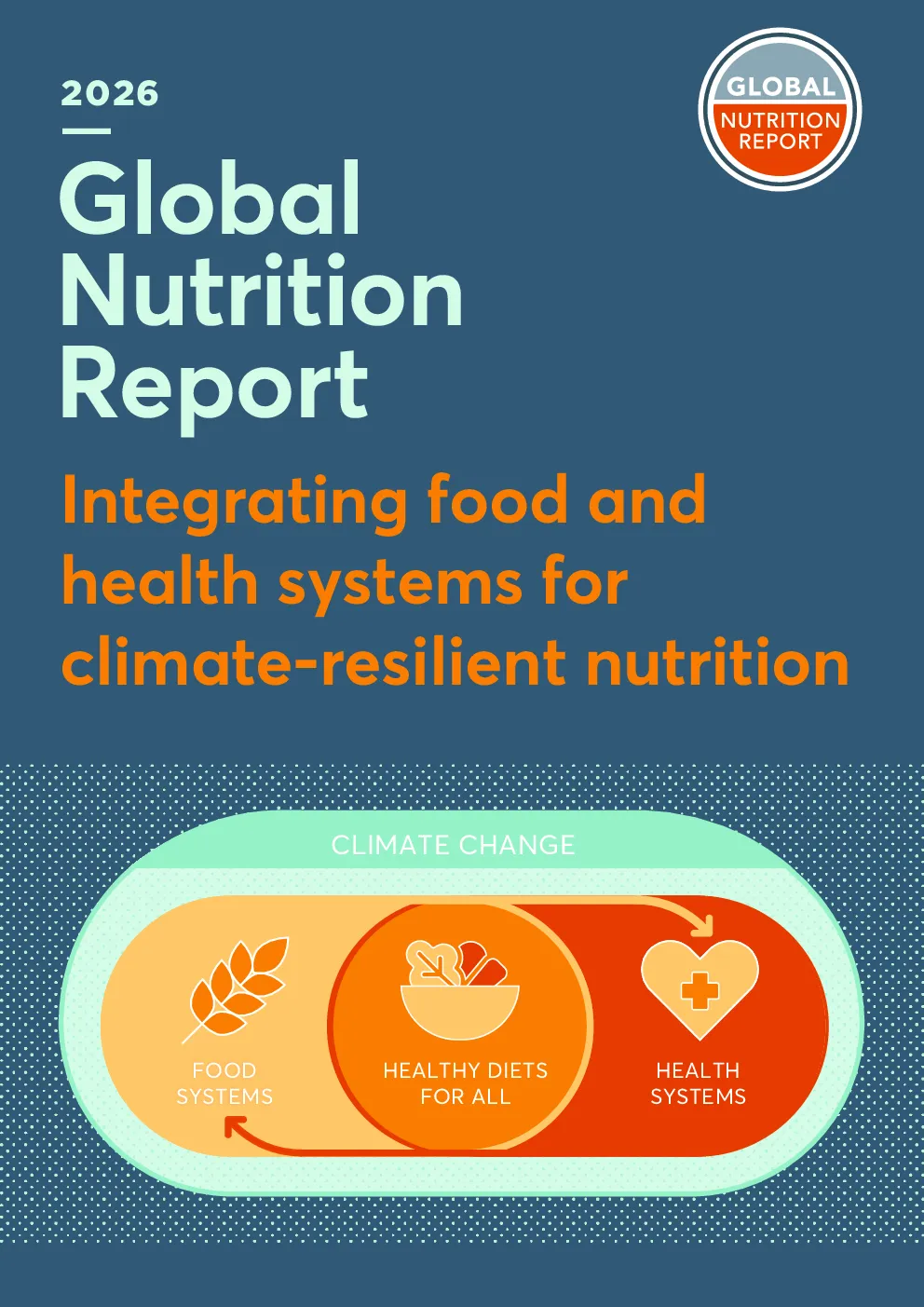
报告封面

The state of global nutritionIntegrating food andhealth systems forclimate-resilient nutrition ENDORSEMENTS The Aga Khan Development Network welcomes the2026 Global Nutrition Reportand its call formore integrated food and health system approaches to protect nutrition amid conflict, financingconstraints, and environmental shocks. The report’s evidence-based analysis highlights howinterconnected crises are undermining nutrition outcomes and reinforces the importance of cross-sector collaboration grounded in country experience. This aligns closely with the longstandingwork of the Aga Khan Foundation, Aga Khan University, Aga Khan Health Services, and partnersto strengthen health systems, improve food security and social protection, and generate evidenceacross fragile settings. We hope the report will guide governments, donors, and developmentpartners in accelerating progress against malnutrition. Michael Kocher, President, Aga Khan Foundation Amid converging crises in climate, health and overseas development financing, the2026 GlobalNutrition Reportprovides both an analytical and practical framework for achieving healthy dietsthrough more coordinated action across food and health systems. Its approach strongly reflectsthe experience of the National Information Platforms for Nutrition (NIPN), which have evolved intoa powerful mechanism for multisectoral, country-led and evidence-informed nutrition action. Bystrengthening national leadership, governance and institutional capacity, NIPN has demonstratedthe value of flexible, collaborative approaches. The report’s recommendations are practical andgrounded in real-world challenges, offering a focused path toward the global nutrition targets andSustainable Development Goals. Laura Barrington, Coordinator, Capacity for Nutrition – National Information Platforms forNutrition (C4N-NIPN), Knowledge for Nutrition Programme Climate change threatens food and health systems, straining access to balanced nutrition.Addressing this requires integrating food security into climate investment, ensuring solutions benefitpeople and the planet. Poor nutrition harms productivity, deepens inequality and puts prosperity atrisk - demanding coordinated action from governments, businesses and civil society. The European Union (EU) leads in combating global malnutrition, and the2026 Global NutritionReportprovides evidence needed for stronger collective efforts. Better cross-sector coordinationis vital. Through Global Gateway, the EU funds evidence-based approaches linking nutritionto broader Sustainable Development Goals. By strengthening policy and delivery, we can turncommitments into impact and build resilience against global challenges. Jozef Síkela, Commissioner for International Partnerships, European Commission The2026 Global Nutrition Reportis a timely reminder of the importance of tackling malnutrition andachieving Sustainable Development Goal 2: Zero Hunger. The report highlights key areas that weneed to focus on to ensure sustainable, long-term nutrition action, working across food and healthsystems and promoting integrated approaches which bring together nutrition, environmental,equity and economic outcomes. It also highlights the high cost-benefit return from scaling upnutrition actions through existing primary healthcare platforms and social protection systems aswell as supporting more nutritious food systems. This resonates strongly with the UK’s priorities ondevelopment, climate and women and girls. The UK remains committed to tackling malnutrition inall its forms, and we look forward to collaborating with partners to support integrated approachesthat deliver co-benefits on health, poverty, women’s empowerment and climate resilience. Baroness Chapman, Minister for Development and Africa, United Kingdom’s Foreign,Commonwealth and Development Office The2026 Global Nutrition Reportshows that nutrition is deeply connected to climate change, healthand sustainable development. It also makes clear that our food and health systems are under realpressure as climate impacts and other overlapping crises grow. Even so, the report reminds usthat progress is possible. By strengthening national institutions and making nutrition a core partof everyday health and food systems, countries can protect communities and maintain hard-won gains, even in tight fiscal times. Canada supports the call to move past isolated efforts andfocus on integrated, country-led solutions. This approach guides initiatives like the Climate SmartAgriculture and Food Systems Fund, which helps farmers in developing countries access the supportthey need to adopt sustainable practices that improve food and nutrition security. These effortsshow what system-based action can achieve, but the report is clear that more work lies ahead.Canada remains committed to working with partners to support healthier lives for all. Randeep Sarai, Secretary of State (International Development), Canada ThisGlobal Nutrition Rep