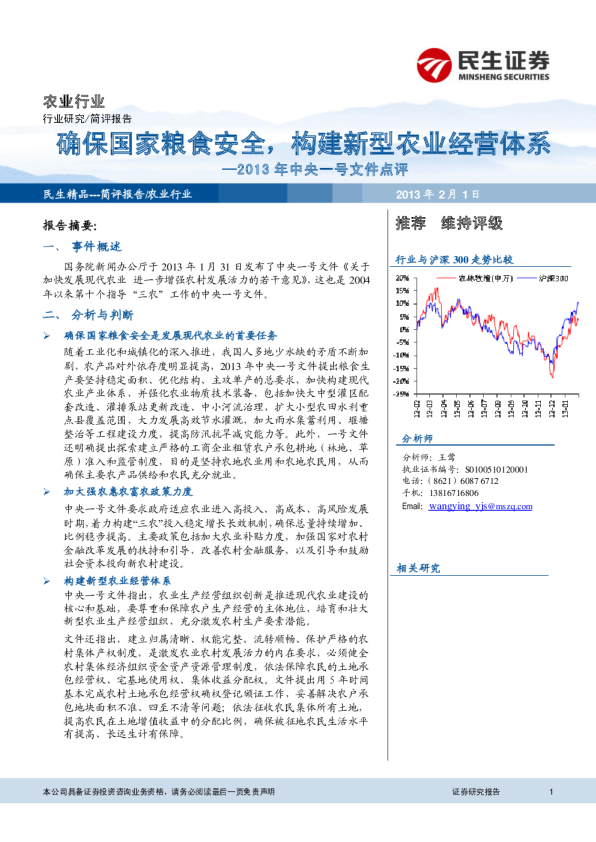
粮食安全:构建21世纪的耐气候粮食体系
The World Government Summit is a global platform dedicated to shapingthe future of governments worldwide. Each year, the Summit sets theagenda for the next generation of governments with a focus on how theycan harness innovation and technology to solve universal challengesThe World Government Summit is a knowledge exchange center at theintersection of government, futurism, technology, and innovation. Itfunctions as a thought leadership platform and networking hub forpolicymakers, experts and pioneers in human development.The Summit is a gateway to the future as it functions as the stage foranalysis of future trends, concerns, and opportunities facing humanity.It is also an arena to showcase innovations, best practice, and smartsolutions to inspire creativity to tackle these future challenges.AnsweringTomorrow’sQuestionsTodayWorld Government Summit 2facing humanity. Sustainable and Resilient Foods for Future GenerationTable of ContentsTopicsINTRODUCTION1. UNDERSTANDING THE CURRENT STATUS QUO2. IMPACT OF INCREASED STRESS ON GLOBAL FOOD SYSTEMS3. METROPOLITAN AREAS CANNOT RELY ON ONE-SIZE-FITS-ALL SOLUTIONS4. GOVERNMENTS CAN LEVERAGE A SERIES OF KEY FOOD SECURITY ENABLERS5. THE ROAD AHEADAPPENDIX A.APPENDIX B.APPENDIX C. 5040507101420222324 Sustainable and Resilient Foods for Future GenerationIntroductionThe food crisis of 2007-2008 shook both developed and developing countries to the core. Between 2006 and2008, the average world price for oil rose by 110 percent1, rice by 217 percent, wheat by 136 percent, maizeby 125 percent, and soybeans by 107 percent2.Even cities said to be relatively food secure like Singapore weretaken by surprise, with food-import prices increasing by 12 percent3.What happened next? Between 2010 and2012, food prices reached new heights. In 2011, Robert Zoellick, former World Bank president, warned that theworld was “one shock away from a full-blown crisis”. What has changed since then? Have governments takenthe necessary steps to make their countries and cities more food secure? Or are we one step away from the nextglobal food crisis?This paper does not offer a prediction as to if or when the next food crisis will occur. However, it defines whatchallenges lie ahead, and offers countries and cities a framework to assess how food secure they are and thenecessary tools to do something about it.For the world to be food secure, countries and cities need to ensure that all aspects of their food supply chainare in check, from farm to fork, whether imported or locally produced. While several countries have put muchemphasis on food production, it is important to remember that one cannot be food secure without processingfacilities, necessary infrastructure, and logistics, as well as adequate distribution channels. Food security doesnot permit weak links.Our food systems do not operate in isolation. They are part of an environment, and the road ahead is pavedwith hurdles. Indeed, given the dramatic advance of climate change and increasingly severe weather events, aswell as population growth, increased urbanization, aging population, changing dietary patterns, and decreasedarable land, our global food system will need to become both more resilient and climate resistant. This paperoffers an analysis into each of these challenges to assess how our food systems need to adapt.If anything is evident, meeting future food demand will require a complete reinvention of our global foodsystem away from the current status quo. This will mean rethinking and restructuring everything from thetechnologies we use, the scale of investments in the agriculture and food sector, to our welfare programs anddiets. We will need to produce more and better. While no country or city start at the same point, all need toadapt. From net exporters to importers and from urbanized Singapore to highly desertic Saudi Arabia, there isno one solution that fits all.This paper analyzes key levers for each aspect of food security to provide countries and cities with a clear pictureof what can be done and a roadmap to enable them to develop long-term food security strategies and in sodoing meet their populations’ most basic need. Not only will countries and cities need to produce more, theywill need to produce more in the face of increasing disruption. To that end, we will propose insights into thenext wave of climate resistant technologies that will push our global food system into the 21st century.Global challenges will require global cooperation. In facing megatrends such as a population boom in a hyper-urbanized world, countries cannot afford to leave corners of the world with unexploited agricultural potentials.Increased investment and technology transfers are sorely needed. With climate change disrupting entire supplychains and generating waves of climate and food refugees, it is clear no country will be able to claim to be foodsecure without regional and international cooperation.1. The impact of oil prices fluctuations on tran