特斯拉公司2026年第一季度预览
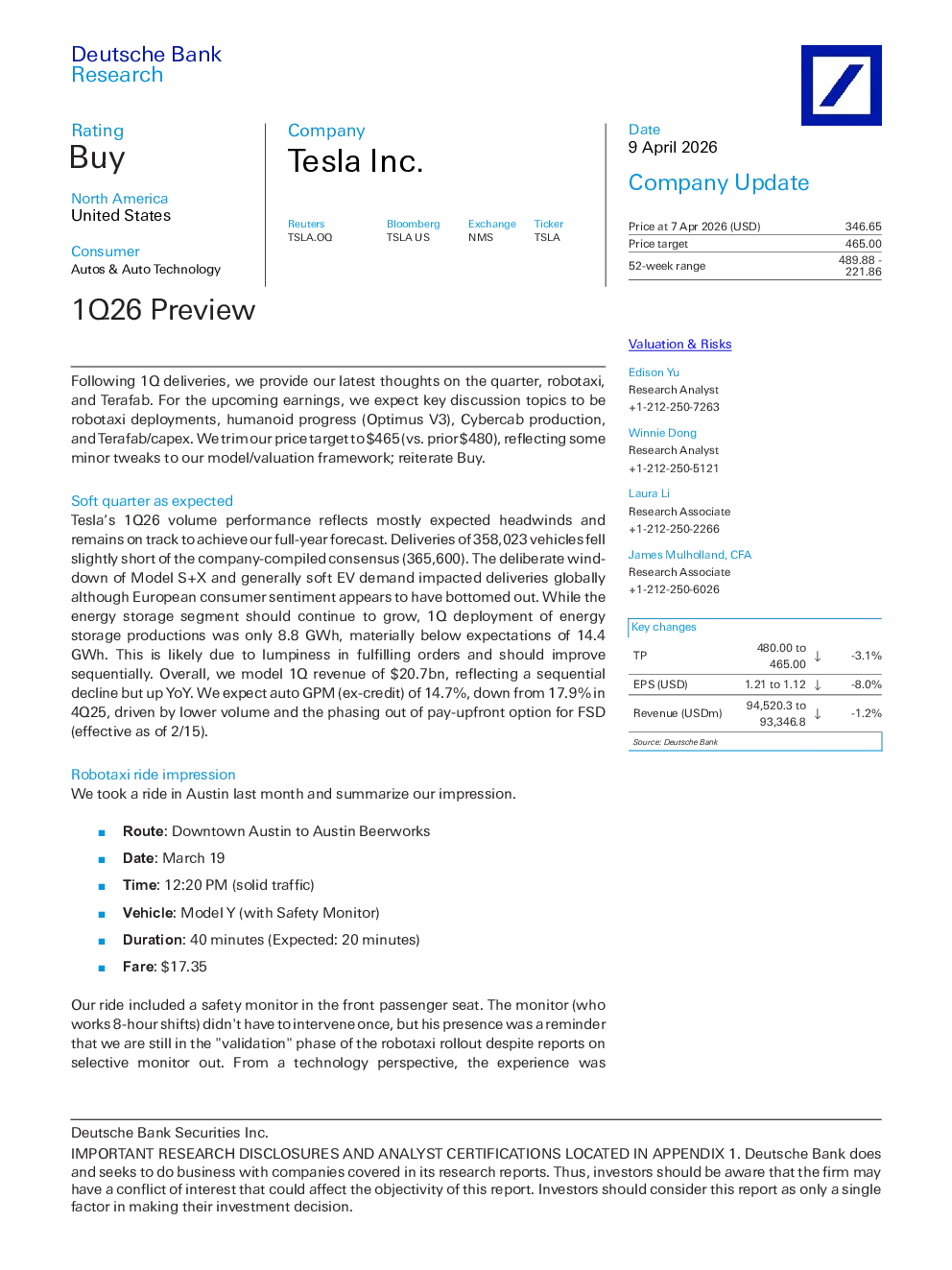
ConsumerAutos & Auto Technology 1Q26 Preview Valuation & Risks Edison YuResearch Analyst Following 1Q deliveries, we provide our latest thoughts on the quarter, robotaxi,and Terafab. For the upcoming earnings, we expect key discussion topics to berobotaxi deployments, humanoid progress (Optimus V3), Cybercab production,and Terafab/capex. We trim our price target to $465 (vs. prior $480), reflecting some Winnie DongResearch Analyst Laura LiResearch Associate Soft quarter as expected Tesla’s 1Q26 volume performance reflects mostly expected headwinds andremains on track to achieve our full-year forecast. Deliveries of 358,023 vehicles fellslightly short of the company-compiled consensus (365,600). The deliberate wind-down of Model S+X and generally soft EV demand impacted deliveries globallyalthough European consumer sentiment appears to have bottomed out. While theenergy storage segment should continue to grow, 1Q deployment of energy James Mulholland, CFAResearch Associate Robotaxi ride impression We took a ride in Austin last month and summarize our impression. nRoute: Downtown Austin to Austin BeerworksnDate: March 19nTime: 12:20 PM (solid traffic)nVehicle: Model Y (with Safety Monitor)nDuration: 40 minutes (Expected: 20 minutes)nFare: $17.35 Our ride included a safety monitor in the front passenger seat. The monitor (whoworks 8-hour shifts) didn't have to intervene once, but his presence was a reminderthat we are still in the "validation" phase of the robotaxi rollout despite reports on 9 April 2026Autos & Auto Technology impressive and seamless. In dense traffic, the vehicle was able to handle merges,initiate lane change signals, and navigate around a truck that changed lanes. Theonly frustration was perhaps the route logic. The car appeared to have opted for asignificant detour to avoid a certain route it isn’t yet authorized to use. While ahuman driver would have likely muscled through the traffic on the highway, the Looking to 1Q earnings, we expect Tesla to provide an update on expansions intoother cities (from Austin and SF currently) including those below. We will also belooking for updates on the production of CyberCab which should start production nFlorida: Miami, Orlando, and Tampa home turf) Tesla also started to disclose active FSD subscriptions, exiting 4Q at 1.1m users(+38% YoY) globally with 70% being upfront purchases. Starting Feb 15, there willno longer be an option to pay upfront (i.e., only subscription at $99/month). Thismay put some pressure on margins near-term given upfront purchases are highly Terafab suggests more capex coming Long term, Tesla confirmed its intention to pursue Terafab, a very ambitiousendeavor for semiconductor vertical integration (logic, HBM4 memory, andpackaging) targeting 1 TW of capacity. Management believes current global chipproduction accounts for only about 2% of the future AI compute capacity needs.Through Terafab, CEO Elon Musk believes the JV can design, fabricate, and test newAI chips (like the upcoming AI5) at much faster speed. Applications for these chipswill span autonomous vehicles, Optimus, and space data centers (majority of futureallocation). The initial $20-25bn outlay will be spent on a phase 1 pilot facility at Giga In terms of capex, Tesla already committed to +$20bn this year excluding Terafaband domestic solar cell production. While the economics of Terafab have not beenofficially disclosed, we assume Tesla’s capex this year should be at least above$20bn. Tesla is reportedly in talks to purchase nearly $3bn worth of solar panel/cell Reiterate Buy; trim price target to $465 Our valuation has been underpinned by success in Physical AI since we resumedcoverage. As such, our framework remains the same. We make some minor tweaks Appendix 1 Important Disclosures *Other information available upon request Important Disclosures Required by U.S. Regulators Disclosures marked with an asterisk may also be required by at least one jurisdiction in addition to the United States.SeeImportant Disclosures Required by Non-US Regulators and Explanatory Notes. 8.Deutsche Bank and/or its affiliate(s) expects to receive, or intends to seek, compensation for investment bankingservices from this company in the next three months.14.Deutsche Bank and/or its affiliate(s) has received compensation from this company within the past year for non- Important Disclosures Required by Non-U.S. Regulators Disclosures marked with an asterisk may also be required by at least one jurisdiction in addition to the United States.SeeImportant Disclosures Required by Non-US Regulators and Explanatory Notes. 24.Deutsche Bank and/or its affiliate(s) is or has been over the previous 12 months party to an agreement with thecompany relating to the provision of services set out in Sections A and B of Annex I of Directive 2014/65/EU, or hasover the previous 12 months been obliged or entitled (as applicable) to pay or receive compensation relating to the F