宜居和有弹性城市手册:将危害和风险信息纳入城市规划(英)2025
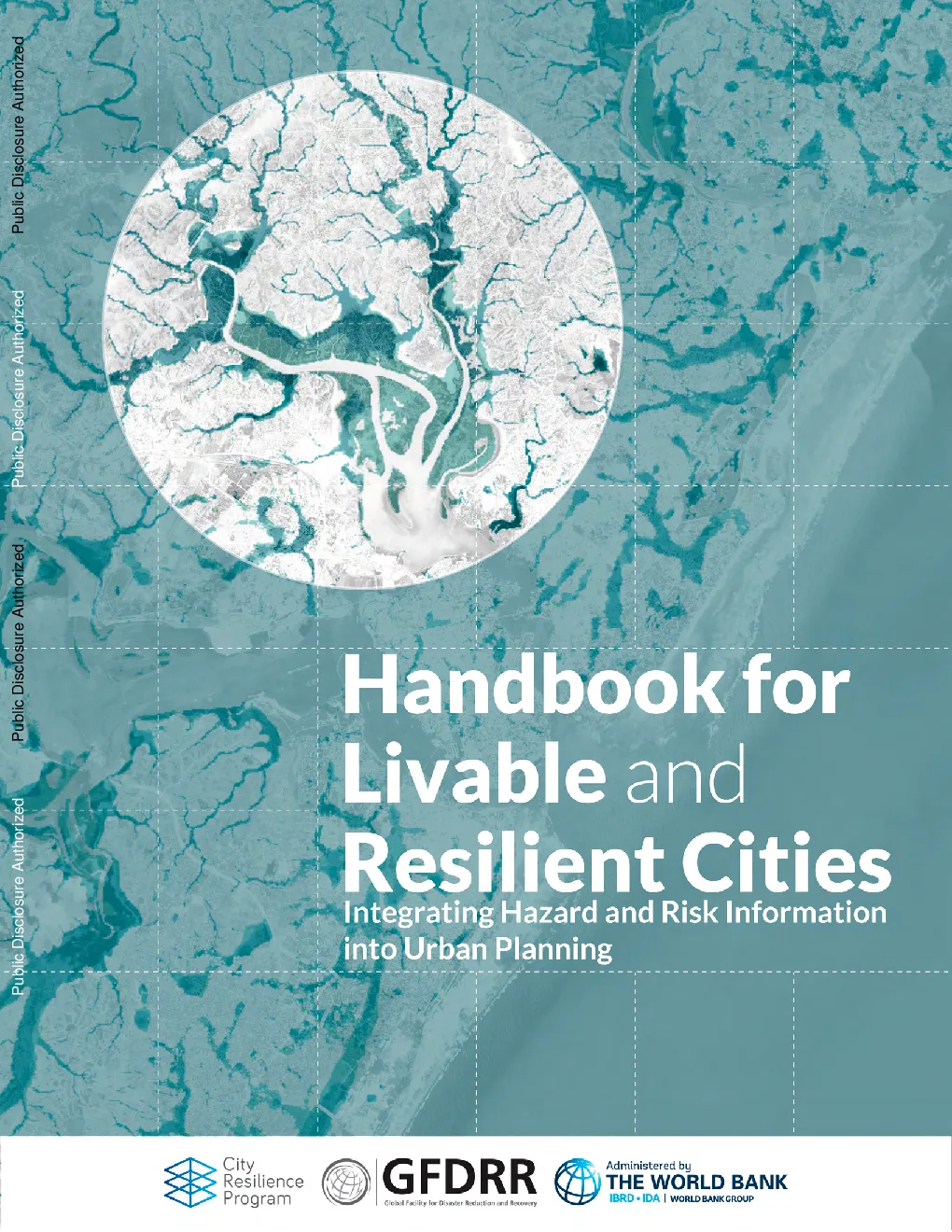
© 2025 International Bank for Reconstruction and Development / The World Bank1818 H Street NW, Washington, DC 20433Telephone: 202-473-1000; internet: www.worldbank.org Some rights reserved This work is a product of the staff of The World Bank and the Global Facility for Disaster Reduction and Recovery(GFDRR), with external contributions. The findings, interpretations, and conclusions expressed in this work do notnecessarily reflect the views of The World Bank, its Board of Executive Directors, or the governments they represent.The World Bank does not guarantee the accuracy, completeness, or currency of the data included in this work anddoes not assume responsibility for any errors, omissions, or discrepancies in the information, or liability with respectto the use or failure to use the information, methods, processes, or conclusions set forth. The maps presented inthis publication have been reviewed and approved by the World Bank Cartography Unit. The boundaries, colors,denominations, and other information shown on any map in this work do not imply any judgment on the part of TheWorld Bank concerning the legal status of any territory or the endorsement or acceptance of such boundaries. Nothing herein shall constitute or be considered to be a limitation upon or waiver of the privileges and immunities ofThe World Bank, all of which are specifically reserved. Rights and Permissions.The material in this work is subject to copyright. Because the World Bank encouragesdissemination of its knowledge, this work may be reproduced, in whole or in part, for noncommercial purposes aslong as full attribution to this work is given. Attribution.Please cite the work as follows:“World Bank. 2025. The Handbook for Livable and Resilient Cities. IntegratingHazard and Risk Information into Urban Planning. Washington, DC: World Bank.” Translations.If you create a translation of this work, please add the following disclaimer along with the attribution:This translation was not created by The World Bank and should not be considered an official World Bank translation. TheWorld Bank shall not be liable for any content or error in this translation. Adaptations.If you create an adaptation of this work, please add the following disclaimer along with the attribution:This is an adaptation of an original work by The World Bank. Views and opinions expressed in the adaptation are the soleresponsibility of the author or authors of the adaptation and are not endorsed by The World Bank. Third-party content.The World Bank does not necessarily own each component of the content contained withinthe work. The World Bank therefore does not warrant that the use of any third-party-owned individual componentor part contained in the work will not infringe on the rights of those third parties. The risk of claims resulting fromsuch infringement rests solely with you. If you wish to reuse a component of the work, it is your responsibility todetermine whether permission is needed for that reuse and to obtain permission from the copyright owner. Examplesof components can include, but are not limited to, tables, figures, or images. Any queries on rights and licenses, including subsidiary rights, should be addressed to World Bank Publications, TheWorld Bank Group, 1818 H Street NW, Washington, DC 20433, USA; e-mail: pubrights@ worldbank.org. Cover design, layout, and illustrations: Cosme Arquitectura y Paisaje. On the cover: Pluvial Flood Probability Map in Mombasa. Background Image Credit: Flood data: Fathom Global 3.0Flood Hazard Data; Roads: OpenStreetMap; Aerial: Esri, Vantor, Earthstar Geographics, and the GIS User Community. Table of Contents Foreword...........................................................................................................................................................................................10Acknowledgments.......................................................................................................................................................................11Abbreviations and Acronyms.................................................................................................................................................12Executive Summary.....................................................................................................................................................................14Part I: Conceptual Framework...............................................................................................................................................191. Why Risk-informed Urban Planning?...............................................................................................................................201.1 Risk-informed Urban Planning for Livable and Resilient Cities.....................................................................231.2 Enabling Environment..........................................................................................