2025年11月月度预算审查
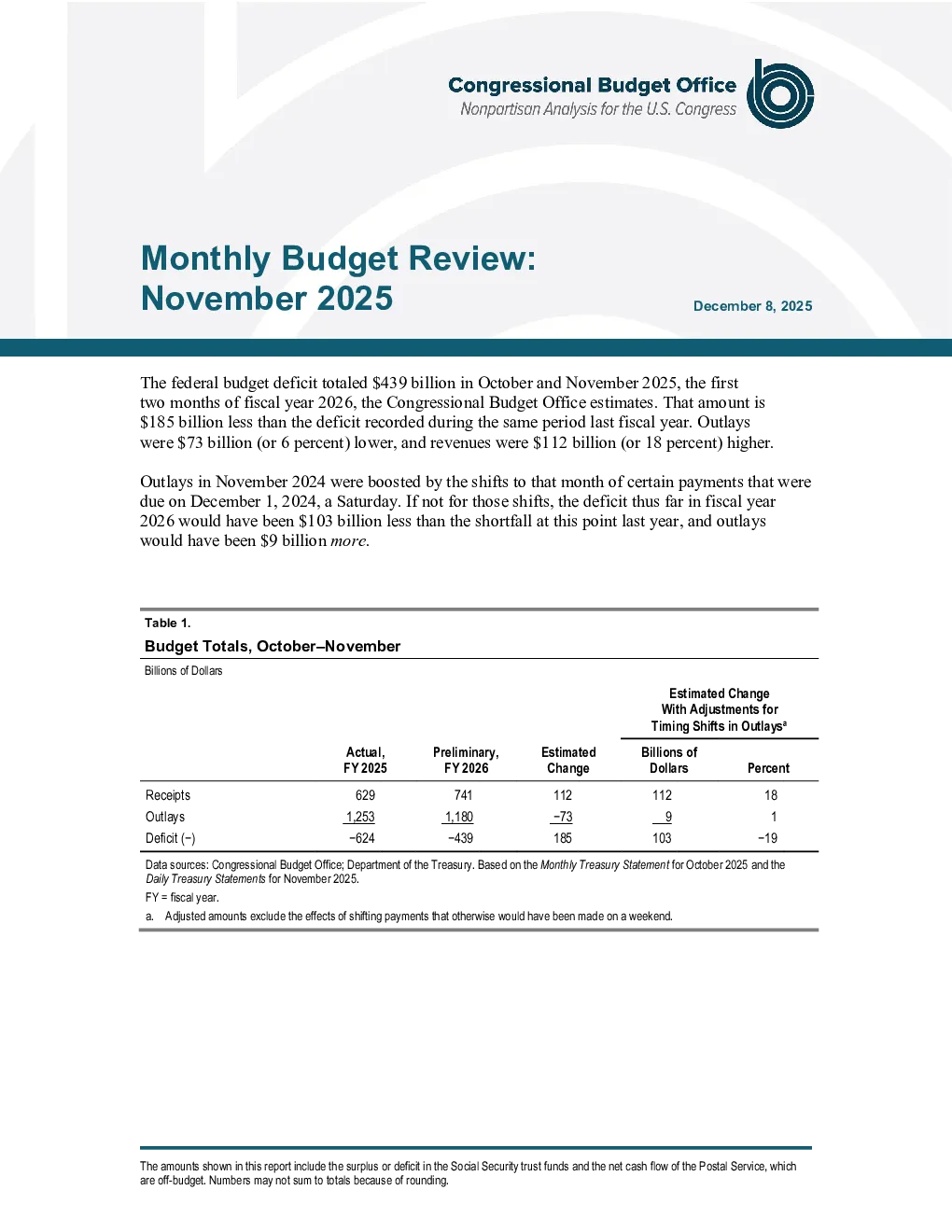
December8,2025 The federal budget deficit totaled $439 billion in October and November 2025, the firsttwo months of fiscal year 2026, the Congressional Budget Office estimates. That amount is$185 billion less than the deficit recorded during the same period last fiscal year. Outlayswere $73 billion (or 6 percent) lower, and revenues were $112 billion (or 18 percent) higher. Outlays in November 2024 were boosted by the shifts to that month of certain payments that weredue on December 1, 2024, a Saturday. If not for those shifts, the deficit thus far in fiscal year2026 would have been $103 billion less than the shortfall at this point last year, and outlayswould have been $9 billionmore. Total Receipts: Up by 18 Percent in Fiscal Year 2026 Receipts totaled $741 billion during the first two months of fiscal year 2026, CBO estimates—$112 billion more than during the same period a year ago. That increase was caused largely bychanges in tariff rates that began in February 2025 and reflects the enactment in July of the2025 reconciliation act. The changes in receipts from last year to this year were as follows: ■Individualincome and payroll(social insurance)taxestogether increased by $69 billion(or 12 percent). •Nonwithheld payments of income and payroll taxes increased by $41 billion (or68 percent), relative to payments in the same period in fiscal year 2025. Some final taxpayments for 2024 and estimated payments of taxes for 2025 were due in October 2025.•Amounts withheld from workers’ paychecks rose by $20 billion (or 4 percent), areflection of rising wages and salaries.•Individual income tax refunds were $8 billion (or 23 percent) less than during the sameperiod in 2025, boosting net receipts.■Customs duties,which include tariff revenues, collected this year were more than four timesthe amount recorded in October and November of last year, an increase of $48 billion. TheAdministration began raising tariff rates for most imported goods in February 2025; thoserates have changed frequently throughout the year.■Receipts fromcorporate income taxeswere nearly unchanged compared with the sameperiod in fiscal year 2025. The enactment of the 2025 reconciliation act allowed corporationsto take larger deductions for certain investments in 2025, thereby reducing some estimatedpayments and mitigating growth in receipts.■Receipts fromother sourcesdeclined by $5 billion (or 17 percent) compared with the sameperiod last year, primarily reflecting a decrease in excise taxes of $5 billion (or 27 percent). Total Outlays: Down by 6 Percent in Fiscal Year 2026 Outlays in the first two months of fiscal year 2026 were $1,180 billion, CBO estimates,$73 billion less than during the same period last year. If not for the timing shifts noted above,outlays so far in fiscal year 2026 would have been $9 billion (or 1 percent)greaterthan outlaysduring the same two months in fiscal year 2025. The discussion below reflects adjustments toexclude the effects of those timing shifts. Outlays for the three largest mandatory spending programs rose by $46 billion (or 9 percent): ■Spending forSocial Securitybenefits rose by $18 billion (or 7 percent) because of increasesin average benefits and in the number of beneficiaries. Average benefits increased mostlybecause of cost-of-living adjustments that affected all beneficiaries and because the SocialSecurity Fairness Act of 2023, enacted in January 2025, increased benefit payments to certainrecipients. That law accounted for about $3 billion of the $18 billion increase. ■Medicareoutlays increased by $21 billion (or 14 percent) primarily because a onetime$16 billion payment to Part D prescription drug plans was settled in November 2025. Thatpayment compensated for higher-than-expected spending by those plans in 2024.■Medicaidoutlays increased by $7 billion (or 6 percent), largely because of rising costs perenrollee. Outlays fornet interest on the public debtrose—by $22 billion (or 14 percent)—because thedebt was larger than it was in the first two months of fiscal year 2025 and because of higherlong‑term interest rates and an increase in the rate of inflation. Estimated ChangeWith Adjustments forTiming Shifts in Outlaysa The largest decreases were the following: ■Spending by theEnvironmental Protection Agencydecreased by $15 billion (or85 percent), CBO estimates, primarily because in November 2024 that agency spent$17 billion for a grant program established by the 2022 reconciliation act to finance cleantechnologies, provide capital for energy-efficiency projects in disadvantaged communities,and support solar power projects in low-income communities. No such spending occurred thisyear. ■Outlays of theDepartment of Agriculturedecreased by $11 billion (or 23 percent) largelybecause the lapse in federal appropriations during October and November 2025 disruptedspending for disaster relief and farm loan programs and spending by the Commodity CreditCorporation.■Spending by theDepartment of Home