2025年9月月度预算审查
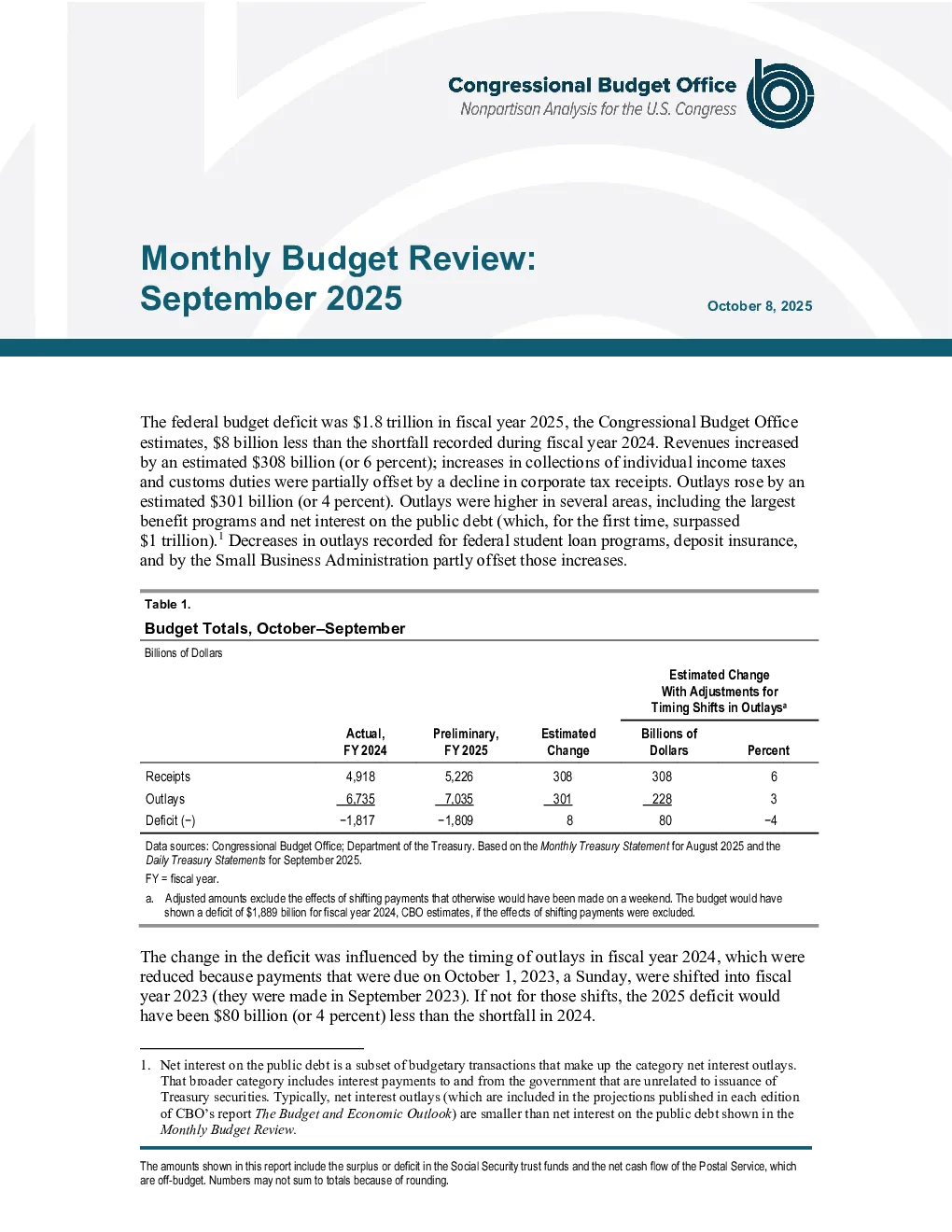
The federal budget deficit was $1.8 trillion in fiscal year 2025, the Congressional Budget Officeestimates, $8 billion less than the shortfall recorded during fiscal year 2024. Revenues increasedby an estimated $308 billion (or 6 percent); increases in collections of individual income taxesand customs duties were partially offset by a decline in corporate tax receipts. Outlays rose by anestimated $301 billion (or 4 percent). Outlays were higher in several areas, including the largestbenefit programs and net interest on the public debt (which, for the first time, surpassed$1 trillion).1Decreases in outlays recorded for federal student loan programs, deposit insurance,and by the Small Business Administration partly offset those increases. The change in the deficit was influenced by the timing of outlays in fiscal year 2024, which werereduced because payments that were due on October 1, 2023, a Sunday, were shifted into fiscalyear 2023 (they were made in September 2023). If not for those shifts, the 2025 deficit wouldhave been $80 billion (or 4 percent) less than the shortfall in 2024. CBO’s estimate of the deficit for 2025 is slightly smaller than the shortfall CBO anticipated in theJanuary 2025 baseline projections.2Those projections were based on legislative andadministrative actions through early December 2024; subsequent actions are included in thenumbers in this report. CBO now estimates that, all told, revenues and outlays alike were slightlymore than the totals projected in January. The current deficit estimate of $1.8 trillion is consistentwith updated projections that CBO published last month.3 Early in the next calendar year, CBO will publishThe Budget and Economic Outlook: 2026to 2036. That report will provide CBO’s economic and budgetary projections for the2026‑2036 period, covering topic areas including the 2025 reconciliation act, tariffs, andimmigration. The House and Senate Committees on the Budget have instructed CBO to publish theMonthlyBudget Reviewduring the current lapse in federal appropriations because the report providesinformation that the Congress needs to carry out its Constitutional functions. Because of the lapsein funding, some data that CBO typically would use for its analysis were unavailable. Total Receipts: Up by 6 Percent in Fiscal Year 2025 Receipts totaled $5.2 trillion during fiscal year 2025, CBO estimates—$308 billion more thanduring fiscal year 2024. That increase was moderated by changes to payment deadlines for certaintaxpayers over the past two years. Receipts were boosted by about $70 billion in the first quarterof fiscal year 2024 because the Internal Revenue Service (IRS) postponed certain 2023 taxdeadlines until early in fiscal year 2024 for some taxpayers in federally declared disaster areas. The IRS also postponed, until early in fiscal year 2026, certain 2025 deadlines for a smaller groupof similarly affected taxpayers. The changes in receipts from fiscal year 2024 to fiscal year 2025 were as follows: Individual incomeandpayroll (social insurance)taxes together rose by $260 billion (or6 percent). •Amounts withheld from workers’ paychecks rose by $185 billion (or 6 percent), areflection of rising wages and salaries. •Nonwithheld payments of income and payroll taxes increased by $95 billion (or9 percent) relative to fiscal year 2024. CBO estimates that the postponement of deadlinesfor some taxpayers in 2023 shifted $35 billion in nonwithheld payments into thebeginning of fiscal year 2024. As a result, the estimated increase for fiscal year 2025 wassmaller than it otherwise would have been. Since the beginning of January, thosenonwithheld payments have been 15 percent greater than payments from the same periodlast year, mostly reflecting an increase in 2024 tax liabilities.•Individual income tax refunds increased by $26 billion (or 9 percent). (Some refundsstemming from refundable tax credits are classified as outlays and discussed separatelybelow.) Receipts fromcorporate income taxesdecreased by $77 billion (or 15 percent) relative tofiscal year 2024. The 2025 reconciliation act, enacted in July, allowed corporations to takelarger deductions for certain investments in 2025, reducing some estimated payments. Inaddition, CBO estimates that the postponement of deadlines for some taxpayers in 2023shifted $35 billion in payments into the beginning of fiscal year 2024. Receipts fromcustoms duties (includingtariffs)increased by $118 billion (or 153 percent)relative to fiscal year 2024. Since February, the Administration has increased tariffs on mostimported goods. Receipts fromother sourcesrose by $7 billion (or 4 percent) relative to fiscal year 2024. •Miscellaneous fees and fines increased by $4 billion (or 10 percent).•Excise taxes increased by $3 billion (or 2 percent).•Remittances from the Federal Reserve to the Treasury increased by $2 billion(or 75 percent).•Estate and gift taxes decreased by $2 billion (or 6 percent). Total Outlays: Up by 4 Per