第九期加纳经济更新:应对加纳经济格局中的劳动力市场挑战和机遇(英)2025
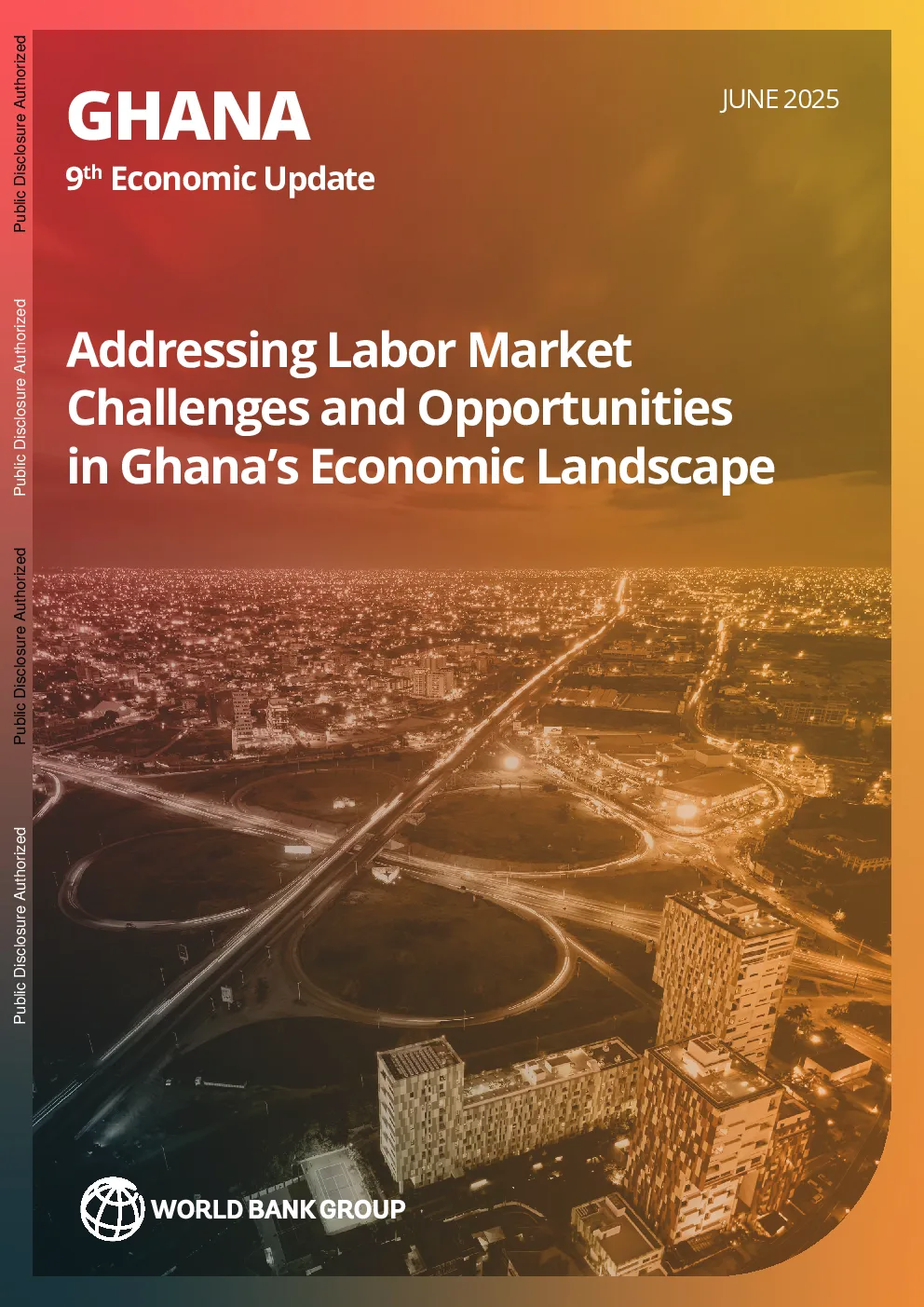
Addressing Labor MarketChallenges and Opportunitiesin Ghana’s Economic Landscape Table of Contents ACKNOWLEDGMENTSvABBREVIATIONS AND ACRONYMSviABOUTviiiEXECUTIVE SUMMARY11. GLOBAL ECONOMIC CONTEXT, RECENT ECONOMIC DEVELOPMENTS, AND OUTLOOK141.1. Global and Regional Context151.2. Recent Economic Developments191.3. Macroeconomic Outlook and Risks441.4. Policy Priorities492. RUNNING ON A TREADMILL: DIAGNOSING GHANA’S STRUGGLE TO TURN GROWTHINTO JOBS AND OPPORTUNITY522.1. Motivation532.2. Running on a Treadmill562.3. Five Jobs Challenges602.4. Outlook - A Renewed Growth and Jobs Agenda for Ghana80Annex A: Supplementary Economic Indicators83Annex B: Internal Migration and the Role of Secondary Cities for Job Creation86 List of Figures Figure 1.1: Developments in Global Context18Figure 1.2: Ghana’s GDP Growth Surges to 5.7 Percent in 2024, Driven by Industry SectorRevival24Figure 1.3: 2024 Fiscal Challenges: Revenue Shortfalls, Election-Driven ExpenditureOverruns, and Arrears Accumulation; but Marked Improvements in Q1 2025 Performance27Figure 1.4: Ghana’s Debt Outlook: High Risk of Distress, but Sustainable on a Forward-Looking Basis, 2024–203433Figure 1.5: 2024 Banking Sector Recovery: Asset Growth, Risk Management, and CreditExpansion amid Lingering Macroeconomic Challenges40Figure 1.6: External Sector Improvement: Trade Surplus, Remittances, and ForeignInvestment Boost43Figure 1.7: Economic Outlook: Fiscal Consolidation, Stricter Monetary Policy, and StrongExternal Sector Position amid Risks48Figure 2.1: Economic Growth and Sectoral Performance, 2012–202357Figure 2.2: Sectoral Employment and Productivity Trends59Figure 2.3: Typology of Employment60Figure 2.4: Population and Employment Composition62Figure 2.5: Within Formal Manufacturing, Food Products and Garments Create the MostJobs65Figure 2.6: Ghana’s Private Sector Holds Significant Untapped ExportOpportunities68Figure 2.7: Low Investments in Assets, FDI, and Credit to Businesses Are Holdingback Job Creation69Figure 2.8: Ghana Scores Poorly on B-READY Categories, Signaling Challenges toCreating an Enabling Environment that Encourages Private Sector Investment69Figure 2.9: Jobs’ Quality72Figure 2.10: Returns to Education73Figure 2.11: Less-Educated Individuals, Youth, and Women Experience High JobTurnover76Figure 2.12: Higher Levels of Education Are Strongly Associated with UpwardMobility in the Labor Market77Figure 2.13: Gender Disparities to Better Jobs79 List of Boxes Box 1.1: Ghana’s Structural Fiscal Challenges Threaten Its Macroeconomic Stability29Box 1.2: Status of Ghana’s Comprehensive Debt Restructuring34Box 2.1: Ghana’s Labor Market, Structural Change, and the ‘Missing Middle’66Box 2.2: The World Bank’s B-READY Framework70Box 2.3: Unlocking Ghana’s Job and Productivity Potential through AgriculturalInvestment78 List of Table Table 1.1: Selected Macroeconomic Indicators, 2022–202821Table 2.1: Transition Matrix75Table A.1: Real GDP Growth by Expenditure Method (%), 2022–202783Table A.2: Key Fiscal Indicators, Percent of GDP, Central Government, 2022–2028(GFS 2001, Cash Basis, % GDP)183Table A. 3: Balance of Payment, 2022–202884Table A. 4: Public Sector Gross Financing Needs and Sources (US$ , millions)85 Acknowledgment This report was prepared by Kwabena Gyan Kwakye (Economist and TaskTeam Leader), Tamoya Christie (Senior Economist), Juan Antonio MelendezAzcunaga (Economist), Andreas Eberhard (Senior Economist), and MahoHatayama (Economist). It benefited from inputs from Neema Mwingu(Senior Financial Sector Economist), Andres F. Garcia (Senior Economist),Laura Rodriguez Takeuchi (Senior Economist), Ashwini Rekha Sebastian(Senior Agriculture Economist), Ebenezer Offei Ansah (E T Consultant), andCarlos Leonardo Vicente (Senior Financial Sector Economist). KennedyFosu (External Affairs Officer) provided guidance on public outreach.Abebe Adugna (Regional Director for Africa West and Central), Robert R.Taliercio (Division Director for Ghana), Sandeep Mahajan (Regional PracticeManager), Frederico Gil Sander (Global Practice Manager, Economic PolicyGP), Stefano Curto (Lead Economist), and Michelle C. Keane (OperationsManager for Ghana) provided overall guidance. The report benefitted fromadministrative support from Pinar Baydar (Operations Analyst), GregoriaDawson-Amoah (Senior Program Assistant), and Irene Sitienei (ProgramAssistant). The peer reviewers were Gustavo Javier Canavire Bacarreza(Senior Economist) and Wilfried A. Kouame (Senior Economist). Abbreviations andAcronyms About The Ghana Economic Update (GEU) is an annual publication by the WorldBank Group that aims to inform public discourse on economic issues andpolicy trade-offs, facilitating dialogue among stakeholders to build consensuson necessary reforms for enhanced macroeconomic management andsustainable, inclusive growth. The report provides an update on recenteconomic developments, the medium-term economic outlook, and potentialrisks. Following severe macroeconomic imbalances