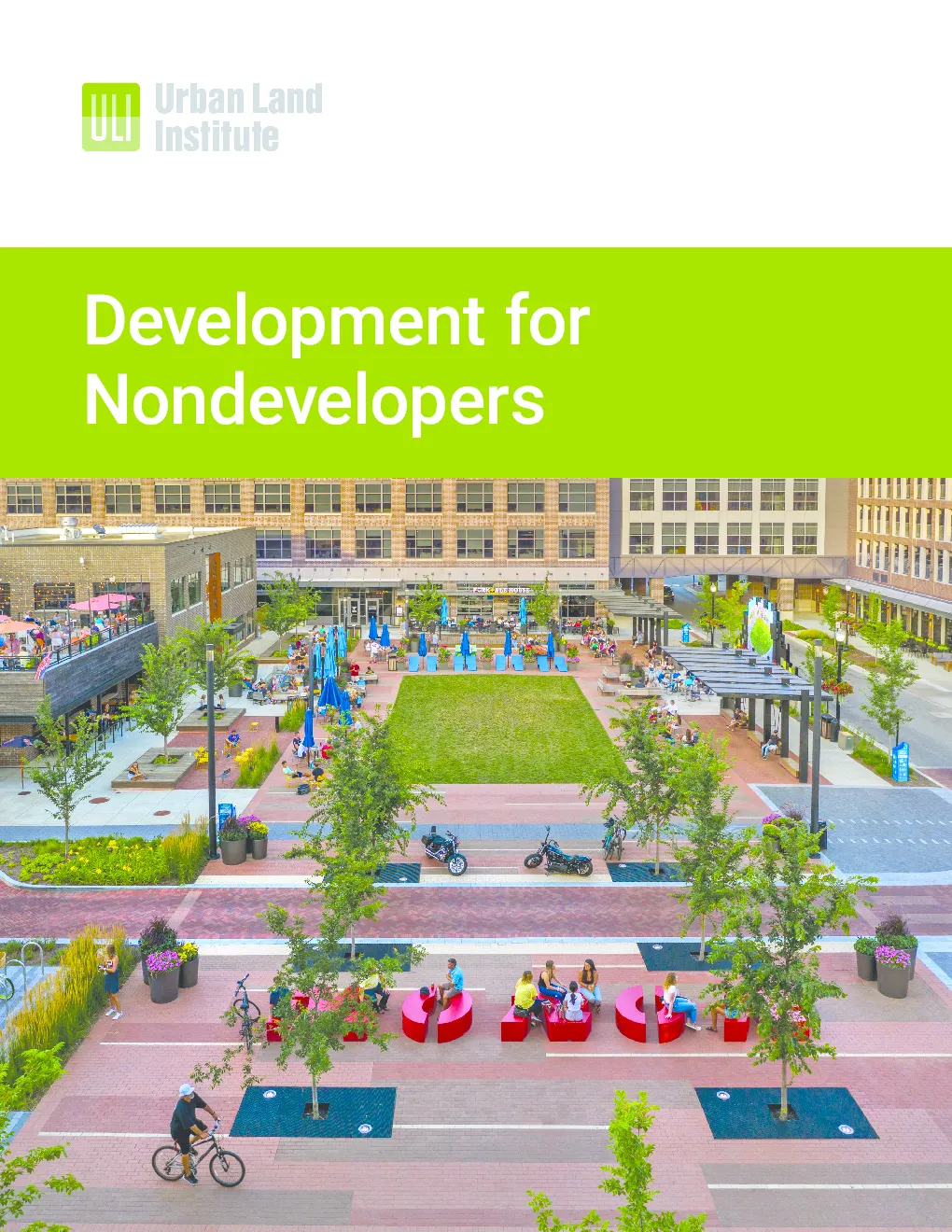
About ULI Randall Lewis Center forSustainability in Real Estate Urban Land Institute The Urban Land Instituteis a global, member-driven organizationcomprising more than 48,000 real estate and urban developmentprofessionals dedicated to advancing the Institute’s mission ofshaping the future of the built environment for transformative impactin communities worldwide. ULI’s interdisciplinary membershiprepresents all aspects of the industry, including developers, propertyowners, investors, architects, urban planners, public officials, realestate brokers, appraisers, attorneys, engineers, financiers, andacademics. Established in 1936, the Institute has a presence in theAmericas, Europe, and Asia Pacific regions, with members in84 countries. The ULI Randall Lewis Center for Sustainability in Real Estate envisions a net zero, resilient, healthy, and inclusive world whereevery person, community, and business thrives. To achieve ourvision, the Center accelerates action for sustainability in real estateand cities by cultivating leadership and knowledge, catalyzingadoption of sustainability practices across the real estate value chain,helping solve land use and real estate challenges, and advancingpolicy solutions. The Center pursues these goals through its four main programs—Decarbonization, Urban Resilience, Healthy Places, and Greenprint—working closely with ULI members and partners to producepublications on cutting-edge issues, host global convenings, providecommunity technical assistance, and organize leadership networks. This Report This report was informed by ULI members and partners—includingboth developers and nondevelopers—to provide an overview ofessential information about the real estate development process.It aims to outline the basics of real estate development to helpcommunity members and public-sector leaders engage effectively inthe real estate development process. Discover transformative practices for real estate and land use atuli.org/sustainability. Connect with the Center atsustainability@uli.org. COVER: (Monon Boulevard, Carmel, Indiana | Hadley Fruits, Rundell Ernstberger Associates) © 2025 by the Urban Land Institute Contents 28Appendixes 3Development Basics 32Notes 33Resources 10Development Potential 34Common Real EstateFinance Terms 13EconomicConsiderations 36Report Contributors 19Regulatory Factors 24CommunityEngagement OVERVIEW The real estate developmentprocess affects every community. The business of real estate—from permitting to design, finance,construction, and operations or sale—is multifaceted andfinancially risky. Real estate development decision-making alsodirectly affects communities. A deeper understanding of thedevelopment process can help people engage constructively in theplanning and implementation of development projects, improvingthe likelihood that those projects will advance local priorities andcontribute to thriving communities. Nearly everyone in the United States lives in a home that was,at one time, built by a developer, shops in stores built by adeveloper, or otherwise uses spaces created as part of a realestate development process—a process that plays a major role indetermining the mix of stores, homes, employment opportunities,and other features present in a community. This resource was informed by ULI members and partners—including both developers and nondevelopers—to providean overview of essential information about the real estatedevelopment process. It aims to outline the basics of realestate development to help community members andpublic-sector leaders engage effectively in the real estatedevelopment process. A more complete understanding of the real estate developmentprocess can make it easier for community members and electedofficials to share local priorities with developers at key stages.This collaboration can make it more likely that projects will meetcommunity goals. With a deeper understanding of the development process,community members and elected officials can be sure that whatthey want to see in their neighborhoods—from new housing togrocery stores to parks with new playground equipment—getsbuilt. Mutual understanding of key stages of the developmentprocess can make collaboration between developers andcommunity stakeholders more effective and productive. The real estate development process isnot clear to most of the population. Real estate development has greatpotential to create benefits forpeople and communities—but thisis not guaranteed. Understanding the basics can helpensure people can effectively andefficiently engage in conversations aboutdevelopment in their communities. Development can play a positive role in generating economicprosperity, increasing community well-being, and helping fundthe infrastructure and services that support quality of life.Development may directly provide community infrastructure andamenities—including green space and affordable housing—or the – Rico Quirindongo, director, Officeof