您的浏览器禁用了JavaScript(一种计算机语言,用以实现您与网页的交互),请解除该禁用,或者联系我们。[世界卫生组织]:HRP联盟在行动:通过在非洲英语国家的合作赋予研究人员权力 - 发现报告

HRP联盟在行动:通过在非洲英语国家的合作赋予研究人员权力

AI智能总结
查看更多
HRP联盟在行动:通过在非洲英语国家的合作赋予研究人员权力

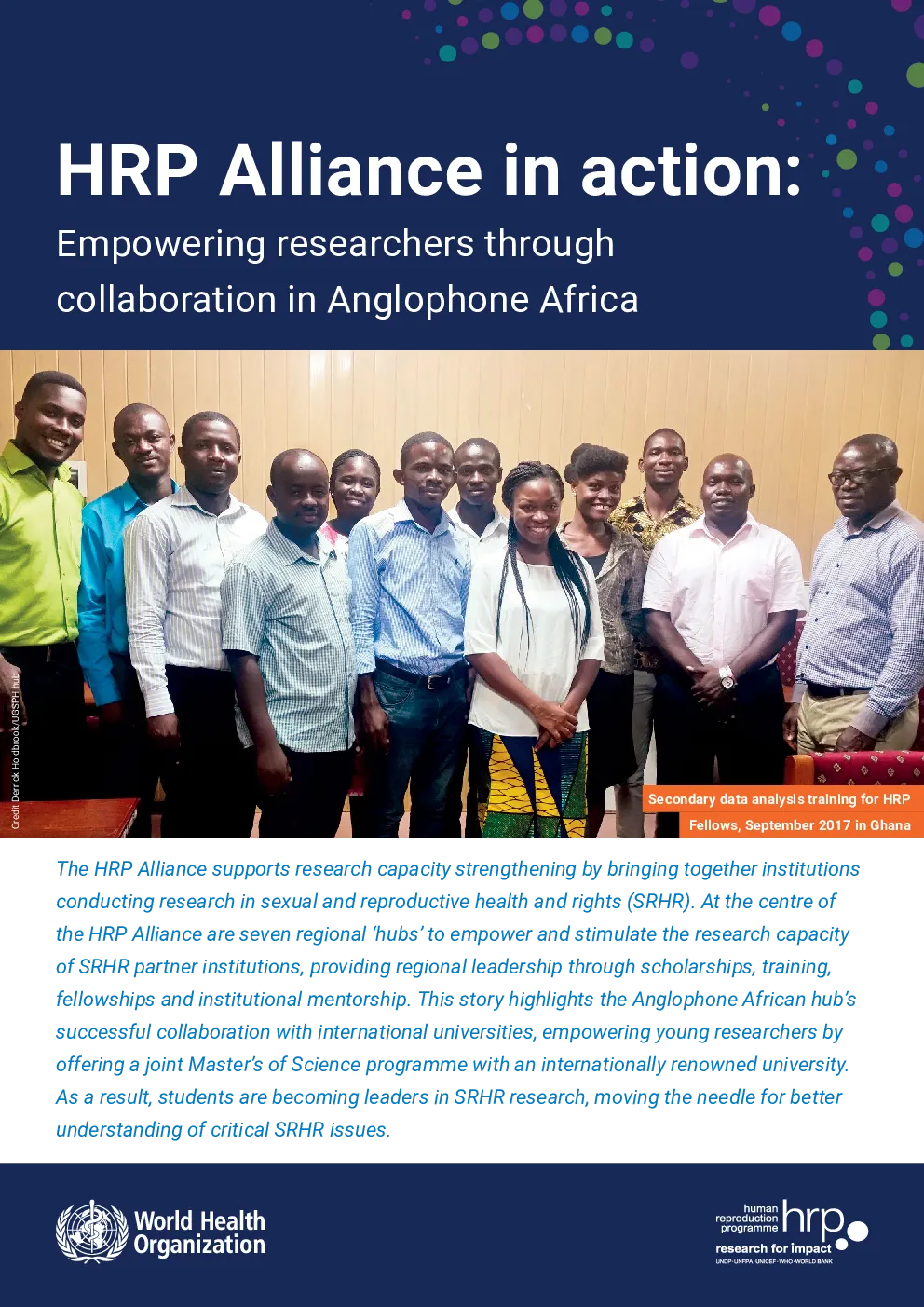
Joint master’s programme:A targeted responseLeveraging on years of support from the HRPAlliance, the hub at UGSPH partnered with LSHTMto develop an online joint Master’s of Scienceprogramme (MSc) in sexual and reproductivehealth policy and programming tailored to meetregional needs. “The partnership with the LondonSchool was a competitive programme. They werelooking for a partner in Africa to implement SRHRtraining in the region. The work that we had donewith the hub allowed us to be competitive. Ourapplication proposed the idea to co-develop an MScfor reproductive health policy and programme. Wedeveloped some modules and we have scholarshipsfor 50 people every year for over a period of threeyears,” said Torpey. The programme combinedrigorous academic coursework with practicalapplications in SRHR, offered through flexible deliverymodes, like online training modules. This approachensures accessibility for working professionals whilemaintaining high academic standards.The hub built on the foundation it had in researchcapacity strengthening, particularly in Sierra Leoneand Ethiopia, by identifying candidates from thesecountries for the joint MSc programme. The hubGrantsmanship training certificates wereawarded to trainees, December 2022, Ghana The regional HRP Alliance hub for AnglophoneAfrica, housed at the University of Ghana School ofPublic Health (UGSPH), has become a cornerstoneof sexual and reproductive health and rights(SRHR) research capacity building in the region.In its fifth year of operation, the hub implementeda landmark initiative, a jointMaster’s of Scienceprogramme in Sexual & Reproductive Health Policyand Programmingin collaboration with the LondonSchool of Hygiene and Tropical Medicine (LSHTM).This programme showcases the hub’s commitmentto addressing pressing regional challenges inresearch capacity and leadership.Regional challenges in SRHR research“Before the collaboration with HRP Alliance, theregion faced significant gaps in SRHR capacity.Despite the presence of practitioners, there wasa shortage of professionals with the advancedskills necessary to lead and innovate in this criticalfield,” said Kwasi Torpey, Dean of the UGSPH andPrincipal Investigator of the hub. Leadership wasanother key challenge; many lacked the capacityto drive transformative projects or influencepolicy. Moreover, while data on SRHR existed,it was underutilized for advancing programmeimplementation and policy development. had already engaged with and trained individualsin SRHR research, creating a pipeline of qualifiedcandidates who could benefit from this jointprogramme. Through the scholarships providedby LSHTM, the hub ensured that individuals couldcontinue their education, further developingtheir expertise in SRHR research methodologies,policy development and programme leadership.Furthermore, this new programme allowed thehub to shift its focus to support international HRPAlliance fellows at the doctoral degree level. Todate, the HRP Alliance has been able to support 26master’s and PhD fellows from eight AnglophoneAfrican countries to complete their postgraduateresearch degrees at the UGSPH.Building on past achievements witha vision towards the futureThe joint MSc programme has been built onyears of investment by the HRP Alliance indeveloping a critical mass of skilled researchers inSRHR, which has resulted in high-quality researchoutputs that contributed to evidence-basedpolicymaking and programme implementation.Several alumni have acquired key roles in academiaand government institutions.Follow-up is key, according to Torpey. “Maintaininga close relationship with the trainees has reallyCredit Derrick Holdbrook/UGSPH hub benefited and ensured continuity. They are not goneafter the graduate training; we were able to use theirexpertise for other SRHR research projects. One ofthe master’s students was just promoted as headof reproductive health service in the governmentof Ghana. One former student is now managinga whole health facility. He was also part of dataanalysis and leadership training,” he said.The programme also demonstrated the powerof partnerships. By leveraging LSHTM’s globalexpertise and the hub’s regional knowledge, thecollaboration provided a holistic educationalexperience that bridged theory and practice. Thissynergy enriched the learning environment and set abenchmark for similar initiatives.Lessons learned and broaderimplicationsTailoring training programmes to address specificregional needs proved critical to the youngresearchers’ success. To this end, the hub hasorganized six courses since 2017 for a total of125 individuals. The lessons learned from theMSc programme also led to the provision ofadditional short courses to other individuals in theregion, including SRHR researchers and ministryof health staff. For example, the hub organised agrantsmanship workshop to provide training onGrantsmanship workshop group picturewith participants, December 2022, Ghana Page4essential fundamentals of gra