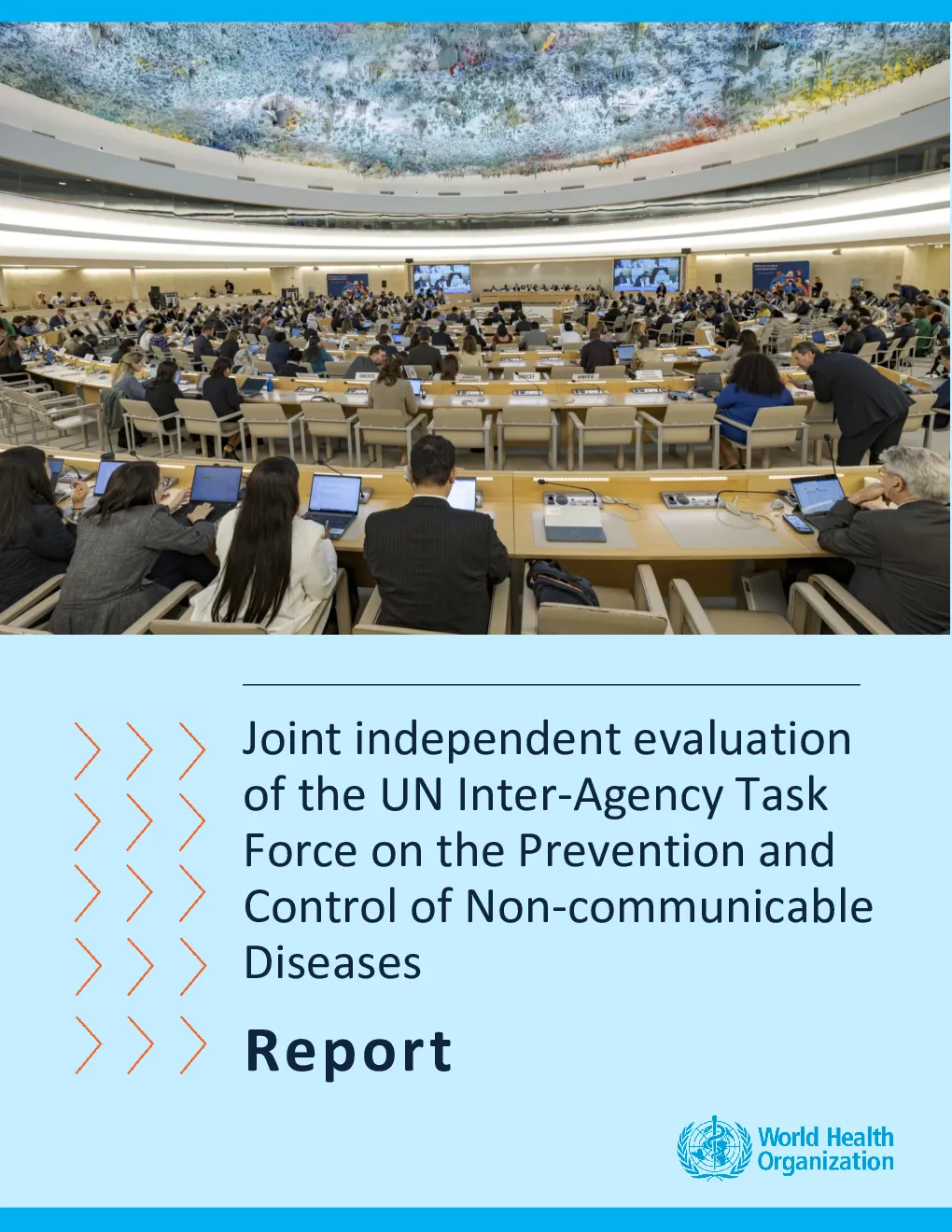
© World Health Organization 2025. All rights reserved.Thecontent of this document is not final and the text may be subject to editorial revisions beforepublication. The content of this draft, however, will not undergo substantive changes. The document maynot be reviewed, abstracted, quoted, reproduced, transmitted, distributed, translated or adapted, in partor in whole, in any form or by any means without the permission of the World Health OrganizationWHO/DGO/EVL/2025.52Photo credit:WHO / Pierre AlbouyCaption:Seventy-fifth World HealthAssembly, Geneva, Switzerland, 22-28 May 2022 ContentsAcknowledgements......................................................................................................................vAcronyms....................................................................................................................................viExecutive summary.......................................................................................................................1Relevance..................................................................................................................................2Coherence..................................................................................................................................2Effectiveness and efficiency........................................................................................................2Sustainability.............................................................................................................................3Gender, equity and human rights................................................................................................3Conclusions................................................................................................................................50Lessons learned..........................................................................................................................52Recommendations......................................................................................................................53References...................................................................................................................................7TABLESTable 1.List of countries where the Task Force has conducted activities...................................................9Table 2. Task Force budget by task category and biennium (in US$)........................................................10Table 3.Evaluation questions and criteria..................................................................................................14Table 4.Main internal and external influencing factors affecting the work of the Task Force.................40FIGURESFig. 1.Evolution of the Task Force mandate and strategic priorities based on ECOSOC resolutions...........9Fig. 2.Simplified Task Force theory of change developed for the purpose of the evaluation...................11Fig. 3.Distribution of respondents to KII according to stakeholders’ categories.......................................16Fig. 4UNDP has co-led the NCD2030 programme with WHO from 2017 to 2021.....................................21Fig. 5.Number of agencies participating in Task Force meetings..............................................................22 iii ivFig. 6UNICEF data on NCDs and mental health in childhood and adolescence.........................................30Fig. 7Proportion of Task Force member agencies which include NCDs in their budget lines...................31Fig. 8Existence of an operational, multisectoral national NCD policy, strategy or action plan that integratesseveral NCDs and their risk factors....................................................................................................34Fig. 9.Progress observed against the 2015 joint mission recommendations............................................35Fig. 10.Number of investment cases conducted annually between 2015 and 2024................................36Fig. 11.Existence of a national multisectoral commission, agency or mechanism for NCDs....................39Fig. 12.Task Force staff and activity budget by biennium (in US$)...........................................................42Fig. 13.Task Force activity budget by activity category from 2018 to August 2024 (in US$)....................42Fig. 14.Sources of funding for Task Force staff and activity budgets (total for 2021–2025, planned costs):Percentage of flexible and voluntary contributions..........................................................................44 AcknowledgementsThe evaluation team would like to thank theUnited NationsInter-Agency Task Force on the Prevention and Controlof Non-communicable Diseases (NCDs) Secretariat and membersfor their insightful and open contributions.Particular thanks are due to DrNicholas Banatvala, Head of the Task Force, Alexey Kulikov, External Relations Officer,and Alexandra Ladak, Programme Administr