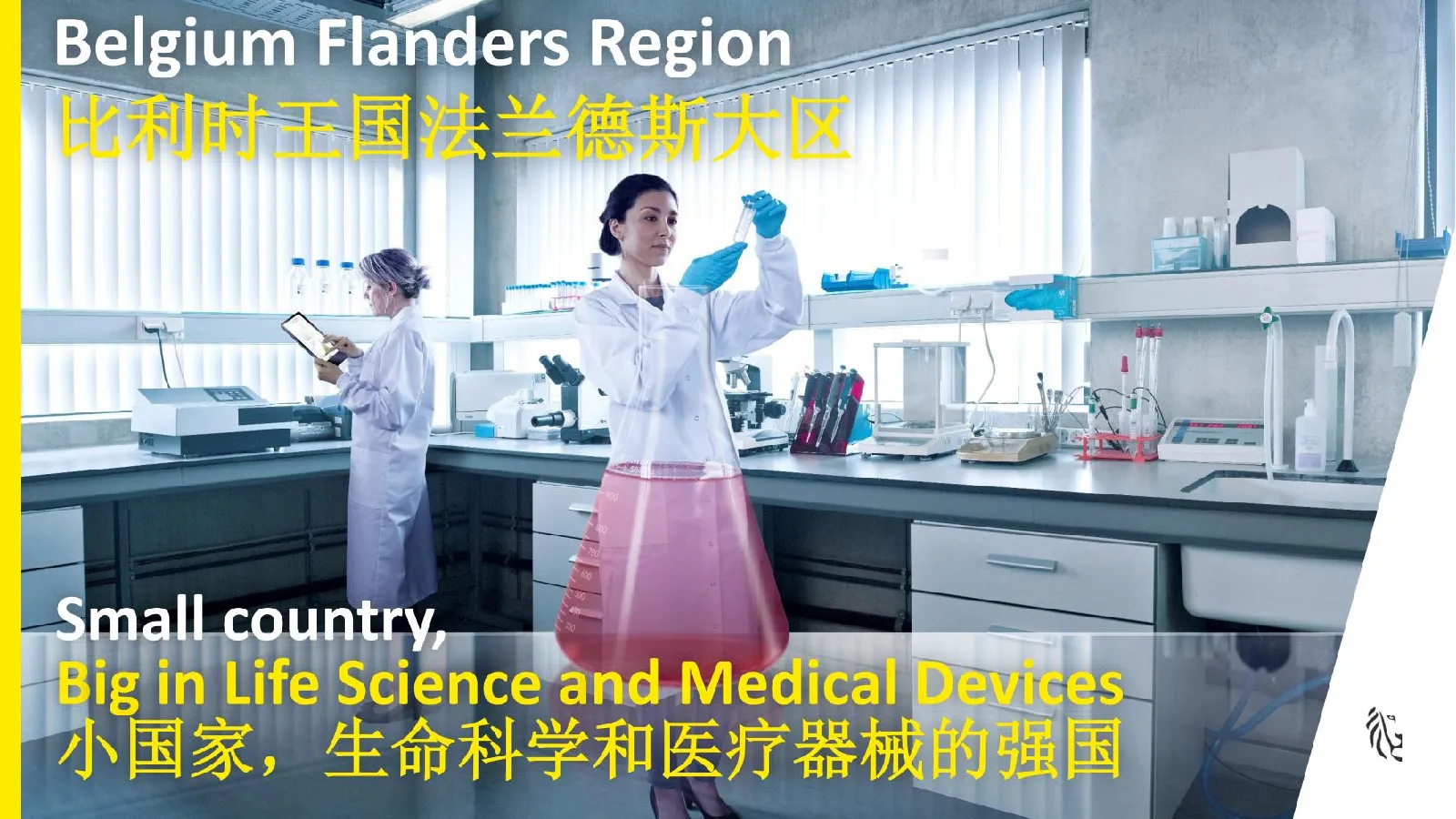
Belgium's Flanders Region is a small country with a strong presence in the life science and medical devices sector, serving as the economic heart of Belgium and a key player in the EU. The region accounts for 58% of Belgium's population and 82.4% of its exports. Belgian MedTech companies generate total revenues of €3.2 billion, with €1 billion dedicated to diagnostic imaging. The market is dominated by companies focusing on pre-IV diagnostics, cardiology, neurology, and surgery.
Medical device and IVD companies in Belgium are active in regional headquarters, sales, distribution, manufacturing, and R&D, with 90-95% involved in distribution and 33-33% in R&D. Flanders' research institutes, universities, and spin-off companies apply novel technologies such as sensors, microfluidics, nanotechnology, AI, and 3D printing to medical devices and IVD.
Minimal invasive surgery, including laparoscopic and robotic surgery, is a key focus, with robotic surgery particularly suitable for complex procedures in gastroenterology, gynecology, and urology. The global robotics surgery market is expected to grow at a CAGR of 17.1% from 2018 to 2024, with Europe growing at approximately 16.7%. Belgium is home to the largest robotic surgery training center, ORSI Academy, which offers high-quality training and collaboration with top universities and industry partners.
Flanders has a significant number of potential clients and research centers, with 164 hospitals and 29,206 hospital beds. The region attracts 35,000 medical tourists annually and has strong collaboration between Flanders Make and KU Leuven in research. QbD Group serves as a preferred partner for Chinese companies in Europe for MDR/IVDR regulatory consulting, certification, and clinical studies, covering the full life cycle of medical device regulatory and clinical services.
Flanders Investment and Trade supports companies through matchmaking services, individual support for setting up subsidiaries, and financial incentives. The region offers up to 60% structural funding cash grants, 80% salary tax deductions, and 85% innovation income exemption deductions, along with investment deductions for R&D-related investments and patents.