联合国开发计划署自然承诺2024
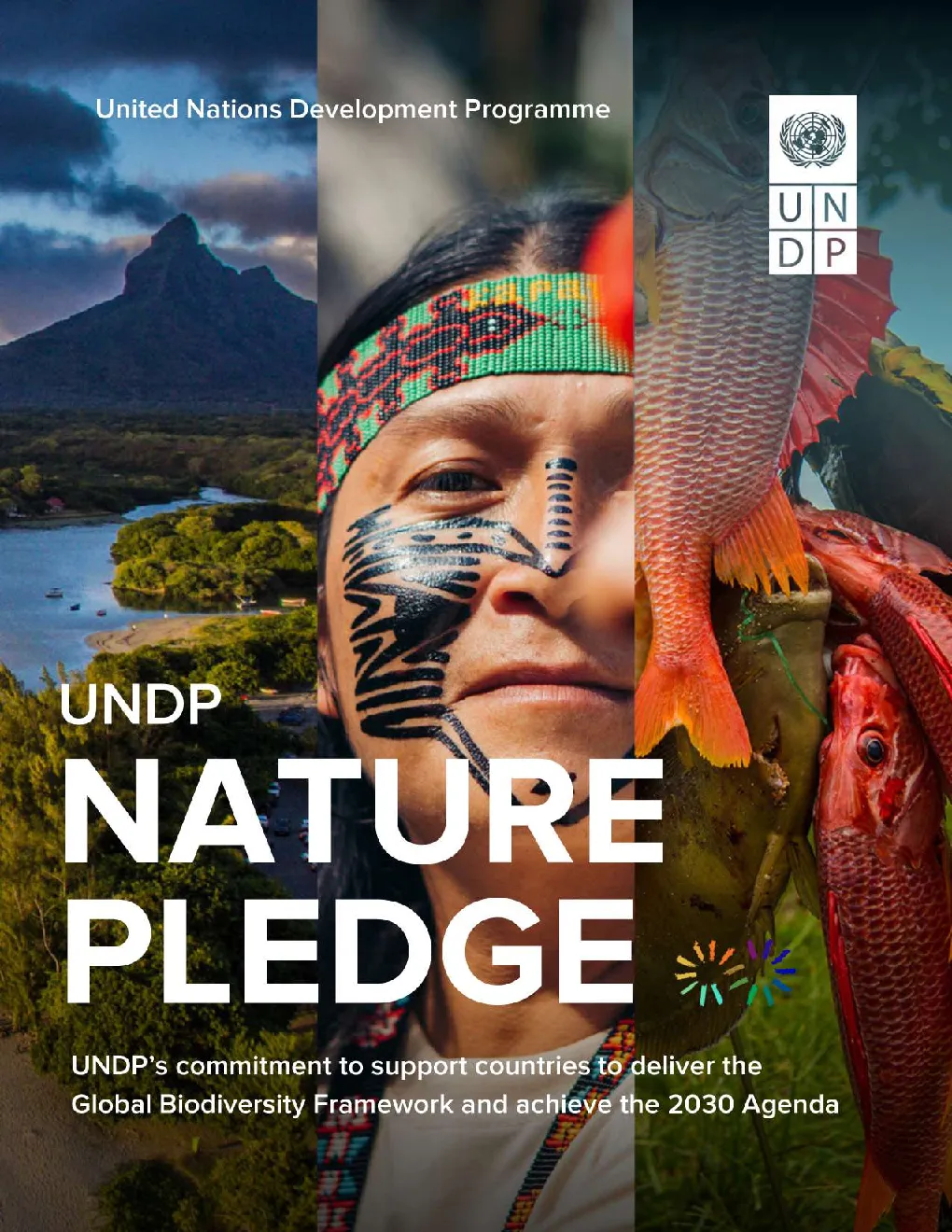
NATUREPLEDGE UNDP'scommitmenttosupportcountriestodelivertheGlobalBiodiversityFramework andachieyethe 2030Agenda Copyright UNDP 2024. One United Nalions Plazs, NEW YORK, NY10017,USA, Ai righits reserved. No pan of this publiceticn mey be reproducedstored in a retrieval system or transmitted, in any form or by means,elecironic, mechanical, photocopying, recording or othenwise, without priorpermission. United Nations Development Programme (UNDP) of poverty, Inequality, and climate change. Working with our broad networkof experts end pertners in 17O countries, we help nstions te build integrated,lasting solutions for people enc plenet, Leam mcre at undp.org or followQUNDP, General disclaimers. The analysis and recammendations of this document do not represent theofficial position of the UNDP or of ery of the UN Member States thel ere partctcd. The mention of specitic crgarizztions cocs not imply that they arcendorsed ot recommencled by UNDP in preferenice to others of a similarnature that are not mentioned. All reasonable precoutions have been takento verify the information conteined in this document, However, the material isThe responsibility for the Interpretation and use ofthe material lies with thebeing distributed vithout warranty of any kind, either expressed or implied.reader. UNDP Nature Pledge The United Nations Development Programme'scommitment of support to countries to achieve thegoals and tergets of the Global BiodiversityFramework and the 2030.Agenda. Covercompositeimage UNDP Nalure, UNDP Small Grants Progrsmme Without nature, we have nothing.Without nature, we are nothing. UN Secretary-General Antonio Guterres, December 6, 2022, Montreal, Canada [1] Natureunderpinsourlives,societies,andeconomles. Nature Is essential for achleving theSustainableDevelopmentGoals (SDGs). three billion people living today in areas facingsevere water stress, a number likely to rise to fourbillion people by 2030. Women, Indigenous Peoples,local communities,and youth are cisproportionatelyimpacted, with often the least power to protect theirlands,resources,and Iivelihoods.Environmentalthreats, as they intensify. are compromising ourobligations to future generations and to leaving noone behind. It constitutes one of the greatestchallenges to human rights in human history The majority of the 169 SDG targets require naturebased solutions to achieve them.[2 However, theworldfacesamulti-dimensionalplanetaryemergency of nature loss, degradation and climateconflict, insecurity and health crises. The well-beingand human rights of billions of people today,and offuture generations, are in jeopardy. Unless worldleacers, governments, businesses and individualstake bold steps to reduce the immense pressurethat is being exerted on nature, efforts to achievethe SDGs will fail. The eradlcatlon and preventlon of poverty,reductionof inequalities,andprotection ofhumanrights can only succeed if we respond to thenature crisis. Humanity's ability to survive into the future isdirectly threatened by this crisis. Current trends areespecially severe for the more than two billionpoorest people who rely upon direct access tonatural resources for daily subsistence and for the destruction,andwomenholdafractionofenvironmental decision-making roles,especially atthe highest levels.[6] Progress reversing this trend isnot nearly fast enough, especially in the face orgrowing evidence that gender equality is key toredlucing environmental degradation and investing innature's protection.[7] Nature Crisis The worid is amid the 6th Mass Extinction,we risk losinespecies in the ccmingTecades.WwilolifeDeenaru%declneorwetanos.Takesmost affectedpyhabitatdestruction and pollution, Almost one-third of freshwaterspecies face extinction There is hope. In December 2022, 196 parties to the Convention onBiological Diversity (CBD) agreed on the historicKunming-Montreal GlobalBiodiversity Framework(GBF) - also known as The Biodiversity Plan. The planis an ambitious but possible path to reach the globalvision of a world living in harmomy with nature by2050. The plan's key elements are 4 goals for 2050and 23 targets for 2030.[8] The Biodiversity Plan setsa new course for a thriving future on a healthy planetthat leeves no one behind. A new nature-positiveeconomy could generate up to $1o.1 trillion in annualbusinessvalue and create395million jobsby2030.This $10 trillion of business opportunities could beunlockcdbytransformingthecconomicsystemsthatare responsible for almost 80% of nature loss: food,infrastructure,energy and extractives.[9] Source: Living Plonet Report, 2022 The internationally agreed climate goal of 1.5Ccannot be achieved without better governance ofnature. Yet the biodiversity and ecosystems thatsustain our life support systems, societies andeconomies are in rapid decline. The World EconomicForum(WEF)Global RisksReport 2023listsbiodiversity loss and ecosystems collapse as one ofthe top four risks over the next 10 years, along withfailur