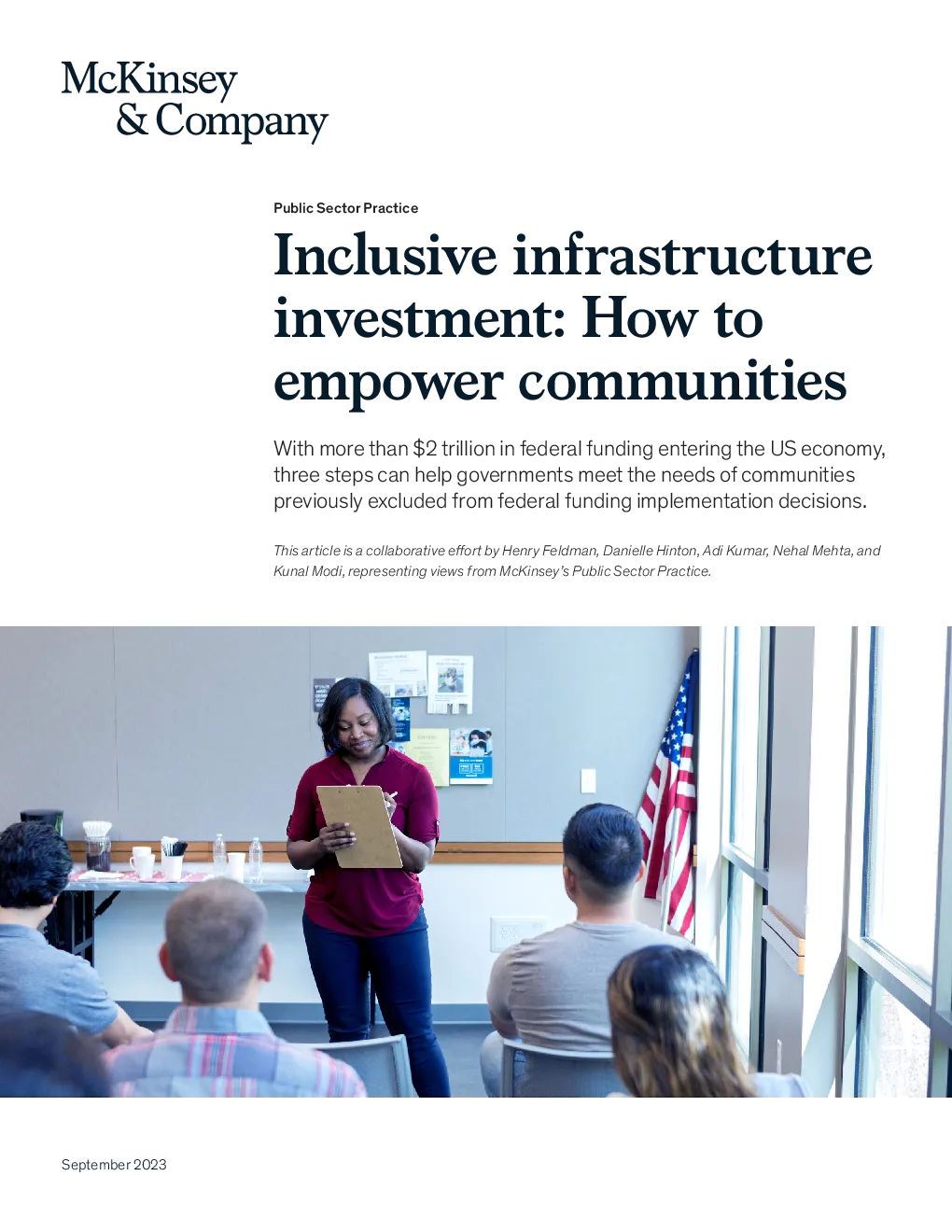
Inclusive Infrastructure Investment: Empowering Communities
Overview
Since November 2021, significant legislative changes have been implemented in the United States, including the Bipartisan Infrastructure Law (BIL), the Inflation Reduction Act (IRA), and the CHIPS and Science Act (CHIPS), allocating over $2 trillion to enhance physical infrastructure, foster innovation, and strengthen the domestic industrial base. These laws aim to rectify historical inequalities and promote sustainable and inclusive growth.
Challenges and Opportunities
Public leaders face the challenge of ensuring equitable participation in infrastructure decisions, particularly involving communities that were historically excluded from such processes. The BIL and IRA offer a unique opportunity for a customer-centric approach to infrastructure strategy, enabling the inclusion of underrepresented voices and empowering communities to pursue funding opportunities.
Strategies for Engagement
-
Identify and Engage Stakeholders: Begin by gathering investment ideas from critical stakeholders, including municipal governments, public utilities, federally recognized tribes, and the communities they serve. Utilize data-driven approaches and tools like the Council on Environmental Quality's Climate and Economic Justice Screening Tool and the Transportation Disadvantaged Census Tracts to identify underserved municipalities with pressing infrastructure needs.
-
Optimize Funding Allocation: Provide targeted support to key stakeholders pursuing competitive grant opportunities, aligning with state-specific priorities and needs. Consider proactive measures to promote transparency throughout the infrastructure investment process.
-
Enhance Trust and Engagement: Address trust issues by collaborating with trusted local organizations, facilitating meaningful engagement with marginalized communities, and ensuring clear communication of objectives and goals. Ensure accessibility and visibility of outreach initiatives, adjusting schedules and formats to accommodate diverse participants and providing necessary resources.
Conclusion
Effective engagement with a diverse range of stakeholders is crucial for successful and inclusive infrastructure investment. By identifying critical stakeholders, optimizing funding allocation, and enhancing engagement through tailored strategies, public leaders can ensure that federal infrastructure dollars are deployed to empower communities, address disparities, and foster sustainable growth. This approach not only maximizes the impact of federal dollars but also builds trust and ensures that all residents' needs are considered in infrastructure planning and decision-making processes.