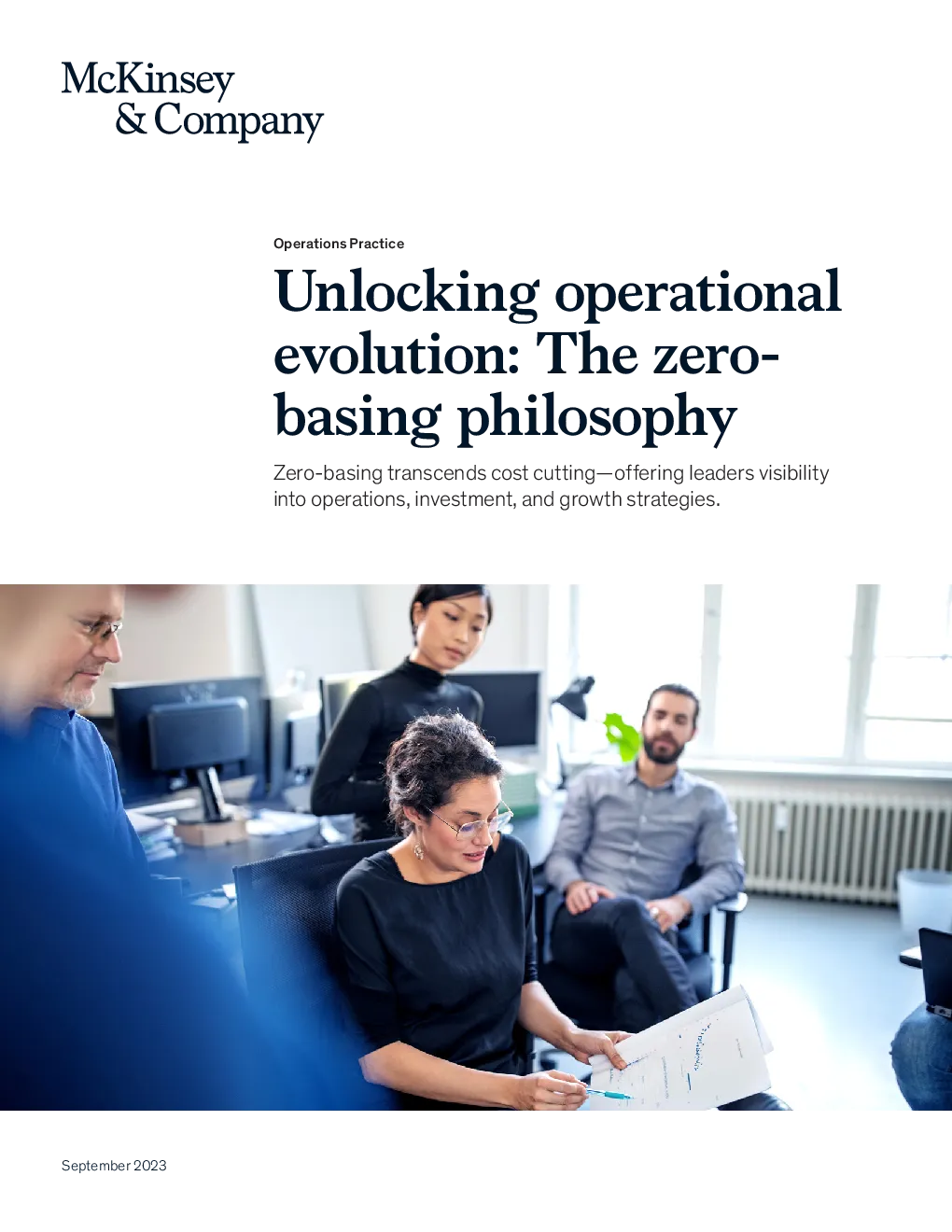
Zero-Basing: A Philosophy for Operational Evolution
Zero-basing, often misunderstood as solely focused on cost cutting, is actually a comprehensive approach designed to enhance operational visibility, foster strategic investment, and drive growth. This concept was discussed in depth during a podcast episode featuring experts Denis Fomin, Steve Frazier, and Carey Mignerey, alongside host Daphne Luchtenberg.
Key Points:
-
Beyond Cost Cutting: Zero-basing is not merely about cutting costs; it's about understanding how to allocate resources efficiently, invest in growth, and evolve operations continuously. It enables leaders to gain visibility into cost, investment, and resource allocation, allowing them to make informed decisions on where to spend and grow.
-
Philosophical Approach: Contrary to the common misconception, zero-basing is more of a philosophy than a rigid process. It challenges the status quo by questioning whether current practices, costs, and resources are optimal, suggesting that if operations were started anew, different approaches might be taken.
-
Impact on Workforce: Implementing a zero-basing mindset encourages a culture of continuous improvement, where roles, talent deployment, and organizational structures are regularly reviewed and adjusted based on ongoing needs. This can lead to a more dynamic and adaptable workforce, reducing the need for large-scale restructuring.
-
Inspiration from Start-ups: Organizations can learn from start-ups' efficiency in resource allocation, especially in general and administrative (G&A) areas. By adopting a zero-basing mindset, larger institutions can mimic start-ups' approach to constant innovation and resource optimization.
-
Automation and Efficiency: Embracing automation is a key component of zero-basing. By automating repetitive tasks, organizations can free up resources to invest in growth and innovation, while also improving operational efficiency and employee satisfaction.
-
Case Studies: While specific examples weren't detailed in the text, it was suggested that organizations that adopt zero-basing principles tend to experience enhanced agility, cost savings, and more effective resource allocation. These benefits contribute to a more sustainable and scalable business model.
In conclusion, zero-basing offers a powerful framework for organizations seeking to evolve their operations, focusing not just on cost reduction but on strategic investment, growth, and continuous improvement. By adopting this philosophy, businesses can unlock new levels of operational effectiveness and competitiveness.