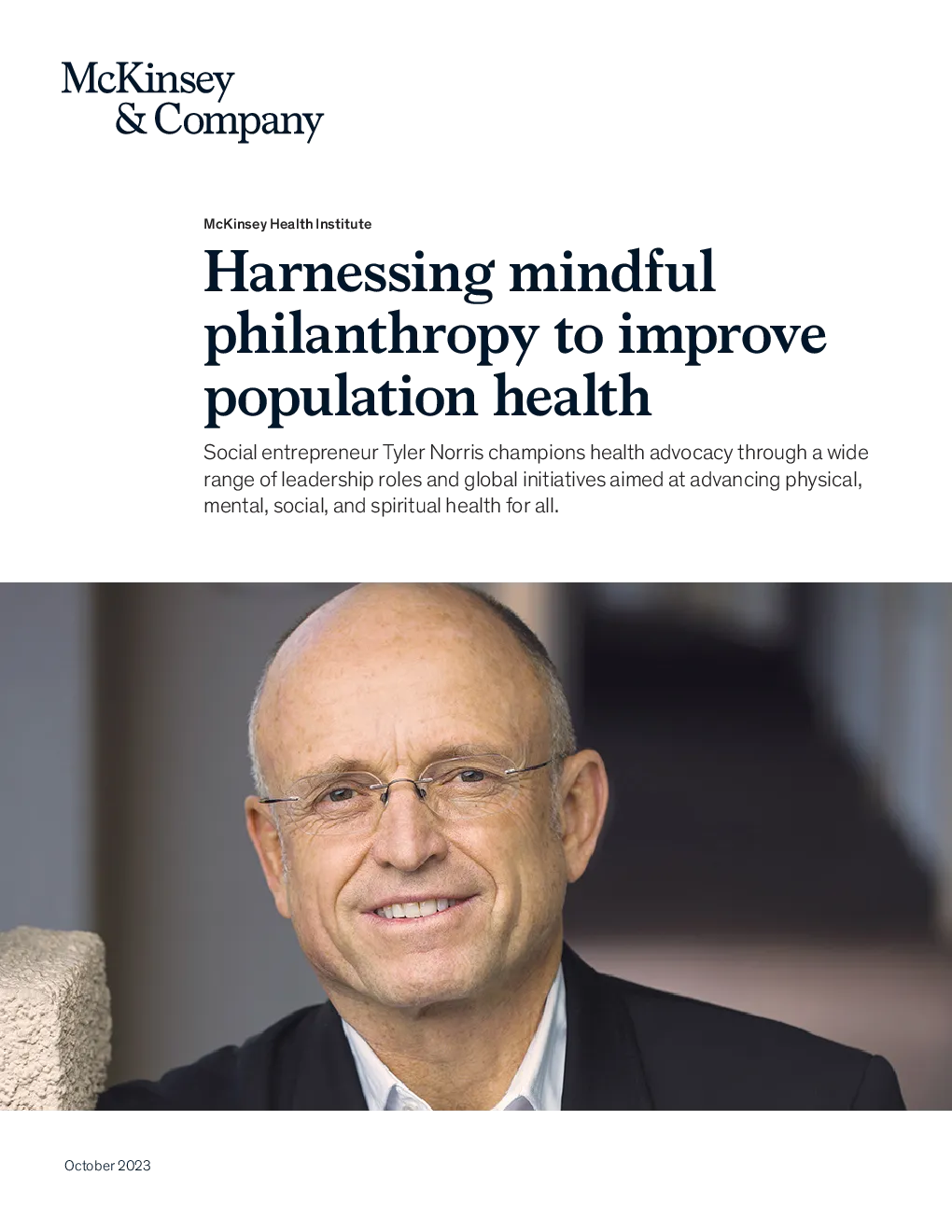
Tyler Norris, a social entrepreneur and former leader at Kaiser Permanente and founding CEO of Well Being Trust, advocates for a comprehensive approach to improving population health through what he calls "mindful philanthropy." This approach involves reimagining health beyond traditional medical systems to include social determinants such as nutrition, education, housing, and mental health.
Norris outlines a unified vision with seven key pillars:
- Community Conditions: Fostering environments that promote a sense of belonging, purpose, and service, which are known to strengthen mental health and well-being.
- Early Identification and Prevention: Prioritizing prevention and early intervention, especially for children, youth, young adults, and families.
- Emergency and Crisis Response: Enhancing crisis management and prevention of mental health emergencies, including suicide and overdose.
- Equity: Addressing systemic inequalities, particularly racism and discriminatory structures that disproportionately affect mental health among people of color.
- Integration: Improving access to integrated health services, including physical, mental, and substance use.
- Parity: Ensuring fair access to mental health services and coverage.
- Workforce: Increasing the number and diversity of mental health professionals.
By focusing on these pillars, Norris aims to build a movement that addresses the root causes of poor health and drives meaningful changes. His efforts have led to significant legislative advancements, such as enforcing mental health parity laws and increasing funding for mental health in schools through the American Rescue Plan and Safer Communities Act. Norris also emphasizes the importance of creating a "growth-oriented healthcare delivery system" that invests upstream in factors that contribute to overall health.
Mindful philanthropy, according to Norris, involves breaking down the stigma surrounding discussions of mental health and directing more resources towards evidence-based interventions. Norris believes that by addressing the social determinants of health and fostering a sense of community, we can significantly improve population health and wellbeing. He advocates for a life-span approach to nurturing young people, recognizing that the first thousand days (from conception to a child's second birthday) are crucial for adequate development. Norris encourages healthcare systems to become more accountable for community outcomes, moving from merely doing good things to being accountable for the health and well-being of their communities.