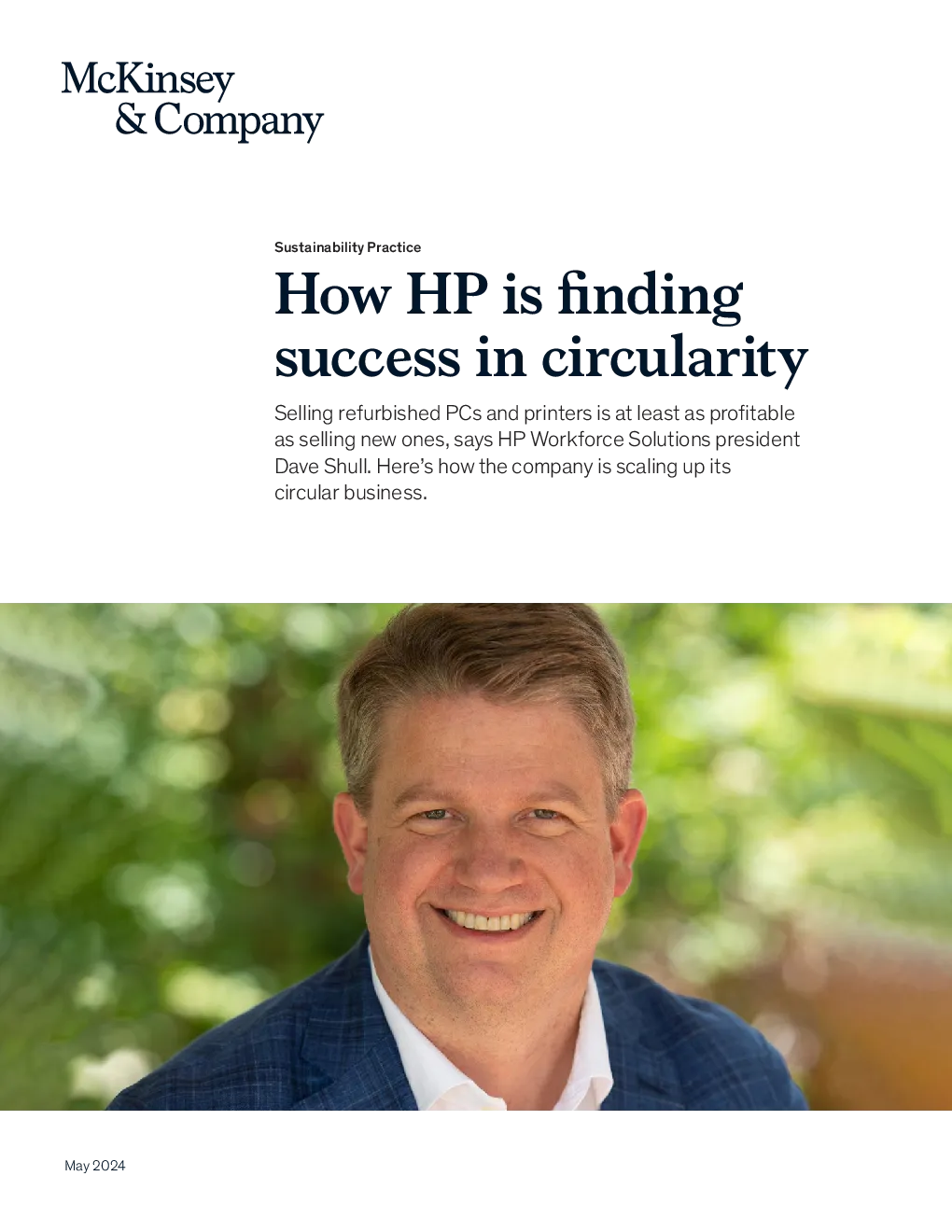
HP, through its HP Workforce Solutions division led by President Dave Shull, has successfully integrated a circular business model, specifically focusing on refurbishing and reselling used computers and printers under the HP Renew Solutions brand. This initiative has proven to be highly profitable, matching the profitability of HP's primary product sales, due to its strategic management as a core business operation.
In a span of less than a year, HP Renew Solutions has achieved margins equivalent to those of HP's main PC and printer business. This success is attributed to the company's strong commitment to sustainability, particularly in achieving a 75% circularity rate for products and packaging by 2030. This ambitious goal underscores HP's dedication to environmental responsibility and efficient resource utilization.
HP's transition towards a circular economy involves addressing the entire lifecycle of its products, including the development of a comprehensive system to track the history and condition of refurbished devices. The company aims to provide customers with detailed information about the product's previous lives, emphasizing the benefits of choosing a used PC or printer, such as cost savings, environmental impact reduction, and quality assurance.
The company's ability to navigate the complexities of a global ecosystem, including legal, tax, and trading structures, has been crucial in the implementation of the circular business model. HP has centralized management and streamlined operations by integrating various departments under one roof, ensuring seamless coordination with its extensive network of partners worldwide.
To further support this transition, HP has established clear performance metrics and profit targets, aligning the circular business with broader corporate objectives. The company emphasizes the importance of direct ties between sustainability initiatives and business benefits, fostering a long-term perspective and driving employee engagement.
As HP continues to expand its circular business globally, it faces the challenge of scaling operations across 150 countries while maintaining consistency and quality standards. The integration of a standardized approach for 150,000 partners to participate in refurbishment programs will be key to achieving HP's ambitious 75% circularity goal by 2030.
In summary, HP's success in implementing a circular business model demonstrates the potential for profitability, environmental stewardship, and operational efficiency in the technology sector. By prioritizing sustainability and aligning business practices with environmental goals, HP is setting a precedent for other companies seeking to adopt similar strategies.