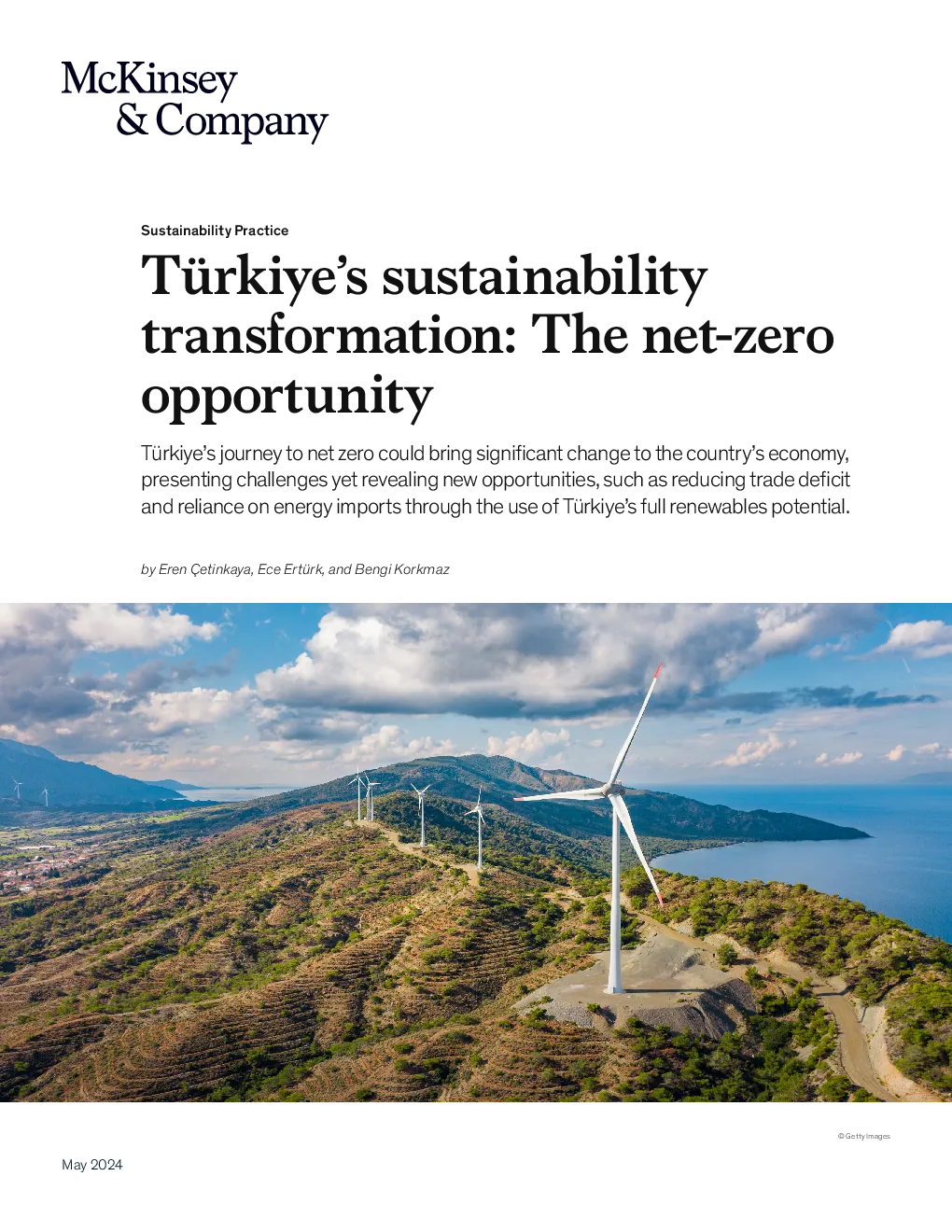
Türkiye's Journey Towards Net-Zero Emissions: A Pathway To Sustainable Growth
Türkiye faces a critical juncture in its quest towards a sustainable future, driven by its commitment to the Paris Agreement and a target to achieve net-zero emissions by 2053. This transformative journey presents both challenges and opportunities, particularly in the realms of energy consumption, trade dynamics, and the agricultural sector.
Key Challenges and Opportunities
Energy Transition: Türkiye’s reliance on imported fossil fuels necessitates a shift towards renewable energy sources to reduce dependency and enhance energy security. Leveraging its abundant renewable resources can significantly boost domestic energy production and decrease the trade deficit in energy imports.
Economic Opportunity: The adoption of green business models, products, and services can unlock substantial economic benefits, including job creation and innovation. This shift can also position Türkiye competitively in the global market, particularly in light of the European Union's (EU) Carbon Border Adjustment Mechanism (CBAM).
The Role of Decarbonization Pathways
Decarbonization strategies must be carefully crafted to balance environmental goals with economic stability. One feasible pathway involves:
- Reducing Fossil Fuel Use: By phasing out oil, natural gas, and coal, Türkiye can significantly lower its GHG emissions.
- Expanding Renewable Energy: Utilizing Türkiye’s full potential in renewables, such as solar, wind, and hydroelectric power, can greatly increase the domestic share of energy production.
- Enhancing Efficiency and Innovation: Implementing energy-efficient practices across sectors like transportation, buildings, and industry can further reduce emissions.
- Agricultural Practices: Optimizing farming methods, including better land management, fertilizer use, and livestock practices, can contribute to carbon sequestration and emission reduction.
Cost and Investment Implications
To achieve net-zero emissions by 2053, Türkiye might need to allocate approximately 7% of its GDP over the coming decades. This investment would cover areas such as energy, materials, land use, and infrastructure development. The actual cost and investment implications vary across different scenarios, highlighting the importance of strategic planning and technological advancements.
The Role of Decarbonization Levers
Four key areas are pivotal in Türkiye’s decarbonization strategy:
- Power Generation and Electrification: This includes expanding renewable energy sources, electrifying industrial processes, and transitioning residential heating and cooking to electric solutions.
- Carbon Capture and Storage: Essential for reducing emissions from industrial processes where direct decarbonization is challenging.
- Nature and Agriculture: Activities like reforestation, pastureland management, and optimized fertilizer use contribute to carbon sequestration and emission reduction.
- Waste Management: Enhancing recycling and implementing comprehensive waste recovery systems can significantly reduce emissions from waste.
Economic Opportunities
The shift towards net-zero emissions presents Türkiye with significant economic opportunities. By embracing green business models and leveraging the CBAM, Türkiye can attract green investments, stimulate economic growth, and improve its trade balance. Moreover, the adoption of sustainable practices can foster innovation and create new job opportunities in sectors such as renewable energy and sustainable agriculture.
In conclusion, Türkiye’s path to net-zero emissions is a complex but promising endeavor that requires a multi-faceted approach combining policy, technology, and innovative business practices. This journey not only addresses environmental challenges but also opens avenues for economic prosperity and sustainable development.