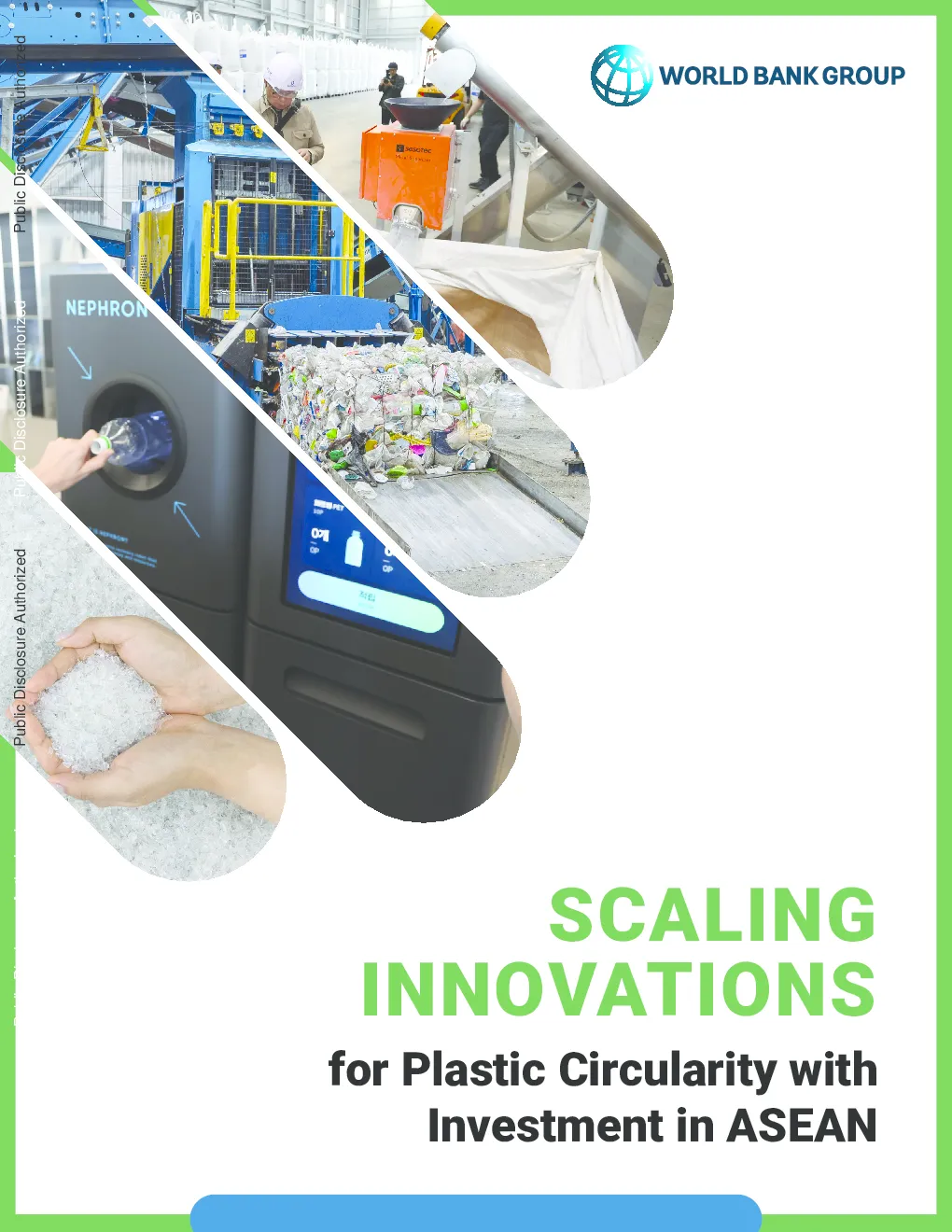
SCALING INNOVATIONS for Plastic Circularity with Investment in ASEAN
Executive Summary
The report emphasizes the critical role of innovation in addressing plastic pollution in the Association of Southeast Asian Nations (ASEAN) region. It outlines the objectives of enhancing waste management practices, recycling, and the circular economy through investment strategies.
Key Points:
- Background & Objectives: The report aims to identify and assess innovative solutions that can help overcome challenges in waste management, recycling, and plastic circularity within the ASEAN region.
- Plastic Pollution in ASEAN: It highlights the environmental impact of plastic waste and the need for urgent action to mitigate it.
- Innovation and Plastic Waste Management: The focus is on developing and scaling innovations that improve waste management systems, enhance recycling capabilities, and promote a circular economy for plastics.
- Methodology: The methodology includes limitations acknowledged and stakeholder consultations to ensure comprehensive insights into the region's challenges and potential solutions.
- Overview of Waste Management Ecosystem: Provides an evaluation framework for assessing waste management, recycling, and plastic circularity across six ASEAN member states (AMS).
- Hurdles to Overcome: Identifies key barriers including policy gaps, financial incentives, organizational capacity, and access to capital.
- Innovation Landscape: Discusses various stages of innovation from upstream to downstream and cross-cutting approaches, evaluating their potential for investment.
- Policy Options: Recommends policy instruments to stimulate innovation and investment in plastic circularity.
- Investment Needs: Estimates the investment requirements for advancements in waste management, recycling, and plastic circularity.
- Enabling Environment: Suggests measures to create a conducive environment for investments, focusing on scaling innovations and supporting policies.
- Conclusion: Summarizes recommendations for fostering a sustainable future through enhanced plastic circularity initiatives in the ASEAN region.
Methodology & Limitations
The methodology employed acknowledges certain limitations, particularly in terms of data availability and the scope of stakeholder engagement. It emphasizes the importance of collaboration and the need for tailored solutions to address regional disparities.
Stakeholder Consultations
Stakeholder consultations were integral to gathering diverse perspectives and ensuring the report reflects the realities faced by various stakeholders in the ASEAN region.
Innovation Landscape
The innovation landscape is analyzed across different stages—upstream, midstream, downstream, and cross-cutting—to provide a holistic view of potential interventions.
Policy Options
Policy recommendations include triggers for plastic innovation, focusing on the development of supportive frameworks and incentives to drive investment.
Investment Needs
The report quantifies the investment needs for waste management, recycling, and plastic circularity, highlighting areas requiring significant funding.
Enabling Environment
Strategies are proposed to create an enabling environment that supports innovation, including direct support for innovators, market demand creation, and regional cooperation.
Conclusion
The conclusion underscores the importance of scaling innovative solutions for plastic circularity in the ASEAN region, emphasizing the role of strategic investments and supportive policies in achieving sustainability goals.