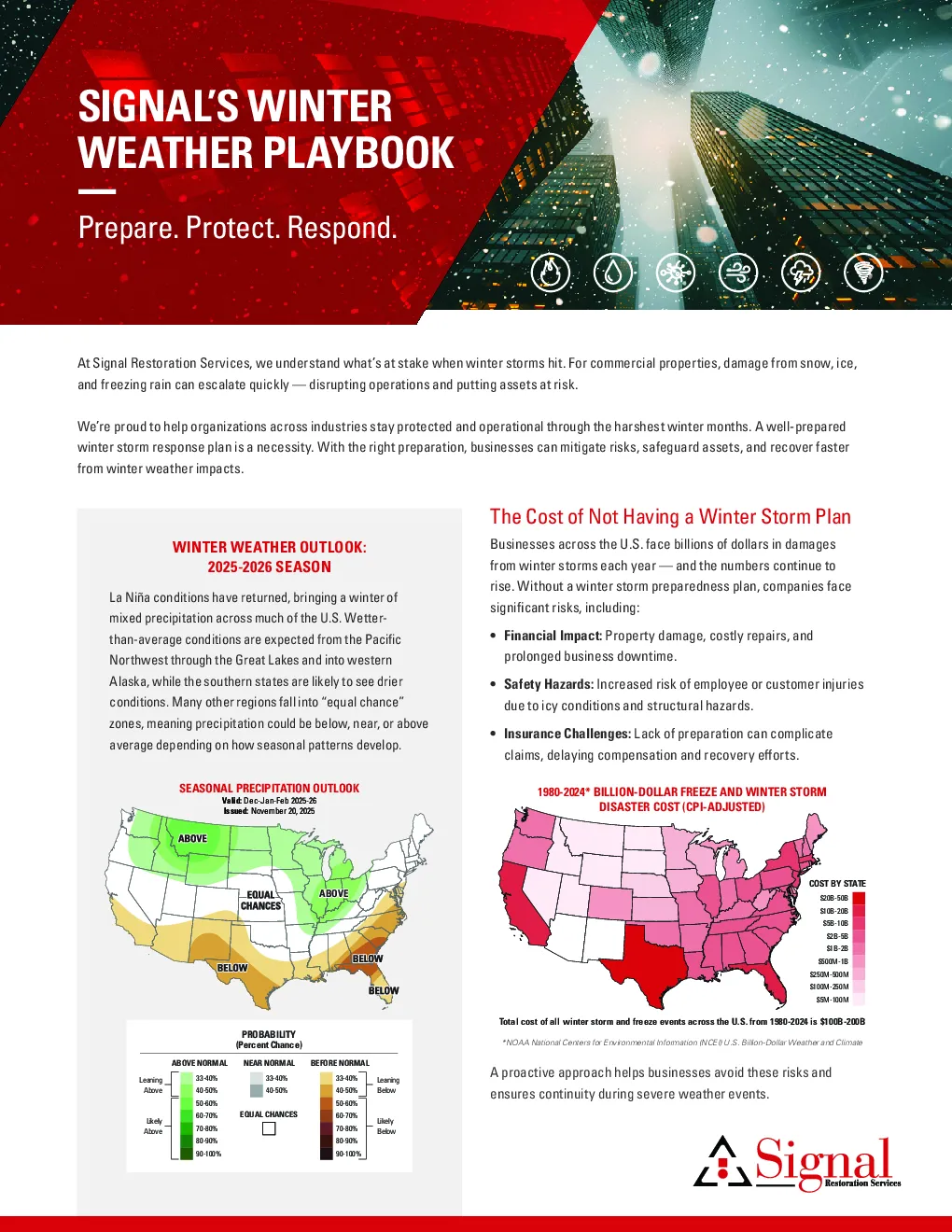
Prepare. Protect. Respond. At Signal Restoration Services, we understand what’s at stake when winter storms hit. For commercial properties, damage from snow, ice,and freezing rain can escalate quickly — disrupting operations and putting assets at risk. We’re proud to help organizations across industries stay protected and operational through the harshest winter months. A well-preparedwinter storm response plan is a necessity. With the right preparation, businesses can mitigate risks, safeguard assets, and recover fasterfrom winter weather impacts. The Cost of Not Having a Winter Storm Plan Businesses across the U.S. face billions of dollars in damagesfrom winter storms each year — and the numbers continue torise. Without a winter storm preparedness plan, companies facesignificant risks, including: WINTER WEATHER OUTLOOK:2025-2026 SEASON La Niña conditions have returned, bringing a winter ofmixed precipitation across much of the U.S. Wetter-than-average conditions are expected from the PacificNorthwest through the Great Lakes and into westernAlaska, while the southern states are likely to see drierconditions. Many other regions fall into “equal chance”zones, meaning precipitation could be below, near, or aboveaverage depending on how seasonal patterns develop. •Financial Impact:Property damage, costly repairs, andprolonged business downtime.•Safety Hazards:Increased risk of employee or customer injuriesdue to icy conditions and structural hazards.•Insurance Challenges:Lack of preparation can complicateclaims, delaying compensation and recovery efforts. SEASONAL PRECIPITATION OUTLOOKValid:Dec-Jan-Feb 2025-26 A proactive approach helps businesses avoid these risks andensures continuity during severe weather events. Understanding Winter Storm Classifications Categories of Winter Precipitation Understanding winter weather and assigned classificationsempowers businesses to anticipate specific risks and implementappropriate countermeasures. SNOW Snow Flurries:Light snow with minimal to noaccumulation. Snow Showers:Snowfall of varying intensity withpotential for some accumulation. COMMON WINTER STORMS •Blizzards:Hazardous winter storms characterized by strong windsand blowing snow, leading to extremely low visibility. Althoughthey’re often accompanied by heavy snowfall and freezingtemperatures, these conditions are not always necessary. In somecases, strong winds can lift existing snow from the ground, causinga ground blizzard. Snow Squalls:Intense bursts of snow with gusty winds. Blowing Snow:Wind-driven snow that reduces visibilityand causes substantial drifting. Blizzards:Severe conditions with winds over 35 mph,snow, and blowing snow, reducing visibility to 1/4 mile orless. •Ice Storms:Occurs when at least 0.25 inches of ice accumulateson exposed surfaces. These storms create dangerous conditionsfor driving and walking, and the weight of the ice can cause treebranches and powerlines to break. SLEET Partially melted snowflakes as they pass through a thinlayer of warm air and refreeze as they descend through athick layer of freezing air near the ground. •Snow Squalls:Sudden snowfalls with strong wind gusts, leading toaccidents and disruptions. They’re commonly associated with theGreat Lakes region. •Lake Effect Storms:Not caused by low-pressure systems. Instead,they occur when a cold, dry air mass moves over the Great Lakes,absorbing moisture from the water. This moisture-laden air thenreleases the water as snow, typically affecting areas to the southand east of the lakes. Heavy localized snow caused by cold airpassing over warmer water. FREEZING RAIN Rain that freezes upon contact with surfaces at or below0°C, creating a layer of ice on roads, trees, power lines,and other objects. Accumulation of freezing rain overseveral hours is classified as an ice storm. Watches and Warnings Your local National Weather Service office issues Winter Weather Advisories, Watches, and Warnings based on specificlocal conditions. WINTER WEATHER ADVISORY WINTER STORM WARNINGS WINTER STORM WATCHES Snow, blowing snow, ice, sleet,or a mix is anticipated, but theconditions aren’t expected to besevere enough to meet the criteriafor a “Warning.” Prepare forpotential winter driving challengesand exercise caution on the roads. Issued when conditions are likelyto support a major winter storm.This may include heavy snow,significant sleet, ice storms,blowing snow, or a combination ofthese severe weather events. Issued for substantial winterweather, including snow, ice, sleet,blowing snow, or a mixture. What to Expect as a Signal OnCallPreferred Customer Signal’s Storm Damage Mitigation Process Once the winds die down, Signal’s team will assess the damage andbegin implementing the pre-storm restoration plan to: When you turn to Signal before the storm, our team will assess yourbuilding, identify vulnerabilities, and recommend ways to strengthenstorm resilience. We’ll also develop a post-storm recovery plan