全球能力中心(GCCs)对消费品包装行业(CPG)的影响:战略转型、价值创造与潜在风险
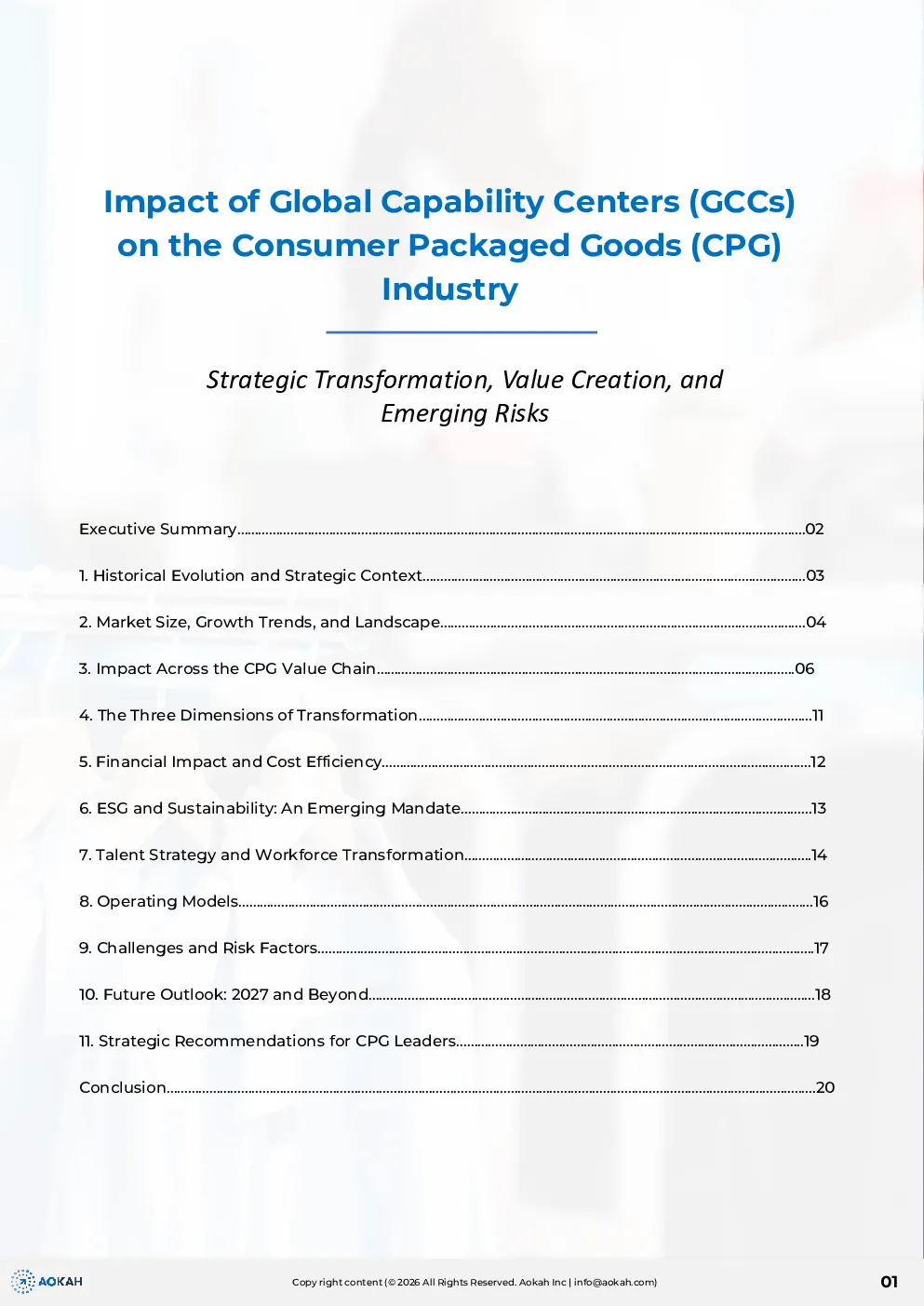
战略转型、价值创造与新兴风险 Conclusion……………………………………………………………………………………………………………………………………………………………...…203. 对CPG价值链的影响11. CPG领导者战略建议……………………………………………………………………………………..194. 变革的三个维度…………………………………………………………………………………………………115. 财务影响与成本效益……………………………………………………………………………………………………12执行摘要………………………………………………………………………………………………………………………………………………021. 历史演进与战略背景 …………………………………………………………………………………………………032. 市场规模、增长趋势与格局…………………………………………………………………………………………046. ESG和可持续发展:一项新兴的使命………………………………………………………………………………137. 人才战略与劳动力转型 ………………………………………………………………………………… 148. 运营模式……………………………………………………………………………………………………………………………………………………9. 挑战与风险因素……………………………………………………………………………………………………………………………1710. 未来展望:2027年及以后…………………………………………………………………………………………….....................18 执行摘要 全球能力中心(GCC)在消费品(CPG)行业领域内已经完成了根本性的战略转型。GCC最初作为专注于财务、人力资源和基础IT支持等交易流程的后台、成本优势设施而建立,现已演变为拥有端到端业务流程、孵化人工智能能力并直接驱动企业全面转型的战略“重塑引擎”。 这不再是一个成本问题,而是关于你如何能战略性地看待母公司,以及你如何能提高业务贡献。 CPG行业正面临结构性压力的叠加——持续的通货膨胀、供应链波动、直面消费者(D2C)模式的兴起、品牌忠诚度的下降以及消费者行为的快速变化。为此,领先的CPG企业已将其全球共享服务中心(GCC)重新定位为“全球价值中心”——即全球企业的数字核心。 $10.4B 70+ 8-9% 的复合年均增长率 位于印度的巨型CPG GCC,雇佣超过85,000名专业人士 预计到2027年,由供应商支持的GCC转型市场规模将增长49%,年复合增长率为49%。 2021年至2024年间印度CPG GCC行业的年增长率 战略胜利 严峻挑战 在主要海湾合作委员会国家中,可衡量支出范围内的SG&A成本降低了40-50%。 60%至70%的GCC(全球商品与消费公司)未能充分实现其战略价值,仍困于成本中心。 2025年,74%的消费品行业雇主报告称在招聘熟练人才方面存在困难。 生成式人工智能的采用将内容创作时间缩短了高达95%。 1.历史演进与战略背景 1.1 GCC发展阶段 海湾合作委员会(GCC)在公司治理(CPG)领域的轨迹反映了一种在授权和价值贡献上的逐渐但加速转变: 流程标准化;拓展至分析、采购及供应链管理 交易型共享服务——财务、人力资源、IT支持;专注于劳动力成本套利 第三阶段:2020年代 第四阶段:展示/新兴 战略创新中心;对核心职能、AI整合、研发及ESG拥有端到端的所有权 以AI为先的运营模式;具有自主性的AI;自主供应链与价格管理 1.2 行业压力推动GCC采用 数种宏观经济的行业特定压力的叠加,加速了GCC的采用。 全球人才危机 数字颠覆 人工智能购物代理的兴起,威胁着要切断数十年来与客户的关系。德勤2026年的展望发现,75%的消费品公司高管认为消费者“价值寻求”行为的增加是一种长期结构性转变。 2025年,消费品行业的74%的雇主报告称,难以找到维持运营和推动增长所必需的技术人才。 经济与地缘政治压力 挤压利润空间 持续的通货膨胀、零售商力量的增强以及DTC竞争对手的激增,正压缩着整个行业的利润空间。GCC(全球整合中心)同时提供了显著的成本效益和加速创新的双重承诺,使其成为越来越有吸引力的战略投资。 全球不断攀升的关税和产品退货总额已接近1万亿美元,这使得传统的运营手册变得过时。那些利用GCC(全球商业中心)来快速转移能力的企业,正比那些仅专注于规模优化的企业获得竞争优势。 2.市场规模、增长趋势与格局 2.1 全球及印度特定市场数据 卡塔尔(Qatar)是海湾合作委员会(GCC)在全球范围内扩张中增长最快的领域之一。关键数据点包括: 每年8-9% 到2030年,更广泛的GCC市场的预期规模,其中CPG是关键推动力。 全球GCC市场增长率,展现出持续扩张的态势。 印度CPG GCC增长(2021-2024年),超过全球平均水平。 • 到2025年,印度GCC市场规模达到698.5亿美元,预计到2033年将以8.1%的复合年均增长率增长至1305亿美元。• 截至2026年,印度在所有行业共拥有超过2100家GCC,雇佣了近200万名专业人士。 2.2 供应商生态系统机遇 支持GCC(海湾合作委员会)设置和转型的市场本身就是一个主要增长故事: 供应商辅助设置 转型市场 预计在2024年至2027年间,提供商辅助的GCC(通用计算集群)设置市场将以44%的复合年均增长率(CAGR)增长,从30亿美元增长至89亿美元。 预计到2027年,由供应商支持的全称集成本地编译器(GCC)转型市场将达到104亿美元,年复合增长率为49%。 (BOT)模式正日益普及,使CPG公司能够降低设立风险,同时Build-Operate-Transfer模式加速了价值实现的速度。 2.3 地理分布:印度枢纽 印度是CPG GCC活动的无可争议的中心,这得益于其可扩展的STEM人才、成熟的技术生态系统以及支持性的政府政策。 为应对主要枢纽(如下表所示)的人才饱和现象和管理集中度风险,公司正拓展至斋普尔、科钦、科伊莫尔、纳格浦尔等城市。这一趋势得益于省级政府的激励措施,包括资本补贴、薪酬支持以及基础设施拨款。 3. 对CPG价值链的影响 3.1 商品销售与营收增长管理 (RGM) GCCs已将商品销售从依赖电子表格的功能转变为认知、AI驱动的运营模式: 本地化精细化品类规划 在架库存优化 GCCs内部开发的AI图像识别算法,使销售团队能够实时监控实体店货架,核实产品陈列准确性,并触发即时补货警报。 人工智能和数据引擎使CPG品牌能够根据细粒度的、按单品划分的消费者行为预测区域需求,并定制产品组合,这远超出了区域平均水平。 动态定价与退货商品管理 GCCs利用数据洞察来基准化促销定价和管理降价策略,同时不侵蚀利润空间,将RGM从一项被动职能转变为预测性的核心竞争力。 3.2 销售、市场营销及创意运营 转向“一人消费者”范式需要传统代理模式无法提供的营销敏捷性。GCC(全球商业中心)正在填补这一空白: 数字营销中心 GCCs是数字营销运营的中心——包括SEO、付费广告和网红互动。 生成式AI内容引擎 生成式AI内容引擎将内容创作时间缩短高达95%,使品牌能够以前所未有的速度制作本地化3D图像、静态创意和社交媒体内容。 2 高级分析与报告 3 GCC中的高级分析集群持续向总部自动发送关于竞争性价格基准、促销投资回报率和交叉销售趋势的报告。 实时消费者互动 4 这使营销从基于战役的模型转变为持续性的实时消费者互动模型。 3.3 供应链韧性及自主运行 供应链弹性是CEO的首要任务。GCC(全球供应链委员会)在推动供应链从被动模式向自主、预测性网络转型中发挥着关键作用: GCCs构建物理供应链的数字孪生体,以模拟中断、测试航运路线、原材料短缺和极端天气事件。 • 预测分析和需求感知使库存持有成本降低了15%以上 • 基于人工智能的需求预测已使领先实施项目的预测准确率提升了10-25%。 主要的海湾合作委员会国家已实现了10-25%的预测准确率提升。 百事公司位于海得拉巴的全球业务服务总部——这是其规模最大、拥有近3,000名员工的核心部门——通过卓越中心(CoEs)管理商业销售、消费者营销、供应链和采购,其业务范围已远超最初的财务和IT职能。 案例研究 – 雀巢印度GCC在其供应链车队中实施了配备人工智能的行车记录仪、GPS追踪和实时分析,七个月内总碰撞减少了36%,严重碰撞减少了26%,超过85%的货物实现了数字化追踪。 3.4 客户体验(CX)与D2C整合 店内助理增强 增强产品发现 GCC公司部署的机器学习模型为时尚零售业提供尺码和合身度建议,从而降低了退货率。 基于AR的助手使店铺员工能够扫描货架以确定补货需求。 无缝全渠道D2C 智能客服 DTC品牌借助GCC(全球商品中心)将实体基础设施与数字店铺连接起来,打造无缝的全渠道支付和配送体验。 大语言模型被应用于客户服务,以快速分析传入的反馈并为销售代理生成实时脚本调整。 案例研究 – 通过将客户满意度监控内部化并构建动态数据管道,可口可乐HBC创造了一个“持续在线”的反馈环境。如今,GCC每天可在多个国家覆盖超过56.6万名客户,其拥有1.5万名现场销售人员,他们配备实时数据,能够当场解决争议和产品陈列问题。 案例研究 – 可口可乐的“钢铁侠引擎”——由其GCC开发的一个模块化数据基础设施——整合了数据源,简化了分析流程,并使整个组织能够实现去中心化、实时决策。 3.5 其他案例研究 联合利华 范围:联合利华在印度的全球业务中心负责管理超过50个品牌的数字营销、金融服务、供应链分析以及研发。 创新:这些中心已开发出人工智能驱动的供应链解决方案,建立了运输管理指挥中心,并在全球范围内推广Kinaxis规划系统方面发挥了关键作用。 影响:通过物流技术优化,在尾程支出管理方面实现了2.5亿欧元以上的节省(2020-2022年),并降低了30%的成本。 Colgate-Palmolive 2 商业分析:孟买GCC支持全球营销和洞察职能,利用承销市场数据和高级分析来驱动商业智能和竞争分析。 宝洁公司 (Bǎoqì Gōngsī) 研发领导力:宝洁的全球研发中心专注于可持续产品创新、生物材料和先进包装技术。 认可:与LasX工业公司合作激光标记技术,荣获2026年PAC全球包装卓越与减废奖。 可持续发展:GCC(全球契约组织)推动ESG倡议,利用生物技术和数据分析来提升产品可持续性并确保合规。 利洁时 数字化转型:利洁时海得拉巴GCC(全球客户中心)领导全球数字化项目,现代化数据平台,并推动人工智能在供应链、制造和商业运营中的采用。 执行卓越:完全从印度领导了主要的S/4 HANA全球推广,展示了端到端交付能力。 Kimberly-Clark 技术领导力:班加罗尔的GCC(全球商业中心)已统一企业技术运营,主导了大规模的云和数字化转型项目,并将AIOps(人工智能运维)和可持续性融入运营。 5 创新文化:围绕黑客马拉松、游戏化以及持续提升技能等举措,提升了参与度和客户体验。 4.变革的三个维度 5. 财务影响与成本效益 5.1 可量化成果 主要的海湾合作委员会国家在多个方面提供可衡量的财务价值: 5.2 绩效差距 尽管潜力巨大,但整个行业仍存在一个关键的执行差距: • 60%至70%的GCC未能充分实现战略价值,仍困于成本中心而非转型引擎;• 大约70%仍困于低价值执行循环。 常见的失败驱动因素包括:战略与执行的脱节;因成本而非能力而聘用人才;业务部门不愿放弃控制权而导致的利益相关者抵制;数据碎片化;以及无法将价值