您的浏览器禁用了JavaScript(一种计算机语言,用以实现您与网页的交互),请解除该禁用,或者联系我们。 [Raconteur]:高管议程 - 发现报告

高管议程

房地产 2026-06-01 Raconteur 顾小桶🙊
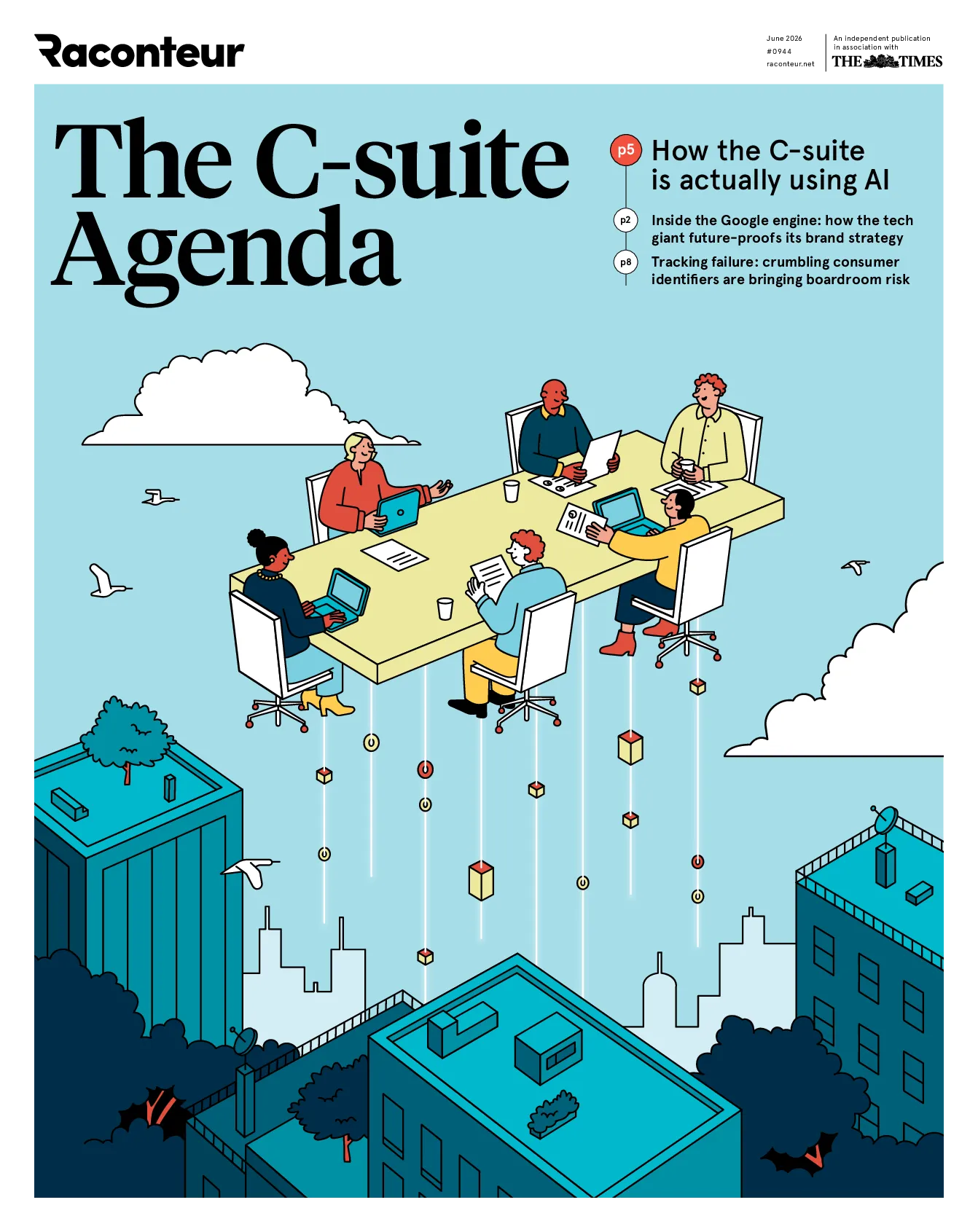
报告封面

How the C-suiteis actually using AI Inside the Google engine: how the techgiant future-proofs its brand strategy Tracking failure: crumbling consumeridentifiers are bringing boardroom risk The C-suiteAgenda The future of CX: from servicedelivery to need anticipation Inside the Google engine Distributed in Google Advertising UKI MDDyana Najdireveals how the tech giantroad-tests its own innovations to future-proof brand strategy As AI reshapes how consumers and citizensdiscover, evaluate and access products andservices, the winning organisations will bethose quickest to become machine-legible, campaignshave used Google AIStudio and Veo as tools for scalingcreativeproduction,loweringcostsand reducing turnarounds.Similarly, Google UKI’s marketingteam now uses Gemini to themati-cally summarise millions of user Tom Dennis Contributors over 18 years at Google. Inthattime,she’s rotatedacross multiple divisions at the techgiant,serving as Head of GoogleAnalytics EMEA between 2008 and2010,and acting as Director ofYouTube/VideoSolutionsEMEAbetween 2017 and 2023. Now, she’sthe MD at Google Advertising UKI,where her team helps Google’s part-ners leverage the full suite of itsD Jeremy BrownHead of Climate Strategiesand Investment Principalat Anthemis, focused onSimon ChandlerTechnology journalistwhose credits includeWired, Digital Trends, says Donald Cameron, a financial ser-vices expert at PA. “Being found and rec-ommendedincreasingly depends onstructured,detailed information thathelps AI evaluate products and services.”The same principle applies to publicbodies,” says Noble. “Trust is not abrandattribute;it is legitimacy.Citizens need to know when AI is beingused, what it has done, what it has notdone, and how a human can challengethe outcome. This last principle is cru-cial, and we’ve seen it applied to goodeffect already in AI implementations;such as our work with HM Courts &Tribunals Service.” between them.AI is increasingly acting as a mediator Tom DennisEditor and journalistcovering tech andinnovation for almost David CurryFreelance businessand technology analystand journalist with Practicing what it preaches ena-bles Google to deliver more consist-ently for its customers, with Najdistating that it has always been auser-first company. “A great exam-ple of this is when we deprecated 30second non-skip ads on mobile fol-lowing a shift in viewing behaviours “There is a powerful saying thatchange has never been this fast, andwill never be this slow again,” she “The assumption that customers willengagedirectly with your brand isalready outdated,” says Clare Allum, Trust in a world ofrecommendation and delegationIf recommendation is becoming the global head of consumer and manu-facturing at PA Consulting, a globalinnovation consultancy. “AI intermedi-ariesnow decide what gets seen,compared and chosen. If you’re notdesigningfor that layer,you’re notcompeting and you’re being filteredout. The winners will be those thatdesign for machine judgement whilekeeping human trust.”new battleground, then the advantagewill go to those able to deploy trust as adifferentiator.When customers seerecommendations provided by a largelanguage model, trust is not limited tothe accuracy of information, but alsothe source and brand behind it.PA’s annual Brand Impact Index – anationally representative survey of US There’s no doubt that Google is oneof the world’s primary movers oftechnological change, and that suchproductsasGeminiandAIOverviewshave helped to bringfamiliarity with LLMs to a wideraudience.Yet according to Najdi,Google has been an AI-first com- In terms of the present and thefuture, Najdi says that Google UKI’sclientsare reporting three coremarketing-related issues. The first,andperhaps most pressing formany brands, is ensuring visibilityin the context of AI-based searchexperiences,which threaten to Noble, where technology can bridgedata gaps between departments.Noble gives the example of an elderlyperson living alone. “There are lots ofsmall breadcrumbs that might suggestsomethingisn’t quite right,”sheexplains, from missed appointments tounusual financial patterns. Individually,these signals may appear insignificant.Together, they can indicate that inter-vention is needed and trigger supportmechanisms earlier.customersjudge you,determiningwhether they convert in that interac-tion and whether they choose to comeback again, building loyalty over time.”The focus on these moments shouldnever come at the expense of the cus-tomer experience investments of thepast decade, warns Allum. “Frictionlessjourneys,intuitiveinterfacesandstrong service design all remain essen-tial,but they are now table stakesbecause we’re all getting less patient Design and illustrationKellie JerrardJames LampardCelina LuceySamuele MottaEditorTom DennisStaff writerSimon ChandlerDesign directorTim WhitlockCommercialproduction managersAlex DatcuAudrey Davey We’re shifting from a worldwhere information wasdesigned primarily for human This