2026年5月就业与社会趋势更新:中东危机加剧的劳动力市场风险
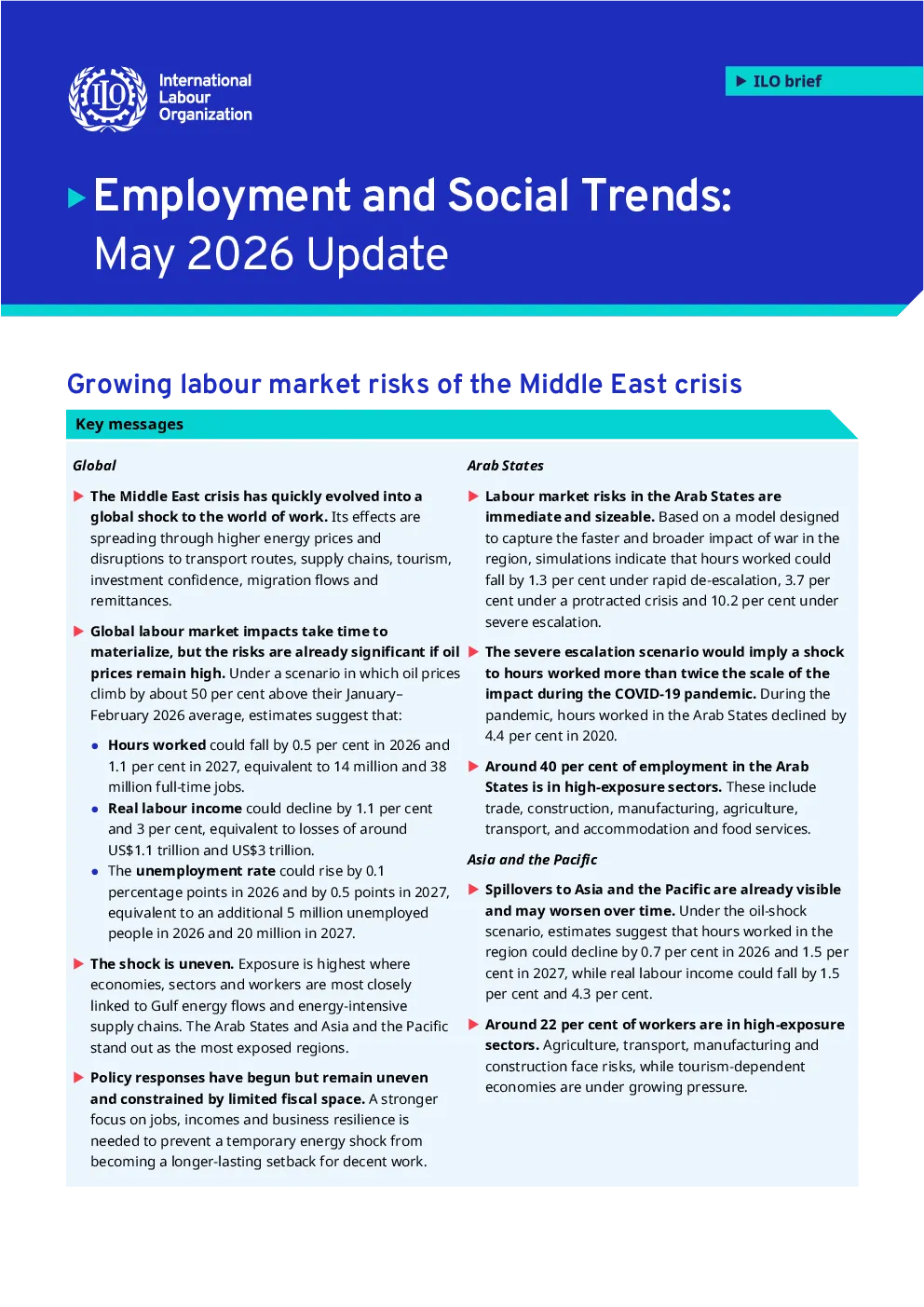
中东危机加剧的劳动力市场风险 关键信息 全球 中东危机已迅速演变为对全球工作世界的巨大冲击。其影响正通过能源价格上涨、投资信心波动、移民流动和侨汇等途径蔓延。 阿拉伯国家的劳动力市场风险迫在眉睫且影响重大。根据一个旨在捕捉战争在秋季因快速降级、长期危机和严重升级分别导致影响加速和扩大的模型显示,这些影响将分别下降1.3%、3.7%和10.2%。 运输路线、供应链、旅游业、地区以及模拟显示,工作时长可能... 全球劳动力市场的影响需要时间显现,但如果油价持续高位,风险已经非常显著。据估计,在油价较2026年1月至2月的平均价格上涨约50%的情景下: 重的升情景将意味着工作小数的冲,其模超新冠疫情期间影响的两倍。在疫情期间,阿拉伯国家的工时在2020年下降了4.4%。 ● 2026年工时可能减少0.5%,2027年可能减少1.1%,相当于1400万和3800万个全职工作岗位。 阿拉伯国家约40%的就业集中在高风险行业。这些行业包括贸易、建筑、制造业、农业、交通以及住宿和餐饮服务。 ● 实际劳动收入可能下降1.1%和3%,相当于损失约1.1万亿美元和3万亿美元。 亚洲和大洋洲 ● 2026年失业率可能上升0.1个百分点,2027年可能上升0.5个百分点,相当于2026年新增500万人失业,2027年新增2000万人失业。 亚洲和大洋洲地区已出现溢出效应,且可能随时间加剧。在石油冲击情景下,估计该地区的劳动时间到2026年可能下降0.7%,到2027年可能下降1.5%,而实际劳动收入可能分别下降1.5%和4.3%。 冲击分布不均。经济体、行业和劳动者与海湾能源流动以及能源密集型供应链的联系最为紧密的地区,其暴露程度最高。阿拉伯国家以及亚洲和太平洋地区是受影响最严重的地区。 约22%的劳动者从事高风险行业。农业、交通、制造业和建筑业面临风险,而依赖旅游业的经济体则承受着日益增长的压力。 政策应对已开始,但进展不均,且受限于有限的财政空间。需要更加关注就业、收入和商业韧性,以防止暂时的能源冲击演变成对体面劳动的长期阻碍。 就业与社会趋势:2026年5月更新 中东危机加剧的劳动力市场风险 力迁移是洲和大洋洲的主要播渠道。早期证据显示,对外籍劳工的输出量急剧下降,遣返人数上升,而侨汇开始显现下行压力的迹象。 移民与汇款 流工人可能要承担不成比例的整代价。在海湾合作委员会(GCC)国家,国际劳工组织(ILO)估计,在危机期间,本国公民就业率每下降1%,非本国公民的就业率就会下降4%。 主要传播渠道,在数据允许的情况下估计可能影响,并突出就业、收入和企业可能面临风险最大的领域。该分析将随着情况的发展和更多证据的出现而更新。 引言:聚焦全球就业与世界工作格局 报告确定了全球影响,并特别关注阿拉伯国家以及亚洲和太平洋地区。尽管危机的影响是全球性的,但最直接的影响是这两个地区。阿拉伯国家是受影响最直接的国家,受到冲突相关中断、经济活动受损、被迫流离失所、能源和贸易冲击以及移民工人压力的影响。亚洲和太平洋地区也高度暴露,因为溢出效应已经通过能源进口依赖、运输和物流中断、旅游业、劳动力移民以及与海湾经济体的汇款联系而显现。由于缺乏相关数据(包括高频数据)(见框1),伊朗伊斯兰共和国的劳动力市场影响未明确评估。 这份《2026年就业与社会趋势更新》探讨了在全球不确定性加剧时期,对就业、收入和工人的新兴风险。与之前的更新一样,它重点关注地缘政治和经济环境的变化如何显著影响劳动力市场和社会结果。本更新特别关注中东危机的潜在影响。 中东危机是2026年全球工作领域下行风险的主要来源之一。除了其直接的人员伤亡外,这场危机还扰乱了能源市场、运输路线、供应链、旅游业和投资信心,其影响远远超出了直接受影响的 countries。这些压力正在全球经济增长前景疲软、不确定性加剧以及持续存在体面劳动赤字的情况下出现。 更新报告分为四个部分。第一部分提供全球概览,分析危机可能通过油价冲击和供应链敞口如何影响劳动力市场,并提供了关于工作时长、实际劳动收入和失业率的估计。第二部分聚焦阿拉伯国家,那里的劳动力市场后果可能最为直接和迅速。第三部分关注亚洲和大洋洲,那里的溢出效应已经显现,如果中断持续,可能会加剧,而最后一部分简要概述了整体政策应对和展望。 工作领域是这些冲击影响人们生活的主渠道之一。当能源价格上涨、运输成本增加、旅游业疲软以及供应链中断时,需求降低、运营成本提高、工作时间减少、实际劳动收入压力以及在某些情况下失业,都会影响工人和企业。这些影响可能分布不均,对处于更易受影响行业的工人和企业以及保护措施有限的群体来说,风险更大。 一、全球概览:冲突区外的影响 尽管本通报提供了国际劳工组织对劳动力市场影响的首项评估,但其目的并非预测危机的未来走向。相反,它是基于评估... 这场危机可能进一步削弱本就脆弱的全球经济。即使在中东危机之前也是如此。 全球增长乏力,不确定性加剧,许多国家面临财政空间受限和持续的通胀压力。这场危机通过更高的能源价格、中断的运输路线、供应链压力和投资者信心减弱,增加了新的风险层。 估计对三个关键指标——工作时长、实际劳动收入和失业率——可能产生的影响,然后考察在不同地区、行业和劳动者群体中的暴露程度差异。 对工时、收入和失业的影响 最新的国际货币基金组织情景分析表明全球经济前景正在恶化。在 其基准评估¹中,全球GDP增长率预计下调约0.3个百分点,而与 危机前预测相比,通货膨胀率预计上调约0.5个百分点。在更严峻的情景下,该情景假设冲突地区的能源基础设施受损更严重,其影响可能要大得多,全球增长率预计下调约1.3个百分点,通货膨胀率预计上调约1.9个百分点。这些情景表明,这场危机不仅是区域性冲击,也是更广泛宏观经济不稳定的潜在根源。 基于对石油冲击的计量经济学模型估算,可以追踪其对劳动力市场随时间的具体影响。当前模拟假设今年3月至5月期间,油价上涨幅度相当于2026年1月至2月平均水平的约50%。由于油价波动性很大,因此这些结果应被视为基于情景的估算,而非预测。 油价冲击对劳动力市场的影响并非一蹴而就。冲击通过更高的能源价格和更低的石油供应传导,这会提高生产和运输成本,加剧通货膨胀,并削弱广泛行业中的活动。随着购买力下降和不确定性上升,企业可能会推迟投资,家庭可能会减少支出。旨在抑制通货膨胀的货币政策收紧可能会进一步加剧这些影响。随着这些压力在经济体中发挥作用,劳动力市场的影响会通过工时减少、实际劳动收入减弱以及最终失业率上升而变得更加明显。这次滞后反映在模拟结果中。 评估全球劳动力市场影响更为 复杂性。直接效应,例如工作场所的破坏、工人的流离失所、企业的中断以及即时的收入损失,在中东地区最为明显。在全球范围内,主要关注点是危机如何通过能源价格、通货膨胀、生产成本、贸易和投资间接蔓延。这些传导渠道需要时间才能在经济中发挥作用,这意味着劳动力市场的影响可能会延迟出现。 这些溢出效应仍然可能很显著。 全球工作时数和实际劳动收入预计将逐渐但显著下降。 企业和工人。更高的能源价格会增加生产和运输成本,降低家庭购买力,对实际工资和企业收入造成压力,并影响企业收入。需求疲软和不确定性加剧会延缓投资和招聘。随着时间的推移,这些压力可能转化为减少工时、实际劳动收入下降,最终导致失业率上升。 与“无冲突”情景(该情景假设油价冲击不会发生)相比,模拟显示,2026年工作时长可能减少约0.5%,2027年可能减少1.1%。这相当于2026年全球将损失约1400万个全时当量工作岗位,2027年将损失3800万个。同时,实际劳动收入也可能在2026年下降1.1%,在2027年下降3%(图1),对应于损失 3 这些估计值具有高度的不确定性,反映了冲突发展路径的不确定性。最终影响的大小强烈取决于石油冲击的最终规模及其持续程度。有关模拟所使用的石油冲击的持续时间和规模,请参见技术说明。 1 参见国际货币基金组织。2026年。世界经济展望,2026年4月:战争阴影下的全球经济。2 这不同于冲击持续的影响。后者的效果,持续到今年和明年,是由于强制的滞后因素。 全球劳动力市场的影响,取决于经济体和行业对石油和天然气的依赖程度、它们与能源密集型供应链的深度关联,以及劳动力集中的地区。4 为了识别工人的暴露程度,该分析考察了各国和各行业对石油、天然气和化肥的依赖情况,包括一般情况和来自波斯湾的具体情况,既包括直接依赖,也包括通过供应链的依赖。5 此外,严重依赖国际旅游的行业中的工人,也由于国际航班费用更高和部分中断而面临更高的暴露风险。 2021年购买力平价(PPP)条件下,分别约为1.1万亿美元和3万亿美元。 预计失业率上升将放缓,但到2027年可能变得显著。危机之前,《2026年就业与社会趋势》(2026年1月)预计全球失业率将在2026年保持稳定在4.9%,并在2027年略有下降。在石油冲击情景下,失业率现在预计在2026年上升0.1个百分点,在2027年上升0.5个百分点(图1),相当于2026年新增500万失业人口,2027年新增2000万失业人口。因此,如果危机未能解决,且冲击如其他石油冲击的历史经验所示般持久,全球劳动力市场的韧性将受到严重考验。 对供应中断的暴露程度在最能与海湾能源流向和能源密集型供应链紧密相连的地区最高。6 在区域层面,阿拉伯国家和大洋洲尤为突出。阿拉伯国家的就业人口约有40%属于高暴露类别,而大洋洲的就业人口中有22%属于高暴露类别,此外分别还有23%和62%的就业人口面临中等暴露。相比之下,全球就业人口中约有15%属于高暴露类别,51%面临中等暴露(图2a)。相比之下,非洲、美洲以及欧洲和中亚的高暴露现象不太普遍。但这并不意味着这些地区不受影响,而是它们的就业人口与本次分析所捕捉到的特定能源冲击的关联性不那么直接。 交通运输服务是全球最容易受影响的行业。约52%的交通运输服务就业属于高暴露类别,这反映了该行业对燃料的直接依赖及其在贸易和流动中的核心作用(图2b)。制造业也显示出显著的暴露程度,约23%的就业属于高暴露活动,另外56%属于中等暴露活动,这也反映了其对能源以及高耗能投入的依赖。全球至少三分之二的农业、批发和零售贸易、住宿和食品服务行业的劳动者面临至少中等程度的暴露风险,而其他服务行业,包括许多公共服务和社会服务。 不均衡的风险暴露:地区、行业和面临更高风险的工人 冲击对不同国家、行业、企业或工人的影响并不相同。虽然综合估算显示了其可能的规模和时间。 4 严重依赖易受冲击部门的多元化程度较低的经济体,其受影响程度可能更严重。5 更多细节请参见技术说明。6 各国各行业的风险敞口,是依据其与因冲突而中断供应的石油、天然气及其衍生品之间的供应联系,加上旅游业相关风险敞口,分别单独确定的。受影响行业和国家的工人 面临低暴露风险的工人不太可能因供应中断或投入成本上升而受到影响。面临中高暴露风险的工人则更有可能因供应渠道的变化而面临就业方面的改变。然而,所有工人都可能受到通货膨胀和第二轮宏观经济效应的影响。 相对而言,它们的暴露程度较低。然而,这些全球结果掩盖了地区之间以及地区内部的巨大差异,如下文所述。 一些工人群体的暴露程度高于其他群体。总体而言,非正规工人的暴露程度高于正规工人,这反映了他们更多地集中在能源密集型行业(图2c)。与高技能工人相比,低技能和中等技能工人更有可能处于高暴露类别。同时,男性往往从事比女性更具暴露性的工作。当更高的暴露程度与较低的收入保障、较弱的社会保障获取途径以及其他应对此类冲击的调整限制重叠时,这些差异尤为重要。 见图2a。 来源:作者根据经合组织(OECD)和亚洲开发银行(ADB)投入产出表及国际劳工组织(ILO)的估计进行计算;详情请参见技术说明。 盒子1. 伊朗危机的影响 如上所述,目前尚无法对伊朗劳动力市场的影响进行全面评估,但其他来源的数