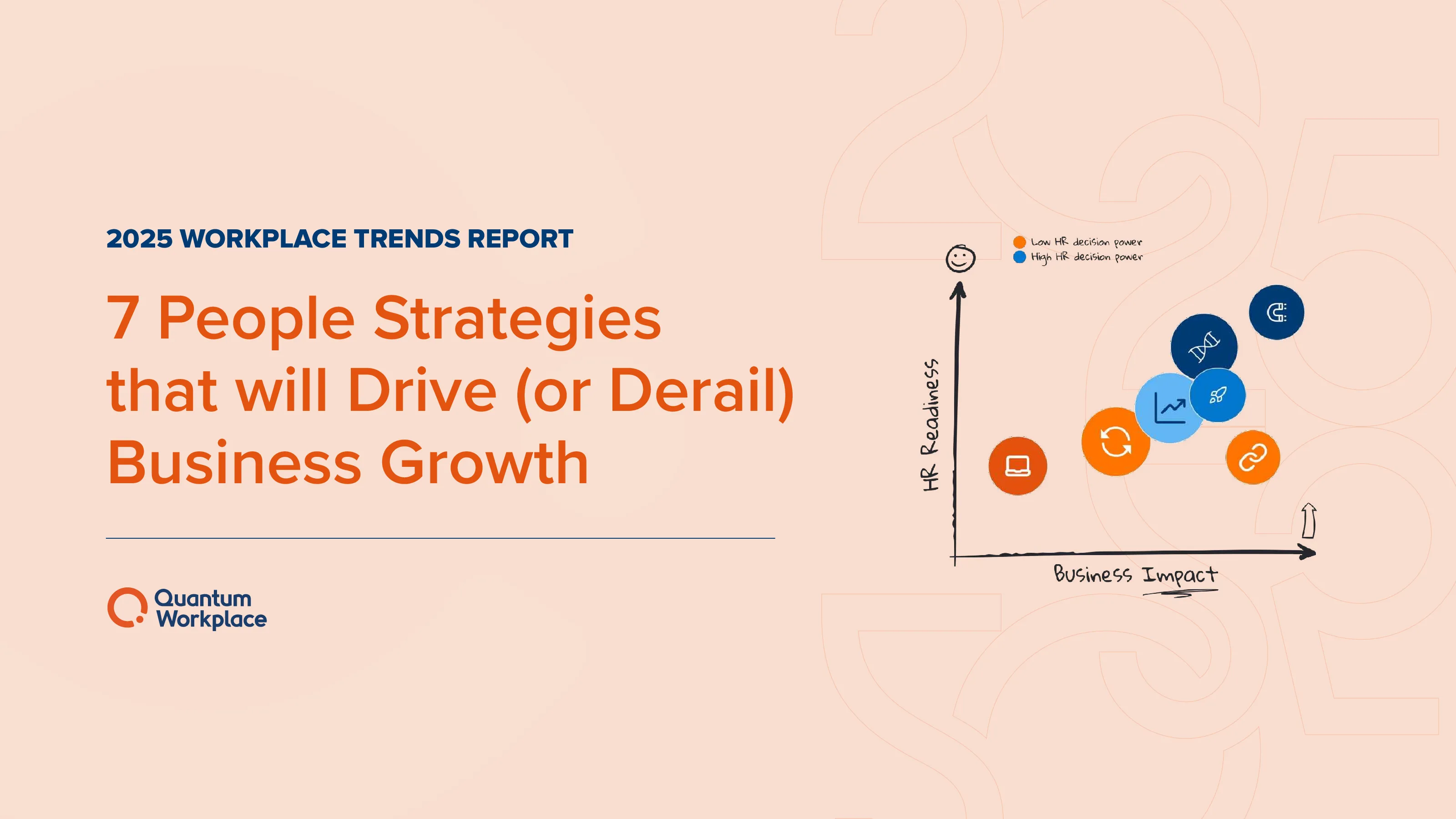
7 People Strategiesthat will Drive (or Derail)Business Growth Where Business Strategy Meets People Strategy HR has earned its seat at the table. But in2025, that seat comes with high expectations. Understanding and sharpening your influencehas never been more important. impact, do more with less, and solve complex workforcechallenges faster than ever. Budgets are tighter. Executiveattention spans are shorter. And yet, the demand for strategicHR leadership has never been greater.Your role isn’t shrinking, it’s evolving. And the opportunity is through three critical lenses:Business impact:how much the trend matters to business performanceHR readiness:how equipped most HR teams areto act on the trendDecision-making power:how much influence HRhas over the trend clear. You must lead with clarity, act with precision, and connectpeople strategies to business outcomes in more tangible andpowerful ways.This year’s workplace trends highlight that opportunity. We’ve Where can you lead?Where do you need buy-in? uncovered seven critical trends shaping the future of work—ones that call for sharper strategies, stronger alignment, andsmarter tools in 2025 and beyond. Where will advocacy make the biggestdifference for your people—and yourbusiness—in the year ahead? This report is shaped by the people who live and breathe workplace culture every day. Our authors and reviewers include forward-thinking HR leaders and other workplace experts whobring a data-driven lens to the most pressing challenges facing today’s workplaces. Meet the Authors They helped ensure insights reflect the realities on the ground of HR in 2025, pressure-testingtrends, surfacing practical implications, and grounding recommendations in lived experience. action with confidence. Director of Learning & DevelopmentBenesch Chief Human Resources OfficerScooter’s Coffee Director of Talent Valet Living Getty Images Quantum Workplace Expert Authors Cindi Fosler |Chief Customer Officer Todd Pernicek |Senior Insights Analyst Aaron Brown |Senior Insights Analyst Rachel Hudson |Senior Insights Analyst Insights Analyst Insights Analyst Insights Analyst VP of People Insights Senior Insights Analyst Product Manager Prometheus Real Estate Group Anthology Table of Contents Great cultures don’t happen by accident. They’re intentionally built, strengthened by leadershipand decisions, and aligned with business strategy. Organizations that once set the gold standard for culture have struggled to sustain it at scale,proving that culture must evolve to stay effective. Culture and strategy must move in tandem.When culture is embedded into decision-making and used as a strategic framework, executionbecomes clearer, engagement deepens, and retention improves. Culture drifts when it’s disconnected from strategy, leading to misalignment, disengagement, and decisions that contradict stated values. Without intentionalreinforcement, even the strongest cultures erode under the pressure of scaling,leadership turnover, or shifting priorities. move into alignment Culture fuels execution when it’s woven into decision-making, leadershipbehaviors, and employee expectations. Organizations that align culture with business strategy strengthen engagement, improve retention, and create afoundation for sustainable growth. Scooter’s Coffee Quantum Workplace Hardwiring culture into daily decisions Create accountability through rituals and systems.Whether it’s how promotions are evaluated or howdecisions are made under pressure, codifyingbehaviors through systems (like performance reviewsor leadership expectations) helps culture scale. Culture isn’t what’s written—it’s what’s lived. If values andbehaviors aren’t reflected in decisions, they lose credibility.For culture to thrive, it must be embedded into dailyoperations, structures, and systems. Nvidia’s CEO ensures innovation stays central as the companyscales. Palantir emphasizes mission-driven work, while Costcoconsistently invests in employee well-being, even duringdownturns. Culture lives in the daily attitudes, actions, and behaviors withinan organization—in how decisions are made, how peoplecommunicate, and how employees are recognized. These day-to-day experiences must be reinforced by the organization’sstructures, systems, and work environments to create clarity,alignment, and cohesion.“When these elements are intentionally aligned with theculture,”says Mikala Friedrich, Chief Human Resources Officer atScooter’s Coffee.“They must serve as a decision filter, and living bythem can’t be optional. They’re the price of admission.”To avoid cultural drift, organizations must takeintentional steps: describing your culture. They must serve as adecision filter, and living by them can’t be optional.They’re the price of admission. organization’s strategy and future direction, they form a powerfulfoundation for a strong, cohesive culture,”says Anna Kelly, InsightsAnalyst at Quantum Workplace.Even admired