全球经济周报:降息周期结束
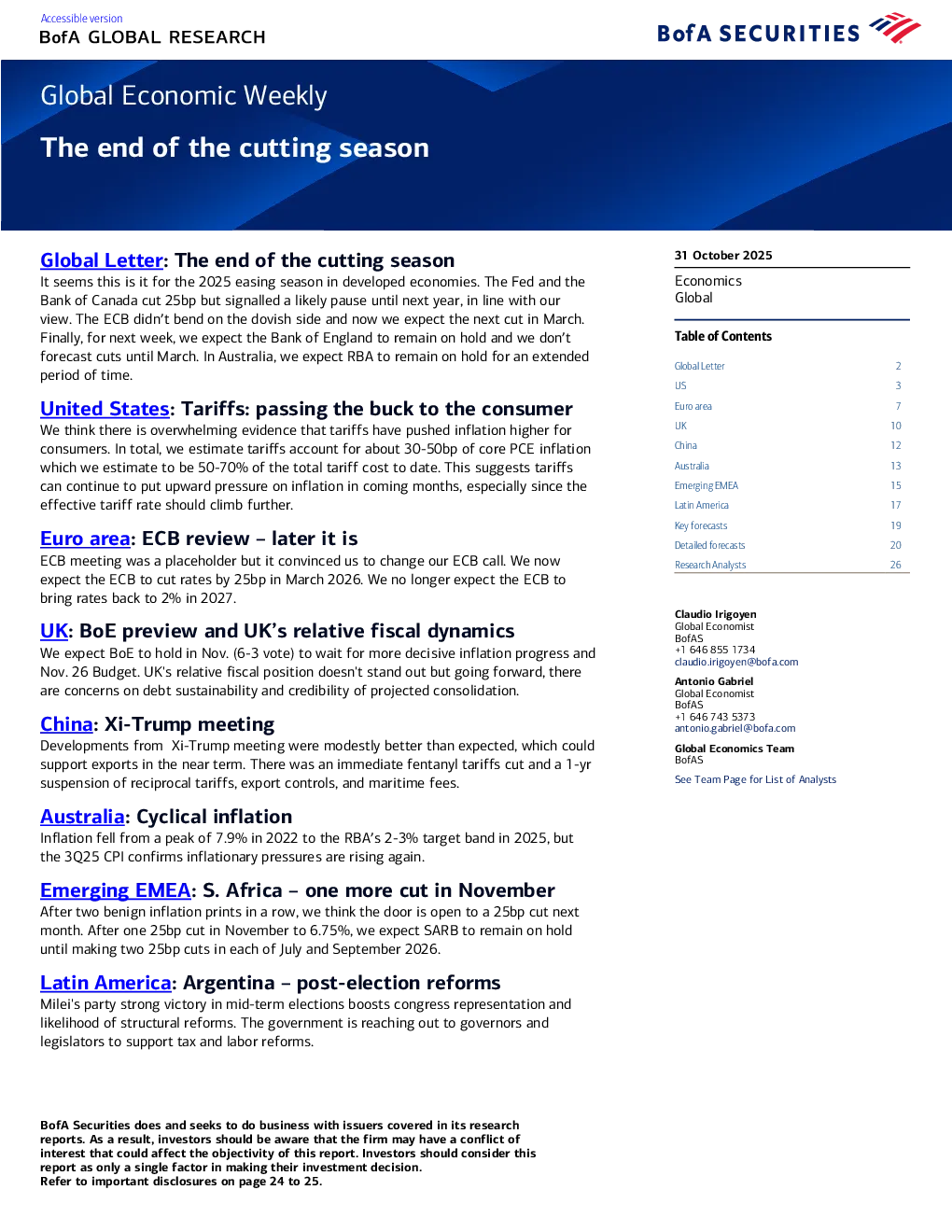
Global Letter: The end of the cutting seasonIt seems this is it for the 2025 easing season indeveloped economies. The Fed and the EconomicsGlobal Bank of Canada cut 25bp but signalled a likely pause until next year, in line with ourview. The ECB didn’t bend on the dovish side and now we expect the next cut in March.Finally, for next week, we expect the Bank of England to remain on hold and we don’tforecast cuts until March. In Australia, we expect RBA to remain on hold for an extendedperiod of time. United States: Tariffs: passing the buck to the consumerWe think there is overwhelming evidence that tariffs have pushed inflation higher for consumers. In total, we estimate tariffs account for about 30-50bp of core PCE inflationwhich we estimate to be 50-70% of the total tariff cost to date. This suggests tariffscan continue to put upward pressure on inflation in coming months, especially since theeffective tariff rate should climb further. Euro area: ECB review – later it is ECB meeting was a placeholder but it convinced us to change our ECB call. We nowexpect the ECB to cut rates by 25bp in March 2026. We no longer expect the ECB tobring rates back to 2% in 2027. Claudio IrigoyenGlobal EconomistBofAS+1 646 855 1734claudio.irigoyen@bofa.com UK:BoE preview and UK’s relative fiscal dynamics We expect BoE to hold in Nov. (6-3 vote) to wait for more decisive inflation progress andNov. 26 Budget. UK's relative fiscal position doesn't stand out but going forward, thereare concerns on debt sustainability and credibility of projected consolidation. Antonio GabrielGlobal EconomistBofAS+1 646 743 5373antonio.gabriel@bofa.com China: Xi-Trump meetingDevelopments from Xi-Trump meeting were modestly better than expected, which could support exports in the near term. There was an immediate fentanyl tariffs cut and a 1-yrsuspension of reciprocal tariffs, export controls, and maritime fees. Global Economics TeamBofASSee Team Page for List of Analysts Australia: Cyclical inflation Inflation fell from a peak of 7.9% in 2022 to the RBA’s 2-3% target band in 2025, butthe 3Q25 CPI confirms inflationary pressures are rising again. Emerging EMEA: S. Africa – one more cut in November After two benign inflation prints in a row, we think the door is open to a 25bp cut nextmonth. After one 25bp cut in November to 6.75%, we expect SARB to remain on holduntil making two 25bp cuts in each of July and September 2026. Latin America: Argentina – post-election reforms Milei's party strong victory in mid-term elections boosts congress representation andlikelihood of structural reforms. The government is reaching out to governors andlegislators to support tax and labor reforms. BofA Securities does and seeks to do business with issuers covered in its researchreports. As a result, investors should be aware that the firm may have a conflict ofinterest that could affect the objectivity of this report. Investors should consider thisreport as only a single factor in making their investment decision.Refer to important disclosures on page 24 to 25. Global Letter Antonio GabrielBofAS Claudio IrigoyenBofAS The end of the cutting seasonIt seems this is it for the 2025 easing season in developed economies. The Fed and the Bank of Canada cut 25bp but signalled a likely pause until next year, in line with ourview. The ECB didn’t bend on the dovish side and now we expect the next cut in March.Finally, for next week, we expect the Bank of England to remain on hold and we don’tforecast cuts until February. In Australia, we expect RBA to remain on hold for anextended period of time. As a separate note, the US-China trade deal is very welcome and more positive thanwhat markets might have read so far. The feel is a kick the can down the road type ofdeal, but the detail is important, everything is postponed for a year, that is until after themidterm elections. It represents an interesting and potentially bullish shift on the USagenda for the next 12 months. The art of engineering a hawkish cut The Fed cut 25bp as widely expected but pushed back on another cut in December, inline with our view. This change in the tone took the market by surprise. The FOMCseems to be quite divided on how to read the data and what kind of insurance to take,given the confluence of supply and demand shocks hitting the labor market. If this is notenough, the lack of official statistics makes the reading of the economy significantlynoisier (see our reports:US Watch: Clear the Dec 29 October 2025andMorning MarketTidbits: Markets don’t intimidate Powell’s Fed 30 October 2025). We stick to our view that the Fed is done in the near future absent any new shock. Wesee Powell’s remarks in line with our view of the importance of supply shocks driving thelabor market and the persistence of inflation ex-tariffs. An interesting complementary angle was the decision to announce the end of QTstarting in December, under the view that recent funding pressures are temporary r