30+残酷诚实的人工智能预测[思维流]
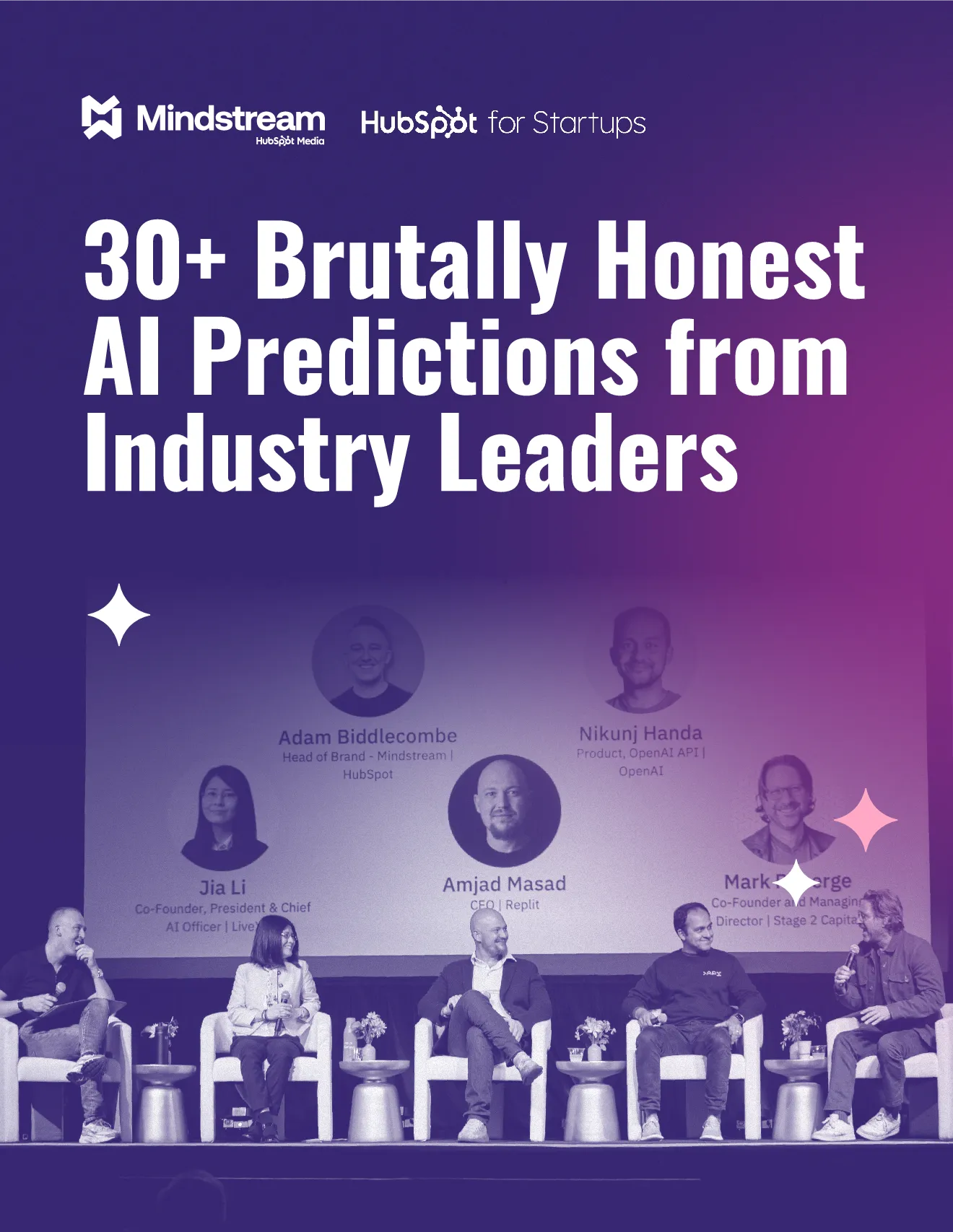
Imagine eavesdropping on the most intelligent AI conversations of theyear. In their most candid moments, we captured cEOs from HubSpot,Atlassian, Anthropic, OpenAI, and other industry leaders, the kind ofunguarded insights you'd hear if you were grabbing coffee with themafter their panels. There is no corporate jargon, no marketing spin, justthe real talk shaping the next 3 to 5 years of AI. Warning: may cause sudden clarity about your AI strategy. Table of Contents Hidden Opportunities Most People Are Missing2 AI Agents Are Becoming Co-Workers, Not ToolsThe Future of Work PredictionsWhy Most AI Implementations Fail (Technology Reality Check)The Organizational Transformation Nobody's Preparing For6 The Great Pricing Revolution7Where to Start: The Repetitive Work Gold MineData as Your Real Competitive AdvantageSpeed as the Ultimate Survival Strategy10 What This Means for You: Action Guide Chapter 1 Hidden OpportunitiesMost People Are Missing 6 major opportunities that are flying under the radar: The $5 Trillion GDp Impact: Economic transformation through productivity gains Memory as the Next Battleground: AI systems that learn between sessions Multi-Agent Revolution: Teams of specialized AI agents working together Emerging Markets AI Explosion: Developing countries are adopting AI fasterthan developed ones Infrastructure Cost Reality: Current costs are <1% of what's coming Business Metrics Revolution: Moving from academic benchmarks torevenue/NPS metrics While everyone's focused on the prominent AI trends, the smartest leaders are quietly positioning themselvesaround opportunities that have yet to reach mainstream awareness. These insights represent the biggestpotential advantages for those who act early. The situation: Beyond the widely discussed AI applications, several transformative opportunities emerged thatcould createmassive competitive advantagesforearlyadopters "Virtual collaborators will be a meaningful fractionof the world's GDP in two to five years" - Matt Bell, Head of Product Research, ANTHROPIC : The Context: When discussing the economic impact of AI collaboration, Bell shared Anthropic's internalprojections about productivity transformation: why This Matters: Making every knowledge worker 2x more productive creates $5 trillion in value in the Usalone. This isn't just efficiency-it's economic transformationSupporting Evidence: He noted that even "first generation virtual collaborators are producing one dollars toone hundred dollars of value per task completed" Timeline Impact: 2025-2027 Spice Level: JJJ "Memory... I think this is where a ton of the game is gonna go over thenext twelve to twenty-four months" - Nicholas Holland, Head of AI, Hubspot : The Context: when discussing the four-layer agent architecture, Holland identified memory as the nextmajor battleground: why This Matters: AI systems that learn between sessions and remember context will dramatically outperformthosethatstartfresheachtime: Supporting Evidence: He explained this is "how do you effectively let the agent understand what it's got asfundamental knowledge," and build on past interactions Spice Level: JJJ Timeline Impact: 2025-2027 "Multiple copies of Claude working in concert can besignificantly more capable than a single copy of Claude' - Matt Bell, Head of Product Research, ANTHROPIC : The Context: when explaining how real AI work gets done, Bell described multi-agent systems as the path tobreakthrough capabilities: why This Matters: Single AI assistants are just the beginning. The real power comes from orchestrated teamsof specialized agents working together: Supporting Evidence: Anthropic's Advanced Research uses "a Claude orchestrator, farms out subtasks to sub-agents that then report back with results" Timeline Impact: Now Spice Level: J "The emerging market... is widely ignored, and it's oneof the biggest opportunities that exist out there for AI" - David Shim, CEO, Read' : The Context: When sharing global adoption patterns, Shim revealed that developing countries are adoptingAI faster than developed ones: why This Matters: These markets don't have legacy processes to overcome, making them more open toAI-first solutions: Supporting Evidence: Read AI went "from zero in Brazil to quarter million active users in Brazil in about fourmonths" and has "one to two percent of the population" using their product in South Africa Spice Level: JJ Timeline Impact: Now "Current inference costs are less than 1% of what's coming'- Shaunak Godbole, Field cTO, Vz Fireworks Al : The Context: When discussing infrastructure needs for complex AI agents, Godbole revealed the massivescale of compute demand ahead: why This Matters: Complex agents need hundreds of model calls, making current costs prohibitiveTheinfrastructuretransformationneededismassive: supporting Evidence: He noted that "these products do not have anywhere close to the user bases they'regonna have in five years, and most of the money is