未来城市的人工智能05:自然
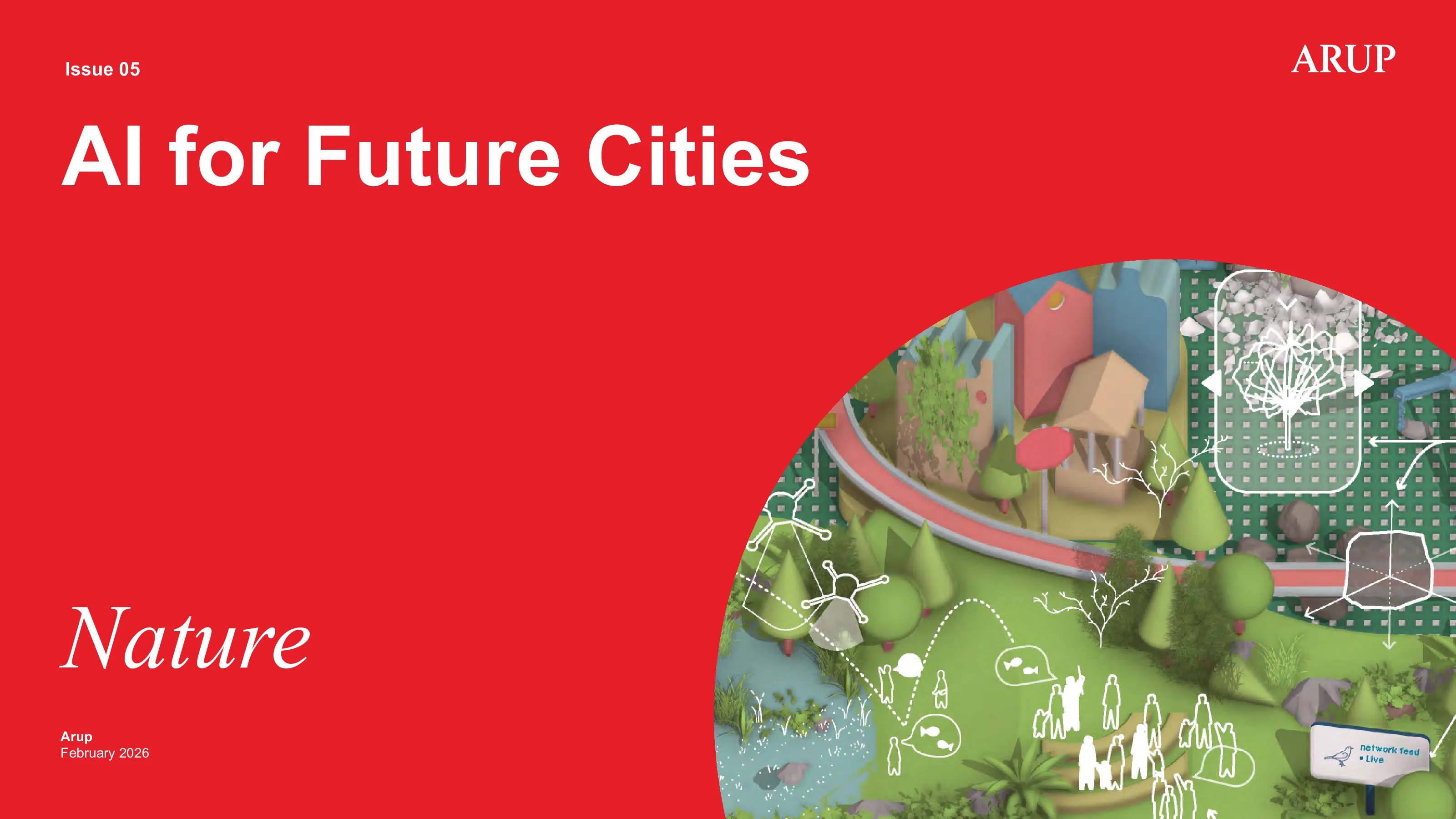
Contents This fifth issue in the series focuses onnaturein our cities. How is artificialintelligence (AI) changing the way we observe, restore, design and steward naturein the built environment? How might new, AI enabled ecological systems reshapethe physical fabric of our cities and the outcomes of the people who live in them?What new competencies may future practitioners require for designing naturalsystems that are increasingly augmented by intelligent tools? And how do we ensure AI for Future Cities series The rapid evolution of (AI) promises to enhance efficiency, speedand innovation. But what does this mean for cities: for how they areplanned, designed, built and managed? What are the opportunitiesand what are the risks? Amongst the hype and speculation, how dowe ensure that these technologies support us in achieving our shared series of critical reflectionsand expert insights on the uses andimpacts of artificial intelligence across all aspects of our cities– from planning them through to running them, from infrastructurethrough to resource flows. It will give you a rich understanding ofhow AI already operates in urban contexts today, what trends are Why consider AI and nature in the city? Why now?IntroductionAI is increasingly shaping the integration and monitoringFutures Triangle of nature in our cities. In recent years, the rise ingenerative AI has on one hand created more stress onthe natural environment, but, on the other hand, AI hascreated new tools which have improved how we plan,manage and co-exist with nature in our cities. placement of nature-based solutions (NbS), analyse theeffects of tree placement for cooling, and autonomouslyhold or deploy flood water through sponge city releasesystems. The potential of these initiatives to be rapidlyand independently deployed using AI is exciting butalso raises questions regarding ethical considerations,accuracy and unintended consequences that we must within our cities? On whose behalf is AI acting: for thatof the natural world or of humans within nature? Whosets the rules for these decisions and how do we ensuretransparency, fairness and accountability when machinesact on our behalf? Figure 1 The Futures Triangle developed by the futuristSohail Inayatullah2is useful in identifying the 4future of how AI may shape nature in our cities. that could emerge as we more readily use AI as a tool toenhance nature in our cities. AI for Future Cities 05: NatureForeword Enhancing nature in our cities with AI But the true value of AI lies in itscapacity to help us reimagine therelationship between people, natureand technology.digital infrastructure. We must ensure that AI servesthe interests of both humanity and the natural world,and that its benefits are shared equitably.This report by Arup University’s Foresight teaminvites us to imagine a future where AI can enable Cities are the crucibles of our collective future; placeswhere humanity’s ingenuity, ambition, and diversityconverge. Yet, as we stand at the intersection of rapidurbanisation, climate emergency and technologicalrevolution, we must also ensure that cities are safe,resilient and regenerative places where communities us to create cities that are not just less harmful, butactively restorative; places where nature and peoplethrive together. It challenges us to think criticallyabout how we deploy AI and to ensure that it servesthe broader goal of creating cities that are better for green spaces with great fidelity, identify biodiversityhotspots and design interventions that maximisebenefits for people and planet. It can draw onIndigenous knowledge and live-time data so we, ashumans, take more place-based, context-sensitivesolutions that build on the wisdom of previousgenerations. It can also help overcome the challengesof siloed data and fragmented governance, enablingpeople, places and the planet. of our health, wellbeing, and resilience. Parks,wetlands and green spaces cool our streets and cleanour air. They provide vital habitats for wildlife. Theyare our first line of defence against the shocks andstresses of a changing climate. Yet, nature is oftenundervalued, fragmented and under threat, competingfor space with other urban priorities. is already transforming the way we plan, design, andmanage urban environments. Its promise is immense,and we are already seeing the benefits in our work.AI is helping us to optimise nature-based solutions,monitor biodiversity, predict and mitigate the impactsof extreme weather. care. AI is not a panacea. Its outputs are only asgood as the data and values we embed within it. Wemust remain vigilant to the risks of bias, unintendedconsequences and the environmental footprint of AI for Future Cities 05: Nature Foresight Perspective:How can AI help us make space for nature in the face of climate change? Beyond aesthetics, nature will be the cornerstone ofour adaptation and resilience strategies. It will supportour adaptation to the increasing freque