您的浏览器禁用了JavaScript(一种计算机语言,用以实现您与网页的交互),请解除该禁用,或者联系我们。[莱坊]:2025年第四季度英国可再生能源开发土地指数 - 发现报告

2025年第四季度英国可再生能源开发土地指数

信息技术2026-02-24莱坊杜***
AI智能总结
查看更多
2025年第四季度英国可再生能源开发土地指数

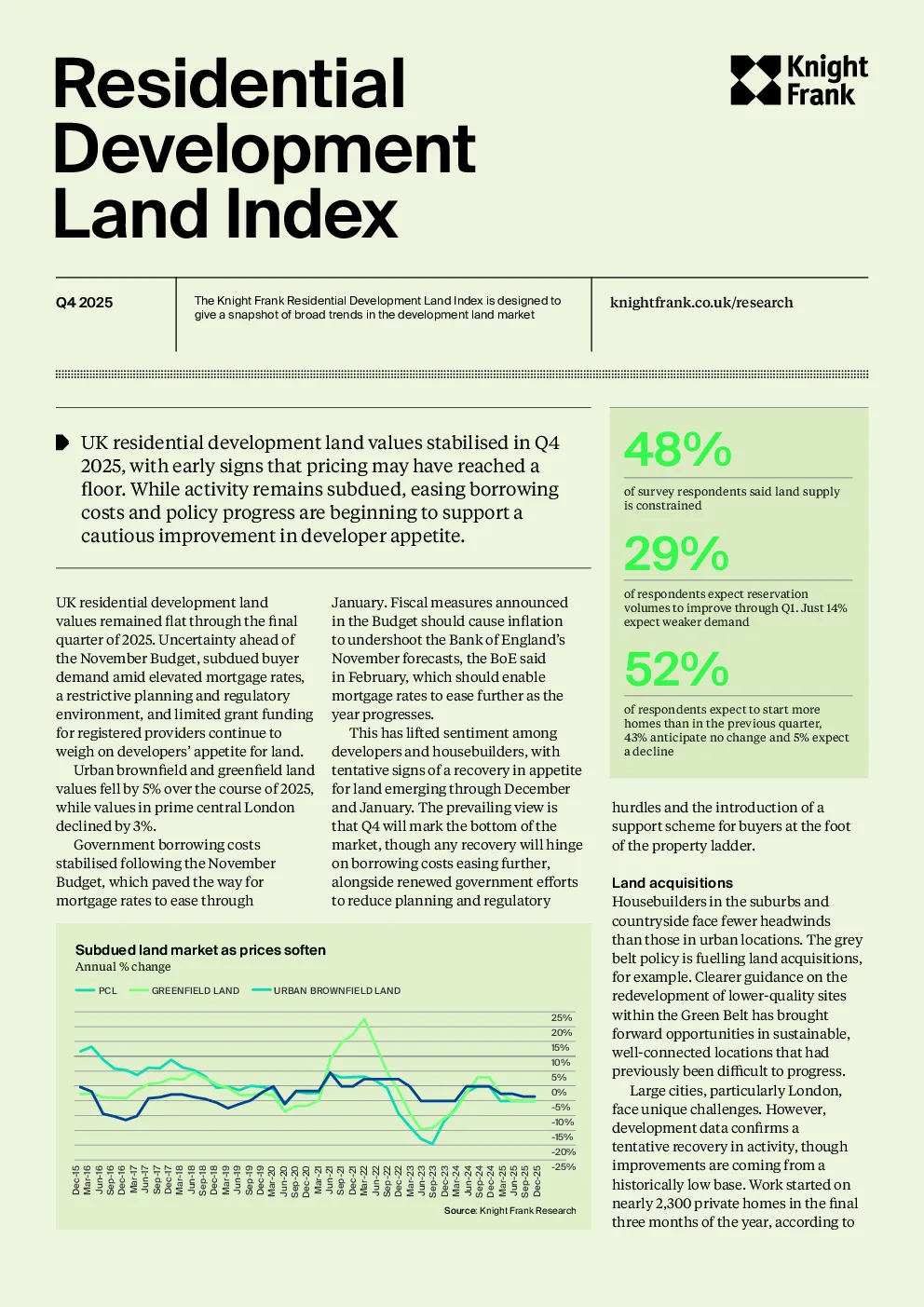
The Knight Frank Residential Development Land Index is designed togive a snapshot of broad trends in the development land market 48% UK residential development land values stabilised in Q42025, with early signs that pricing may have reached afloor. While activity remains subdued, easing borrowingcosts and policy progress are beginning to support acautious improvement in developer appetite. of survey respondents said land supplyis constrained 29% of respondents expect reservationvolumes to improve through Q1. Just 14%expect weaker demand January. Fiscal measures announcedin the Budget should cause inflationto undershoot the Bank of England’sNovember forecasts, the BoE saidin February, which should enablemortgage rates to ease further as theyear progresses. UK residential development landvalues remained flat through the finalquarter of 2025. Uncertainty ahead ofthe November Budget, subdued buyerdemand amid elevated mortgage rates,a restrictive planning and regulatoryenvironment, and limited grant fundingfor registered providers continue toweigh on developers’ appetite for land. 52% of respondents expect to start morehomes than in the previous quarter,43% anticipate no change and 5% expecta decline This has lifted sentiment amongdevelopers and housebuilders, withtentative signs of a recovery in appetitefor land emerging through Decemberand January. The prevailing view isthat Q4 will mark the bottom of themarket, though any recovery will hingeon borrowing costs easing further,alongside renewed government effortsto reduce planning and regulatory Urban brownfield and greenfield landvalues fell by 5% over the course of 2025,while values in prime central Londondeclined by 3%. hurdles and the introduction of asupport scheme for buyers at the footof the property ladder. Government borrowing costsstabilised following the NovemberBudget, which paved the way formortgage rates to ease through Land acquisitions Housebuilders in the suburbs andcountryside face fewer headwindsthan those in urban locations. The greybelt policy is fuelling land acquisitions,for example. Clearer guidance on theredevelopment of lower-quality siteswithin the Green Belt has broughtforward opportunities in sustainable,well-connected locations that hadpreviously been difficult to progress.Large cities, particularly London, face unique challenges. However,development data confirms atentative recovery in activity, thoughimprovements are coming from ahistorically low base. Work started onnearly 2,300 private homes in the finalthree months of the year, according to Number of NEW BUILD cases, by management type Molior – that’s up from 986 in Q3, 882in Q2 and 1,385 in Q1. London has anannual housing target of 88,000 homesyet private starts are down 84% in adecade, from 33,782 at the peak of themarket in 2015 to just 5,547 last year. requirements, with a decision expectedin the coming months. London construction starts onthe decline Many of these changes will help tovarying degrees, but they are unlikelyto be enough to enable delivery to hitthe government’s targets. A meaningfulincrease in delivery will hinge oncutting into the risks presented bythe planning system, particularlyan overhaul of the late-stage reviewprocess. And while leading fixed ratemortgages should drop below 3.5%by spring, which will improveaffordability at the margins, a targetedbuyer support scheme would do muchmore to unlock development. Thepromised increase in grant funding foraffordable housing providers shouldalso be ringfenced to ensure it isdirected towards expanding the supplyof affordable homes, rather than beingabsorbed by balance sheet repair orlegacy issues at registered providers. Number of private units started,20+ unit schemes The government’s policy agendahas so far been positive, though ithas largely focused on supply-sidemeasures. Increases in technicalstaff at the Building Safety Regulatorhave started to ease delays in theGateway 2 process, though it still addssignificant uncertainty. Amendmentsto the Planning and InfrastructureBill announced in October may limitopposition to residential projects,while larger sites may soon be subjectto a new fast-track process. The GreaterLondon Authority has consulted oncutting affordable housingthresholds and easing some ofLondon’s many prescriptive design % of respondents half expect land values to remain staticthrough Q1, while 38% expect furthereasing. We also asked respondents torank factors that were most likely toincrease their appetite for land anddevelopment. More First Time Buyersupport was the clear priority, followed byinterest rate cuts, planning reformand further falls in land values. economy and planning delays werecited as the most significant constraintsduring the quarter. Land availability % of respondents that said landavailability was… Almost half of respondents reportedthat land supply was constrained, withmany site owners unwilling to transactat price levels that would supportdevel