全球水监测 2025报告:追踪水循环、水文极端事件及影响
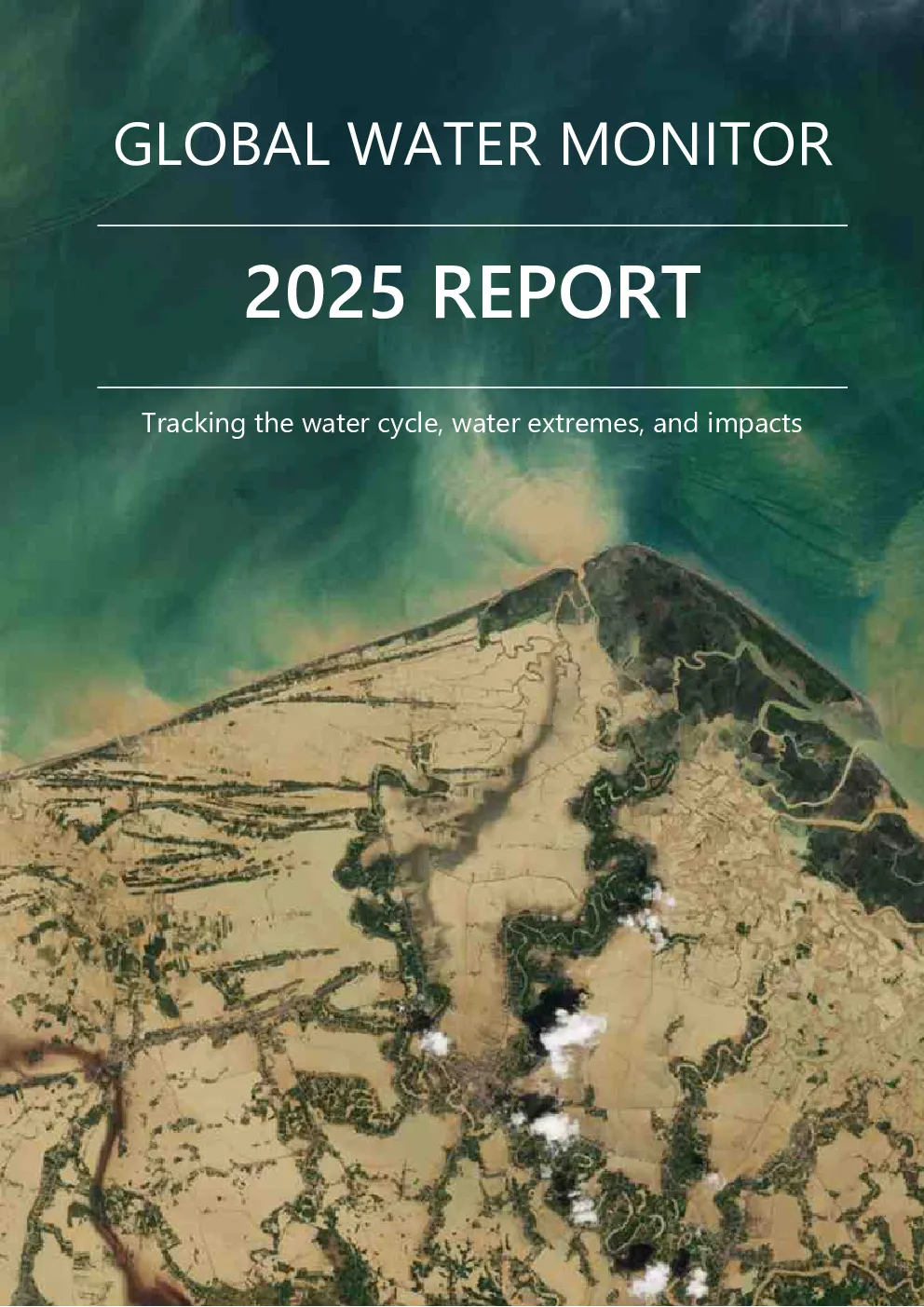
2025 REPORT Tracking the water cycle, water extremes, and impacts Disclaimer The material in this report is of a general nature and should not be regarded as legal advice or relied on forassistance in any particular circumstance or emergency situation. In any important matter, you should seekappropriate independent professional advice in relation to your own circumstances. The Australian National How to cite: Van Dijk, A.I.J.M., H.E. Beck, E. Boergens, R.A.M. de Jeu, W.A. Dorigo, C. Edirisinghe, E. Forootan, E. Guo, A.Güntner, J. Haas, J. Hou, S. Mo, W. Preimesberger, J. Rahman, P. Rozas Larraondo (2026)Global Water Monitor, © Australian National University, 2026 The CC BY licence is a standard form licence agreement that allows you to copy and redistribute the material inany medium or format, as well as remix, transform, and build upon the material, on the condition that youprovide a link to the licence, you indicate if changes were made, and you attribute the material as follows: Front cover image: Sentinel-2 satellite image of severe flooding on Saturday, 29 November 2025, over a region east of the city of Lhokseumawe,on the northern coast of Aceh province on the island of Sumatra, Indonesia. Contains modified Copernicus Sentinel data Preface Our global water systems are under mounting pressure as climate change drives more extreme weather events anddisrupts the water cycle. The year 2025 was a year of new records and not an isolated occurrence. It fits with a worsening Reliable and timely information about water resources and hazards is more crucial than ever, yet traditional ground-based measurement networks continue to decline. Satellite observations now play a vital role, offering rapid and The Global Water Monitor Consortium unites public and private organisations to deliver open, actionable climate andwater data. By integrating satellite and ground observations, we aim to provide timely updates on critical aspects of the This third annual report builds on the work of previous years, summarising the state of the global water cycle in 2025,identifying key trends, and analysing major hydrological events. It includes updated metrics on rainfall, temperature, air This report reinforces a clear message: as the planet warms, water challenges are escalating, year after year. By trying toprovide information on changes and events, we hope to support informed decision-making to protect communities, 2 January 2026 Summary Key findings In 2025, was the third hottest year on record and experienced new hydrological extremes.Water-related disasters caused major impacts worldwide, with climate change contributing to About this report The Global Water Monitor provides free, rapid, global information on climate and water resources. Thissummary report contains information on rainfall, air temperature, humidity, soil and groundwater conditions, Global water cycle Some key aspects of the water cycle in 2025 over the global land area were: Precipitationover land was close to average. There appears to be a declining trend. The number ofrecord-dry months was above average and shows a significant upwards trend of 9.7% per decade. Maximum daily precipitationand the frequency of rainfall records broken both show increasing trends, Air temperatureover land was the third highest on record. The frequency of record-warm months was Maximum temperatureswere 0.71°C above the1995–2005 baseline, and hot days were 22% Minimum temperaturesare increasing, and thenumber of frost days was 6.3% below the Air humidityover land continued its long-termdecline, with record-low months twice more The annual number of hot days (>35°C) over the globalland area has increased markedly over recent decades, Soil moistureshowed strong regional contrasts,with record-low values widespread in Europe Vegetation greennesswas 7.6% above the 2001–2005 average, continuing a steady increase. Record- Surface water extentover land was close the baseline average, but record-high monthly values were26% more frequent, with a significant increasing trend of 3.8% per decade. River flowswere 10.6% above the baseline average, with record-high flows in Africa and South America. Terrestrial water storagecontinued its long-term decline, with record lows in southern Europe and parts Major water-related disasters Water-related disasters in 2025 caused nearly 5,000 deaths, displaced around 8 million people, and resultedin economic losses exceeding US$360 billion globally. Actual impacts were likely higher due to incomplete Global water-related disasters in 2025.Major disasters are shown by location, timing and disaster type. Events aregrouped by calendar quarter. The map illustrates the distribution major impacts described in this report but does not aim to Tropical cyclones were among the deadliest hazards of the year, with major loss of life in parts of South andSoutheast Asia, including Indonesia and Sri Lanka. Extreme heat